
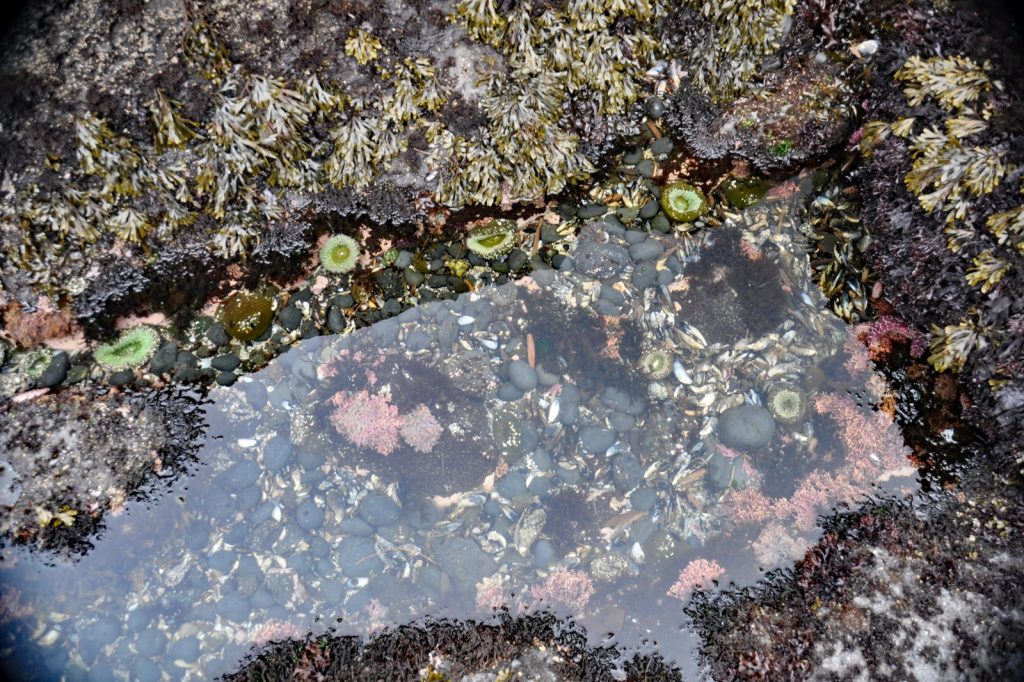
Yes, and in surprising numbers. A tide pool is an isolated pocket of seawater left behind in the intertidal zone, and NOAA’s National Ocean Service says these small basins, often only inches to a few feet deep and a few feet across, are packed with snails, barnacles, mussels, anemones, urchins, sea stars, crustaceans, seaweed and small fish.
Living there is hard. Twice a day, or once, depending on the coast, the sea comes and goes, and everything in the pool has to cope with both states.
Hours of exposure
As the water retreats at low tide, residents face hours of sun, low oxygen and rising water temperature, NOAA explains. Wading birds that specialize in feeding in shallow pools are waiting. National Geographic adds that anything living in this zone must tolerate changes in moisture, temperature and salinity, which means saltiness.
High tide brings a different set of problems. The plants and animals are bathed in fresh seawater, but they must endure the pounding of waves, and foraging fish gain temporary access to the shoreline.
How they hold on
Many tide pool inhabitants simply cling. Barnacles make a fast-curing cement, and NOAA calls it among the most powerful glues known to exist. Researchers are trying to work out whether it can be harvested or reproduced for commercial use. Barnacles, mussels and kelp anchor themselves to rock, National Geographic says, and barnacles and mussels can also keep seawater inside closed shells so they do not dry out at low tide.
Pools themselves act as shelter. On rocky shores they form in holes, cracks and crevices where seawater collects as the tide goes out, and creatures that could not normally last through low tide, such as sea stars, shrimp or fish, can take refuge in them. On sandy shores, organisms bury themselves in the sediment to stay cool and moist.
Plenty to eat
Space is limited. Food is not. Every wave at high tide delivers fresh nutrients and microscopic organisms such as plankton, NOAA says, and these feed the smallest animals, which in turn sustain larger ones.
Where an animal ends up depends on how well it handles being underwater and above water, and on predators and rivals for the same space and food. National Geographic describes three zones. The high tide zone is submerged only at high tide, so it is hotter and drier. The middle zone spends equal time covered and exposed. The low tide zone is exposed only at low tide and has the greatest biodiversity of the three, because conditions suit organisms that cannot stand long stretches in air.
The zone matters beyond the pools. It is an important feeding spot for resident and migrating birds, and National Geographic notes that it protects against erosion and keeps storm waves from reaching buildings along the shore.
Visiting with care
NOAA’s advice is simple. Go at low tide. Find footholds on bare rock, which is less slippery than rock covered in algae and other sensitive sea life. If you look under a rock, put it back where and as you found it. Leave the animals and plants alone, and do not collect intertidal species, which is illegal in many areas. It also suggests bringing a bag to pick up any trash on the beach.
Sources
- What is a tide pool? – NOAA's National Ocean Service
- Intertidal Zone – National Geographic Education




