
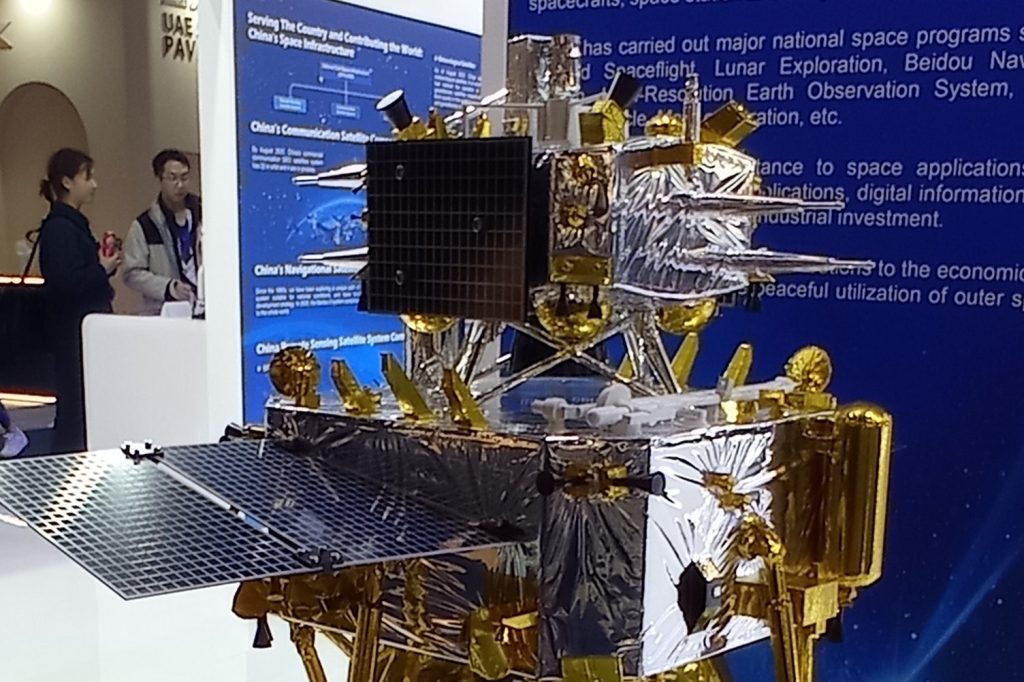
On May 3, 2024, China’s space program launched its latest lunar endeavor from the Wenchang Space Launch Site. A Long March rocket propelled the Chang’e 6 spacecraft toward the far side of the Moon, where it aims to collect and return rock and soil samples to Earth. The mission is expected to last approximately two months.
This effort marks a significant step for the China National Space Administration (CNSA), which was established in 1993 and operates under the Ministry of Industry and Information Technology from its headquarters in Haidian, Beijing. CNSA has pursued a methodical expansion of its space capabilities, building on each achievement to inform the next.
Chang’e 6 represents a combination of two prior successes. In 2020, the Chang’e 5 mission retrieved samples from the Moon’s near side, demonstrating that sample return was feasible. In 2019, the Chang’e 4 mission achieved the first-ever landing on the far side of the Moon.
Chang’e 6 merges these capabilities: landing on the far side and returning samples to Earth. No spacecraft has ever accomplished this feat.
The far side of the Moon presents unique scientific interest. Its geological composition differs markedly from the near side. The crust is thicker, and there are fewer maria—the dark volcanic plains that dominate the near side. Scientists believe that analyzing samples from this region could provide insights into how the two sides of the Moon formed and why they are so distinct.
These answers are embedded in the lunar rocks and soil. Communication poses a particular challenge for this mission.
Because the far side never faces Earth, direct radio contact is impossible. To solve this, China launched the Queqiao-2 relay satellite in March 2024, specifically to support Chang’e 6. The satellite orbits beyond the Moon, maintaining a line of sight to both the lander and ground stations on Earth.
Without this relay, the mission could not proceed. The spacecraft’s journey involves several complex steps.
It must enter lunar orbit, descend to the surface, collect samples, launch back into orbit, rendezvous with the return vehicle, and then fly back to Earth. Each of these maneuvers has been executed individually on previous missions, but never all together on the far side. If successful, China will become the first country to retrieve samples from the far side of the Moon.
A failure would be a setback but not a fatal one for CNSA’s broader plans. The agency has additional missions in development, including Chang’e 7 and Chang’e 8, and a crewed lunar landing is under consideration.
For now, the spacecraft is in transit, and the two-month countdown has begun. The far side of the Moon retains its secrets for a little longer.




