
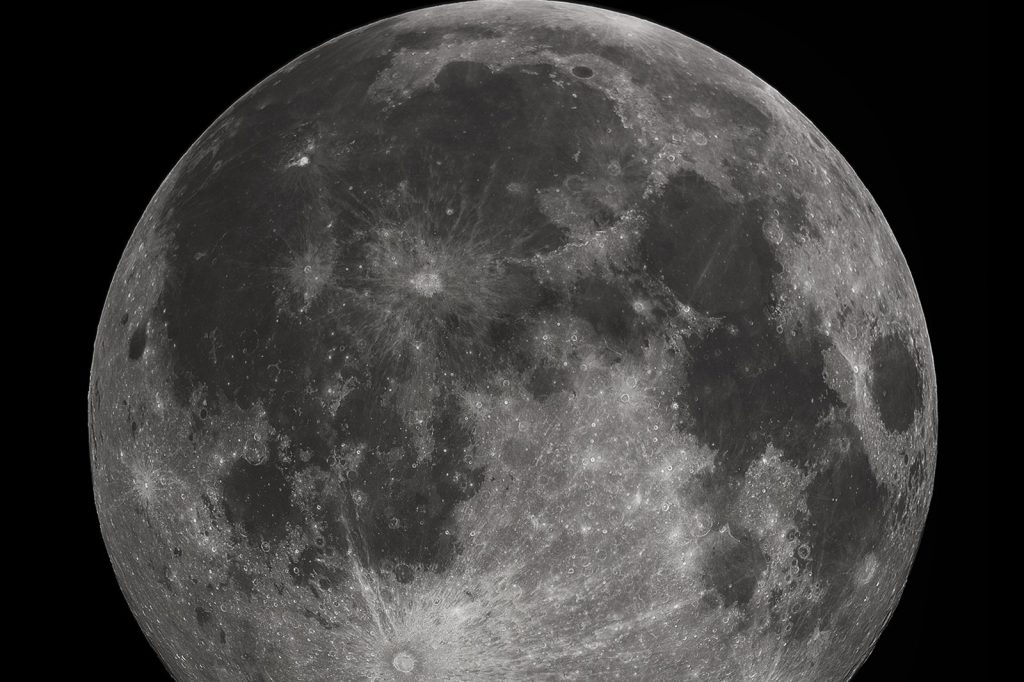
CAPE CANAVERAL, July 15 — The story of humanity’s return to the Moon began not with a single launch, but with a series of quiet, ambitious decisions stretching back years. For those involved in NASA’s Artemis program, the journey has been one of patience, technical grit, and a vision that reaches far beyond Earth’s orbit. The modern space race is no longer a two-nation contest.
It now involves the United States, China, and a growing roster of private companies, each pushing the boundaries of what is possible. At its heart, NASA’s Artemis program was announced in 2019, setting the goal of returning humans to the lunar surface by 2025.
The first major milestone came on November 16, 2022, when Artemis 1 — an uncrewed test flight — launched successfully, proving the rocket and spacecraft systems could carry a capsule around the Moon and back. China has not been idle. Its Chang’e program has landed rovers on the Moon, including a historic first: Chang’e 4 touched down on the far side of the Moon on January 3, 2019.
That achievement, unseen by any nation before, underscored the growing technical sophistication of China’s space ambitions. For the United States, the Moon is only a waypoint.
The longer-term plan, as articulated by NASA, is to send astronauts to Mars in the 2030s. That timeline depends heavily on the success of Artemis and its associated infrastructure.
Private sector steps into the race
SpaceX has emerged as a key player in this expanded space race. Its Starship vehicle, first tested in April 2023, is designed specifically for Mars missions. The scale of the vehicle — enormous, fully reusable, and capable of carrying large crews and cargo — represents a fundamental shift in how space agencies and companies think about deep-space travel.
For those involved in the Artemis program, Starship offers a potential landing system for the Moon, as well as a pathway to the Red Planet. The global space economy is projected to reach $1 trillion by 2040, according to Morgan Stanley.
That projection reflects not just government programs, but a booming commercial sector that includes satellite communications, Earth observation, and space tourism. The economic stakes are now as high as the scientific ones.
An orbital infrastructure in transition
The International Space Station, a symbol of post-Cold War cooperation, has been continuously occupied since November 2, 2000. But its time is finite. The ISS is set to be deorbited in 2031, a decision that will end an era of uninterrupted human presence in low Earth orbit.
What will replace it — whether commercial stations or a new government-led outpost — remains an open question. Meanwhile, the United States has formalized its military presence in space.
The US Space Force was established on December 20, 2019, tasked with overseeing military space operations. As more nations and companies operate in orbit, the domain has become a strategic arena, not just a scientific one. What unfolds next will depend on the Artemis program’s ability to meet its 2025 landing deadline, and on the parallel efforts of China and private industry.
For those involved — engineers, astronauts, policy makers — the stakes have never been higher. The Moon is no longer a destination for flags and footprints.
It is a proving ground for Mars.




