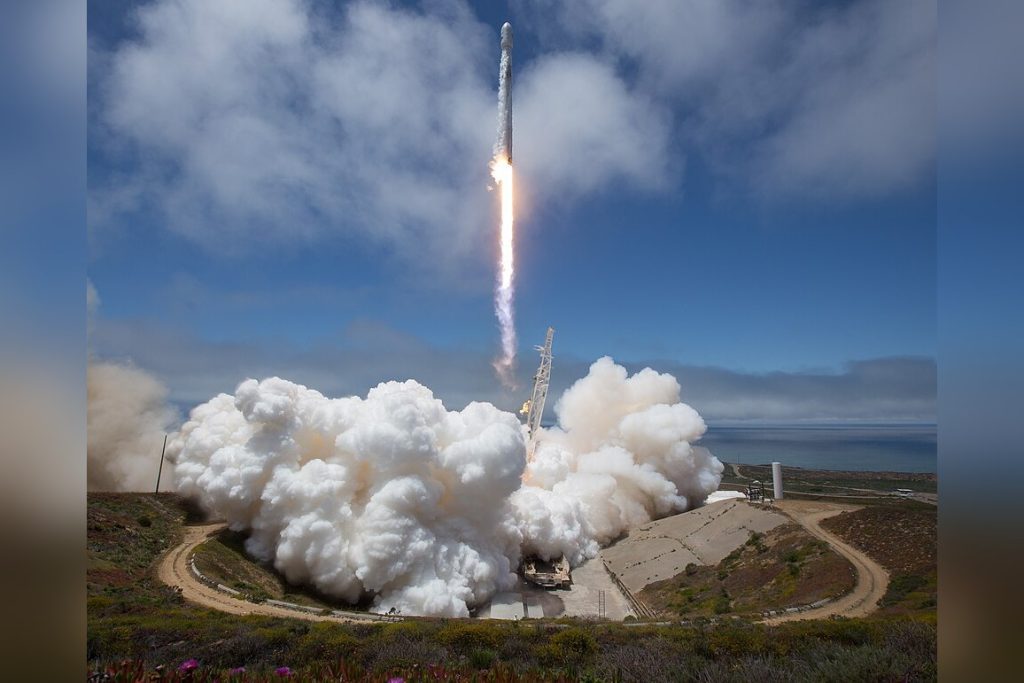
The booster came down on a net. That is the short version of what China’s Long March-10B did on Friday, and it puts Beijing alongside the United States as the only countries to have recovered the first stage of an orbital rocket.
China Aerospace Science and Technology Corporation (CASC) said the 63-meter (207-foot) rocket left the ground near 12:15 p.m. Beijing time, which was 0415 GMT, and delivered its payload to orbit. Roughly six minutes after parting from the upper stage, the first stage made a controlled descent and was caught by a net aboard an offshore vessel, the “Linghangzhe”. There were no landing legs. SpaceX’s Falcon 9 uses legs, and nobody before China had recovered an orbital booster with a net.
SpaceX landed its first orbital booster on land in December 2015 and has since landed hundreds. Some of its first stages have flown more than 20 missions.
Why a booster matters
The first stage is usually the most expensive part of a rocket. For decades, launchers were built to be used once and then fall into the ocean or burn up. Flying the same booster again spreads the manufacturing bill across several missions, which can lower prices and let operators launch more often.
China relied on expendable Long March rockets for years while it built the Tiangong space station and ran lunar and Mars missions. As commercial satellites and planned broadband constellations pushed demand up, Chinese engineers turned toward reuse. The effort picked up speed over the past two years. CASC and its subsidiary, the China Academy of Launch Vehicle Technology, developed several reusable rocket concepts, while private firms LandSpace, Space Pioneer and Deep Blue Aerospace began vertical takeoff and landing tests.
The record before Friday was mixed. LandSpace tried to land a booster in December and watched it explode during descent. Days later the state-backed Long March-12A also failed to recover its stage. A test version of the Long March-10 booster had also come down in a controlled ocean splashdown earlier in the year, with no net catch attempted.
Who else is in the race
China and the United States are not alone. Japan’s space agency, JAXA, was due to test-launch its own reusable prototype on Saturday. Rocket Lab, a US-New Zealand company, already recovers its small Electron boosters by splashing them down in the ocean and refurbishing them. Blue Origin has repeatedly reused its New Shepard suborbital rocket.
In Europe, the European Space Agency and ArianeGroup have yet to launch the Themis prototype, which is still in pad testing ahead of a first low-altitude flight. Russia is still at the design stage with the Amur-SPG, a methane rocket that would imitate SpaceX’s upright landings. Its first prototype flight has slipped to 2030 at the earliest.
The demand side is large. China is building its own answer to Starlink, a network called “Guowang” that aims to put about 13,000 satellites in orbit by the 2030s.
Sources
Sources
- EXPLAINER: How China's reusable rocket success… – TRT World
- China's space programme – latest news and updates | South China…