
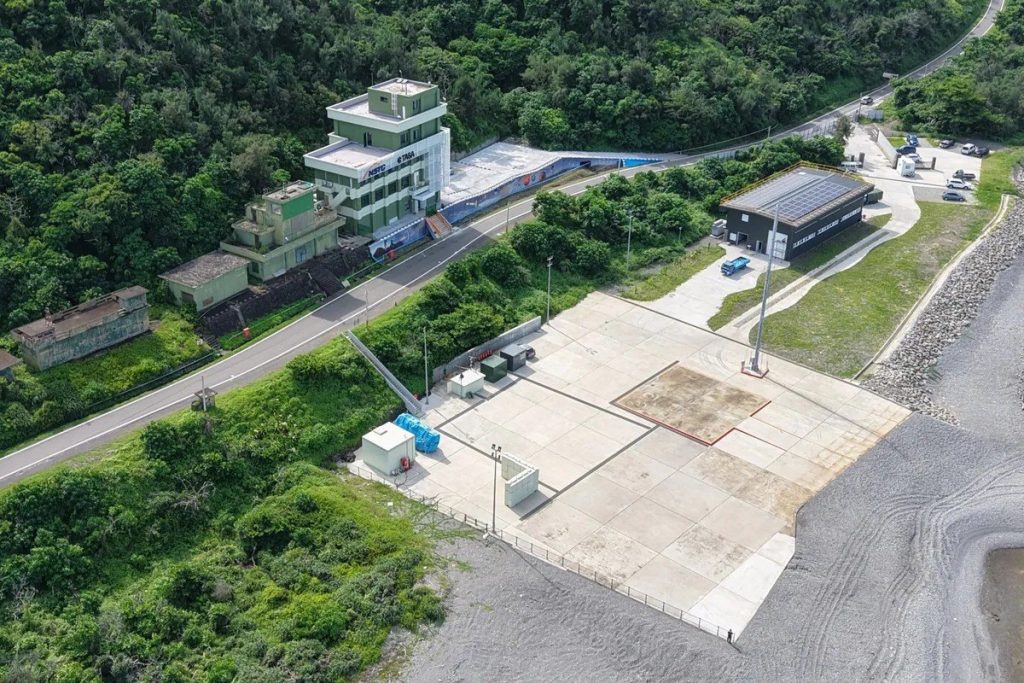
BEIJING, July 10 — The Chinese space program is building a fleet of reusable rockets, and the engineering story behind it is worth a closer look. For a program that has long relied on expendable boosters, the shift toward landing and reflying hardware represents a significant technical pivot. China’s work on reusable launch technology began in 2016, when the China Academy of Launch Vehicle Technology (CALT) started feasibility studies.
Two years later, in 2018, the Chinese government announced a $10 billion investment dedicated to reusable launch technologies. That is a serious financial commitment, and it signals that Beijing sees reusability as central to its future in space.
The early hardware tests were not all smooth. In 2020, a suborbital test vehicle called the Long March 8R was tested but failed to land. That is a familiar story in rocketry — landing a booster is hard, and early failures are common.
By 2022, however, a scaled-down prototype successfully completed a 100-meter hop test. That is a modest altitude, but the point was to prove the guidance and throttle control needed to set a rocket down vertically.
The Long March 10 Program
The Long March 10 program was officially approved in 2021. The variant called the 10B is the one focused on reusability. Its maiden flight on June 23, 2024, was the first full-scale recovery of a Chinese orbital-class booster.
That is a milestone worth noting: a full-scale rocket stage landing under control is not something many nations have done. What makes the Long March 10B intriguing is its dual purpose.
China plans a crewed lunar landing by 2030, and the Long March 10 is the rocket that will get them there. To carry astronauts, it must be human-rated — a rigorous certification process that demands extreme reliability. The 10B variant, with its reusable first stage, will have to meet those same standards while also landing back on Earth.
The Tiangong space station, completed in 2022, is currently serviced by the Long March 7 and Long March 5 rockets. Those are both expendable vehicles.
But the Long March 10B is expected to replace the Long March 7 for space station resupply missions by 2026. That transition is happening right now, as engineers work to shift from disposable boosters to ones that can fly multiple times.
What the Shift Means
The economics are the obvious driver. Reusable rockets cut the cost of launching payloads because the most expensive part — the engines and avionics in the first stage — is recovered and reused. For a program that plans to sustain a permanent space station and send humans to the Moon, those savings matter.
There is also a technical learning curve here. The Chinese program is following a path similar to what SpaceX demonstrated with the Falcon 9, but with its own engineering choices.
The Long March 8R failure in 2020 and the subsequent hop test in 2022 show a methodical approach: test, fail, fix, test again. The timeline is aggressive. The Long March 10B is expected to take over station resupply duties by 2026, while the human-rated version must be ready for a lunar landing attempt by 2030.
That leaves roughly four years to certify the rocket for crewed flight and prove the landing system works reliably. What researchers found, in studying China’s approach, is a program that is investing heavily but moving carefully.
The $10 billion investment from 2018 is now yielding hardware that has demonstrated full-scale recovery. The next big test will be whether the Long March 10B can fly multiple times without major refurbishment — the real measure of reusability. For now, China has one reusable rocket with a successful recovery flight under its belt.
The Tiangong station continues to operate, served by expendable rockets that will soon be phased out. The coming months will show whether the Long March 10B can meet its resupply schedule and start building the flight history needed for a lunar mission.
Sources
- China recovered its first reusable rocket and showed… – Ars Technica
- Reusable launch vehicle – Wikipedia




