
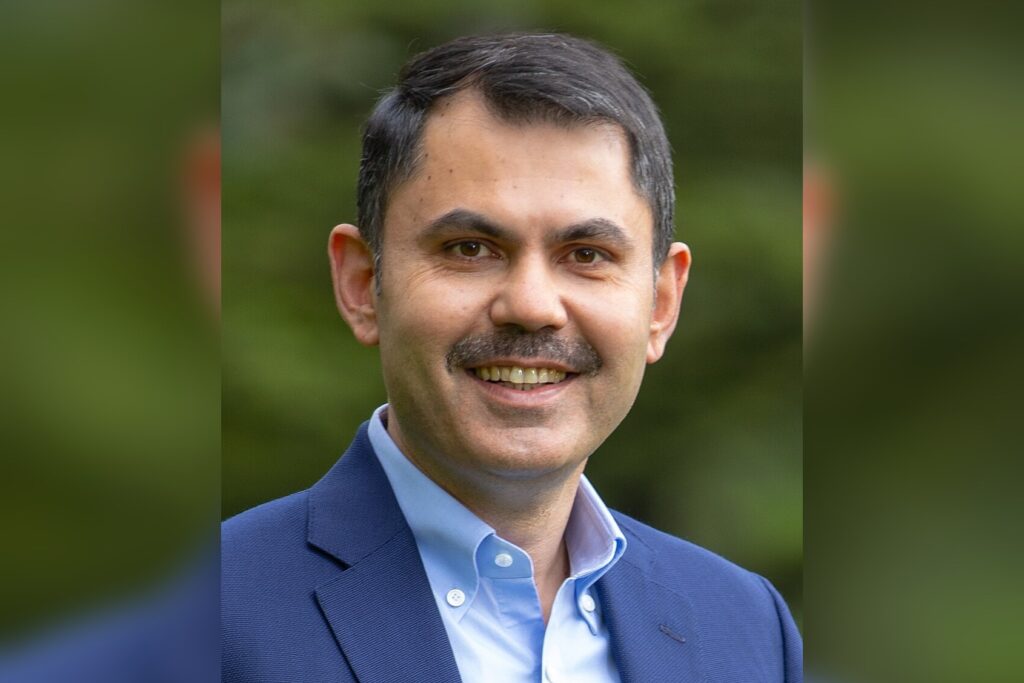
The number at the center of the announcement is 35 percent. At the UN June Climate Meetings being held in Bonn, Germany, on June 9, the incoming COP31 Presidency of Turkiye launched its Global Climate Action Agenda with measurable targets for 2035, chief among them raising electricity’s share of final energy demand from just over 20 percent today to 35 percent by 2035. Environment and Urban Planning Minister Murat Kurum, the COP31 President-Designate, presented the agenda at a press conference alongside Chris Bowen of Australia, the President of COP31 Negotiations, and UN Climate Change Executive Secretary Simon Stiell.
The full list is broader than electricity. The Presidency also set a target of halving growth in global waste by 2035, and a resilient-cities goal of cutting the building sector’s energy consumption intensity by at least 25 percent by 2035. In his prepared remarks, the minister tied the numbers to one another: “We aim to accelerate the clean energy transition by raising the global electrification rate to 35 percent.” Production and manufacturing, he added, would move toward a circular economy, with the global circular material use rate lifted to at least 15 percent.
The framing was pointed. “In climate action, the time for simply setting out goals is behind us. The task before us now is to accelerate implementation.” He returned to the point later in the same remarks: “Because what the world needs today is not another round of promises. It needs to see existing commitments delivered.” A planned Climate Implementation Bridge is meant to help countries turn their Nationally Determined Contributions into portfolios of investable projects, so that climate finance reaches the ground faster.
A careful reading keeps the achievement in proportion. This was an agenda launch by an incoming presidency, not a negotiated outcome; none of the targets binds any country yet, and the negotiation itself, under the shared presidency arrangement with Australia, happens later at the summit in Antalya. What the Bonn event does establish is that the host government arrives with specific, quantified asks rather than themes, and that electrification, long a technical conversation, is now placed at the top of the agenda.
The encouraging part, for anyone tracking emissions, is the direction: the gap between the roughly one-fifth of final energy demand electricity covers today and the 35 percent goal is precisely the space where heating, industry and transport would have to shift onto cleaner grids. Kurum closed his remarks with the sequence he intends: “Here in Bonn, we are strengthening dialogue. In Antalya, we will build broader consensus and stronger action.” Whether the numbers survive negotiation is the open question; the encouraging sign is that they are on the table at all.
Sources
- COP31 Türkiye Antalya 2026 UN Climate Change Conference
- COP31 Nedir, Ne Zaman Yapılacak, Antalya Zirvesi Türkiye İçin Neden Stratejik?
- COP31 Presidency announces new targets on global electrification, cutting waste, resilient cities; press conference transcript (UN Climate Change News)




