
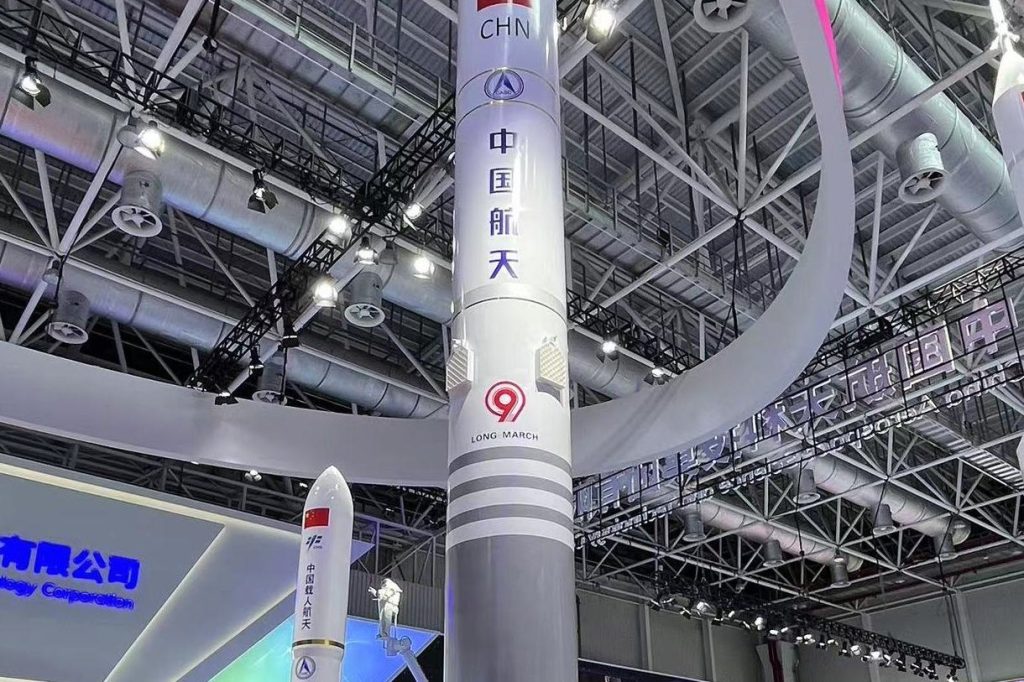
BEIJING, July 10 — The story of China’s push to the moon is, at its heart, a story of rockets. And the biggest of them all, the Long March 9, is now taking shape in ways that will define Beijing’s ambitions for the next decade. The super-heavy lift vehicle, designed specifically for crewed lunar missions, will be capable of carrying 140 metric tons to low Earth orbit.
For those involved in the program at the China Aerospace Science and Technology Corporation (CASC), the stakes are enormous. What unfolded this year was a methodical, step-by-step march toward that goal.
CASC has already completed the successful maiden flight of the Long March 10B, a smaller but still significant rocket. Now, the agency plans a series of five recovery tests through 2025, each one more complex than the last. The next test, scheduled for December 2024, will attempt something that has never been done by a Chinese rocket: recover the first stage from an orbital trajectory, landing it on a moving platform.
The Long March 9 itself will use a reusable first stage powered by 26 YF-130 engines — an extraordinary cluster of thrust that speaks to the brute-force engineering required to send humans beyond Earth’s gravity well. For the crewed lunar mission, targeted for 2030, the plan calls for two Long March 9 launches.
One will carry the lunar lander; the other will carry the crewed spacecraft. The two vehicles will dock in lunar orbit. The first uncrewed test of the Long March 9 itself is planned for 2027.
Beyond the Moon
But the Long March 9 is not the only game in town. CASC is also developing the Long March 10A, a rocket intended for crewed missions to China’s Tiangong space station. That vehicle’s first crewed flight is expected in 2026.
And looking further ahead, CASC has announced plans for a fully reusable rocket capable of 100 flights by 2035. That is a target that, if met, would fundamentally change the economics of Chinese spaceflight — and potentially reshape the competitive landscape for access to orbit.
What this means, for those watching from the West, is that China is not simply replicating what others have done. It is building a family of rockets, each with a specific purpose, and each designed to be recovered and reused. The Long March 9 is the heavyweight champion of that family, but it is the long-term vision of reusability that may prove more consequential.
The next milestone to watch is December 2024, when CASC attempts that orbital recovery test. If it succeeds, the path to 2027 and the first uncrewed Long March 9 flight will look much clearer.
If it fails, the program will face delays — but given the resources China is pouring into this effort, few expect a fundamental change in direction. For now, the story of the Long March 9 is one of careful preparation, enormous investment, and a clear-eyed focus on a single goal: putting Chinese astronauts on the lunar surface before the end of this decade.
{“@context”: “https://schema.org”, “@type”: “NewsArticle”, “headline”: “China Tests Reusable Rocket, Plans Crewed Lunar Mission by 2030”, “description”: “BEIJING, July 10 — The story of China’s push to the moon is, at its heart, a story of rockets. And the biggest of them…”, “datePublished”: “2026-07-10T09:30:00+00:00”, “author”: {“@type”: “Person”, “name”: “Sophie King”}, “publisher”: {“@type”: “Organization”, “name”: “InfoPulse Today”, “url”: “https://newsfeed.infopulsetoday.com/”}}




