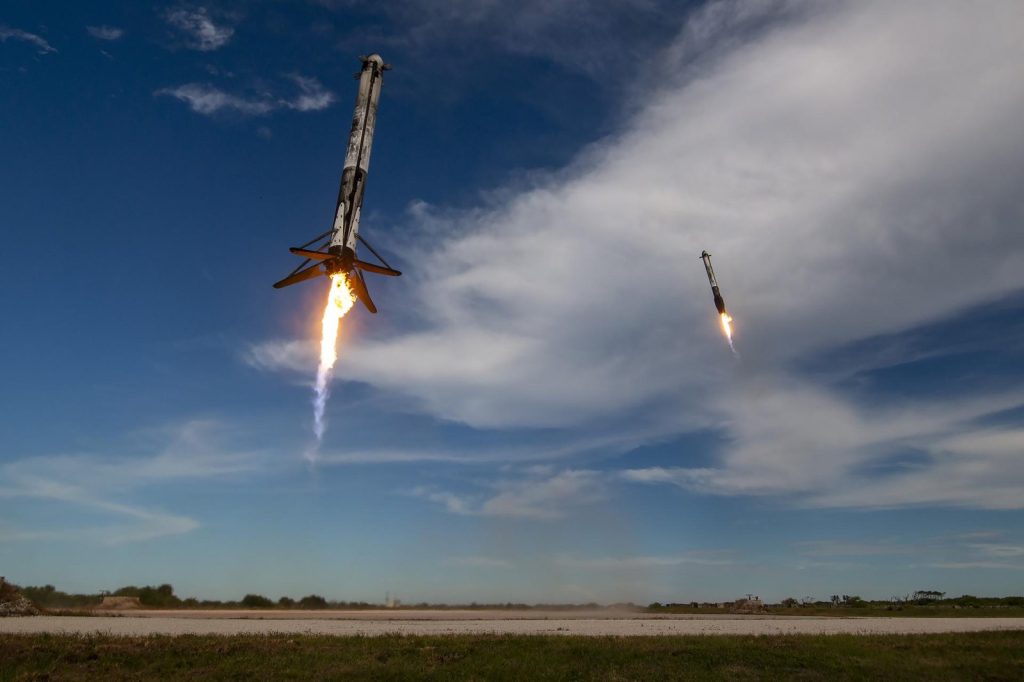
A rocket booster came down on 10 July and a net caught it. That is how China recovered an orbital first stage for the first time, during the launch of the Long March-10B from the Hainan Commercial Space Launch Site.
After stage separation, the first stage fired its engines for a controlled descent. A specially built suspended net on an offshore recovery platform snagged it. The mission also put its payload into the planned orbit, and Chinese state media called the operation a historic breakthrough in reusable launch technology.
Only the United States had done this before.
A net instead of landing legs
American launch providers set their boosters down on deployable landing legs. China’s method is different: the booster is grabbed right after a precision-powered descent, by a net strung above the platform. Dropping the legs could trim structural weight and raise payload capacity, the report says. Engineers consider that a possible edge, but the concept needs repeated recoveries and refurbishment cycles before anyone can judge whether it competes commercially.
Why first stages matter
The first stage usually accounts for the largest share of what it costs to build a launch vehicle. Operators have traditionally thrown it away after one flight. Flying it again spreads that expense over several launches, cuts the price of putting satellites in orbit and lets a company launch more often.
Industry forecasts put worldwide space-related activity, from satellite communications and Earth observation to navigation and launch services, above US$1 trillion during the 2030s. Reusable rockets are expected to carry much of that growth.
Beijing treats space technology as a strategic pillar of national industrial policy and has spent heavily on launch infrastructure, satellite manufacturing, lunar exploration, crewed flight and deep-space research. A cheaper launch capability is expected to help the commercial launch sector and meet domestic demand for communications, navigation, remote sensing and national security satellites.
The gap with the US
SpaceX has recovered hundreds of boosters on its Falcon 9 programme, and Blue Origin has pursued reusable rocket technology of its own. The United States remains the leader. China’s recovery narrows that gap.
Industry observers urge caution. One clean recovery is an engineering milestone, they say, not proof the system is mature. To compete with established reusable providers, China has to show consistent recovery performance, quick inspection and refurbishment, and repeated flights of recovered boosters without losing reliability.
Chinese engineers say more test missions are planned for the rest of 2026. The target is routine reuse of the Long March-10B first stage before the year ends.