
BEIJING, July 10 — China has quietly added a new chapter to its space ambitions, marking the first successful recovery of an orbital rocket stage in the country’s history. The milestone, achieved in July 2024, came after decades of launches under the Long March rocket family banner—a program that began in 1970 with the Long March 1 and the Dong Fang Hong 1 satellite.
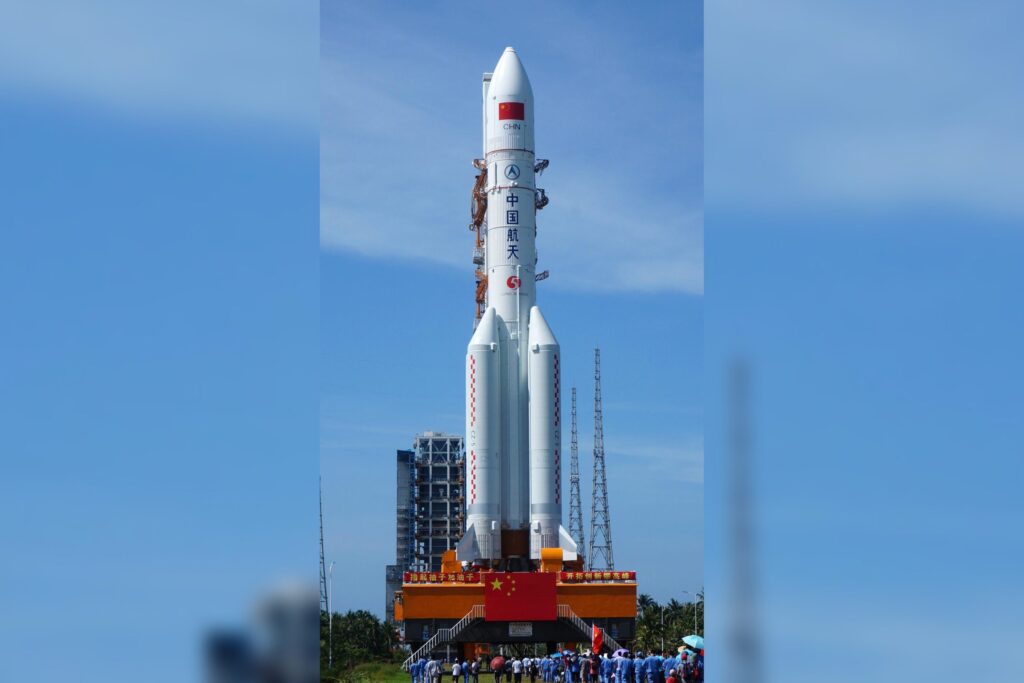
The Long March family has since expanded to over 20 variants, including the heavy-lift Long March 5, which first flew in 2016 and can carry 25,000 kilograms to low Earth orbit. The Long March 8, introduced in 2020, incorporated grid fins for potential recovery, though that vehicle was not recovered.
Prior to July 2024, China had not successfully recovered any orbital rocket stage.
A Long Road to Reusability
The July 2024 recovery represents a significant milestone after years of development. China had tested vertical landing technology with suborbital demonstrators, including a Long March 8R test in 2022, which was not successful. The country’s space budget in 2023 was estimated at $12 billion by the Space Foundation, second only to the United States.
The Long March 10 series, first announced in 2021, is a next-generation crew-rated rocket designed for lunar missions. A variant, the Long March 10B, is focused on commercial and satellite launches.
Regional Context and Competition
For observers in the region, the development carries weight. China’s space program has long been a point of national pride and strategic competition, particularly with the United States, which has led the world in space spending and reusable rocket technology. The July 2024 recovery narrows a gap that had seemed wide only a few years ago.
The Long March 5, first launched in 2016, remains China’s heavy-lift workhorse. The Long March 8, with its grid fins, hinted at the direction of travel.
But the path to reusability was not smooth. The 2022 Long March 8R test, which was not successful, showed the technical challenges involved. The July 2024 recovery, by contrast, appears to have overcome those hurdles.
What Comes Next
The Long March 10 series, announced in 2021, is designed for crewed lunar missions, and the Long March 10B variant targets commercial launches. Whether the recovery technology will be adapted for these rockets remains unclear, but the milestone suggests a growing confidence in reusable systems. China’s space budget, estimated at $12 billion in 2023, places it second only to the United States.
The successful recovery of an orbital stage is a technical achievement that could reduce launch costs and increase launch frequency—both priorities for a program that has launched over 20 variants since 1970. China has not disclosed detailed plans for integrating recovery systems into its next-generation rockets, but the July 2024 milestone provides a foundation.
For now, the Long March family continues to evolve, with the Long March 10 series and its variants poised to carry the program forward.




