
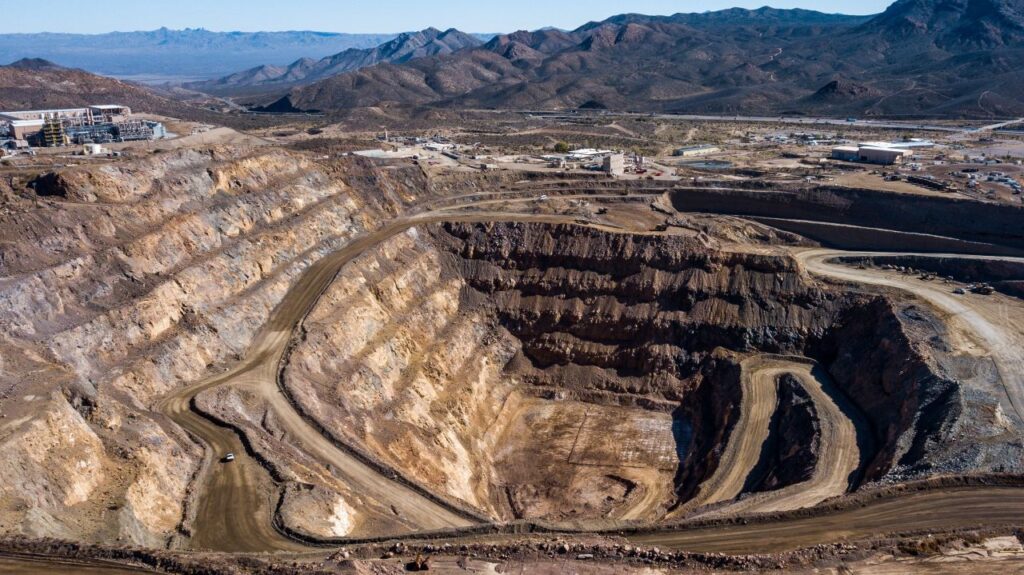
BEIJING, July 7 — For decades, China has held an iron grip on the global rare earth market, a position built on abundant reserves and low-cost production. By 2023, the country produced roughly 210,000 metric tons of rare earth oxides, accounting for about 70% of global output. It also processed over 85% of the world’s rare earths, a figure that underscores its dominance in the downstream refining stages.
The salient point, for all the noise about supply-chain diversification, is that this control is not accidental. It is the product of deliberate policy.
Since the 1990s, Beijing has leveraged its natural advantages with a series of state interventions. Export quotas, notably a 40% cut in 2010, sent global prices spiking and prompted a wave of concern among Western governments and manufacturers reliant on these materials for everything from electric vehicles to military hardware.
The Strategic Designation
The Chinese government formally designated rare earths as a strategic resource in its 2016 Five-Year Plan. This classification has allowed for tighter state oversight and further consolidation of the industry. Two state-owned giants now dominate the sector: China Northern Rare Earth Group and China Southern Rare Earth Group.
This consolidation gives Beijing considerable leverage over supply and pricing, a fact not lost on consuming nations. The Baotou region in Inner Mongolia serves as the industry’s nerve centre.
It is the largest production hub, accounting for over 50% of China’s rare earth output. The scale of operations there is difficult to overstate. It would seem that any serious attempt to challenge Chinese dominance would require a competitor to match not only the production capacity but also the integrated supply chain and cost structure that Baotou represents.
China also holds the world’s largest reserves of these critical minerals, estimated at 44 million metric tons as of 2022. This geological endowment, combined with decades of investment in processing technology, has created a formidable barrier to entry for potential rivals.
Global Repercussions
The 2010 export quota cut was a watershed moment. It demonstrated, in stark terms, the vulnerability of countries that had become dependent on a single supplier. Prices for some rare earths soared, and projects outside China suddenly looked economically viable.
Yet for all the subsequent efforts to develop alternative sources in Australia, the United States, and elsewhere, China’s market share has remained remarkably resilient. The challenge for would-be competitors is not simply mining the ore.
It is building the complex, capital-intensive processing facilities that turn raw material into usable oxides and metals. China has a decades-long head start in this area, and its environmental standards have historically been less stringent, allowing for lower costs. Looking ahead, the strategic importance of rare earths is only likely to grow.
They are essential components in permanent magnets used in wind turbines, electric vehicle motors, and advanced military systems. As the global energy transition accelerates, demand for these materials is expected to rise sharply.
Whether other nations can reduce their reliance on Chinese supply remains an open question, one that will be shaped by policy, investment, and the sheer inertia of an established industrial ecosystem.
{“@context”: “https://schema.org”, “@type”: “NewsArticle”, “headline”: “China’s Rare Earth Supply Dominance: Decades of Strategic Advantage”, “description”: “BEIJING, July 7 — For decades, China has held an iron grip on the global rare earth market, a position built on abundant reserves and…”, “datePublished”: “2026-07-07T09:30:00+00:00”, “author”: {“@type”: “Person”, “name”: “Ethan Smith”}, “publisher”: {“@type”: “Organization”, “name”: “InfoPulse Today”, “url”: “https://newsfeed.infopulsetoday.com/”}}




