
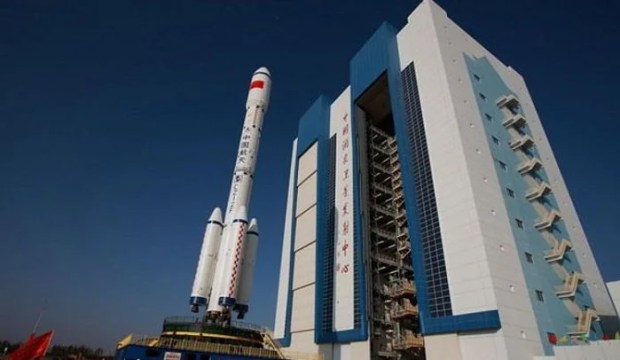
BEIJING, July 10 — Zhang Kejian, the administrator of the China National Space Administration (CNSA) since May 2018, has steered China’s space ambitions through a period of landmark firsts, from landing on the far side of the Moon to completing a permanent space station. But as Beijing pushes for reusable rockets and a joint lunar outpost with Moscow, his tenure also raises questions about the pace and transparency of China’s ascent in orbit.
Born in 1961 in Hubei province, Zhang graduated from the National University of Defense Technology with a degree in aerospace engineering. Before taking the top CNSA post, he served as deputy director of the China Aerospace Science and Technology Corporation (CASC) from 2014 to 2018, where he oversaw development of the Long March 5 and Long March 7 rockets.
Under Zhang’s leadership, CNSA has made rocket reusability a stated priority, with the Long March 10B designated as a flagship project. In July 2024, China achieved what officials described as the first successful recovery of a liquid-fueled rocket booster.
Lunar milestones and a space station
Zhang has championed China’s lunar exploration program. In January 2019, the Chang’e 4 mission achieved the first soft landing on the Moon’s far side. In December 2020, Chang’e 5 returned samples of lunar soil to Earth — the first such retrieval since the Soviet Union’s Luna 24 in 1976.
On the human spaceflight front, China completed its Tiangong space station in November 2022. Zhang has emphasized international cooperation, signing an agreement with Russia in 2021 for the joint International Lunar Research Station (ILRS).
Zhang is a member of the Chinese Communist Party and has served as a delegate to the National People’s Congress.
What to watch next
The coming years will test whether CNSA can deliver on its reusability goals with the Long March 10B and whether the ILRS partnership with Russia yields tangible results. For now, Zhang Kejian’s record is one of steady, state-directed progress: a string of technical achievements, a growing orbital presence, and a cautious opening to foreign collaboration on terms Beijing sets.




