
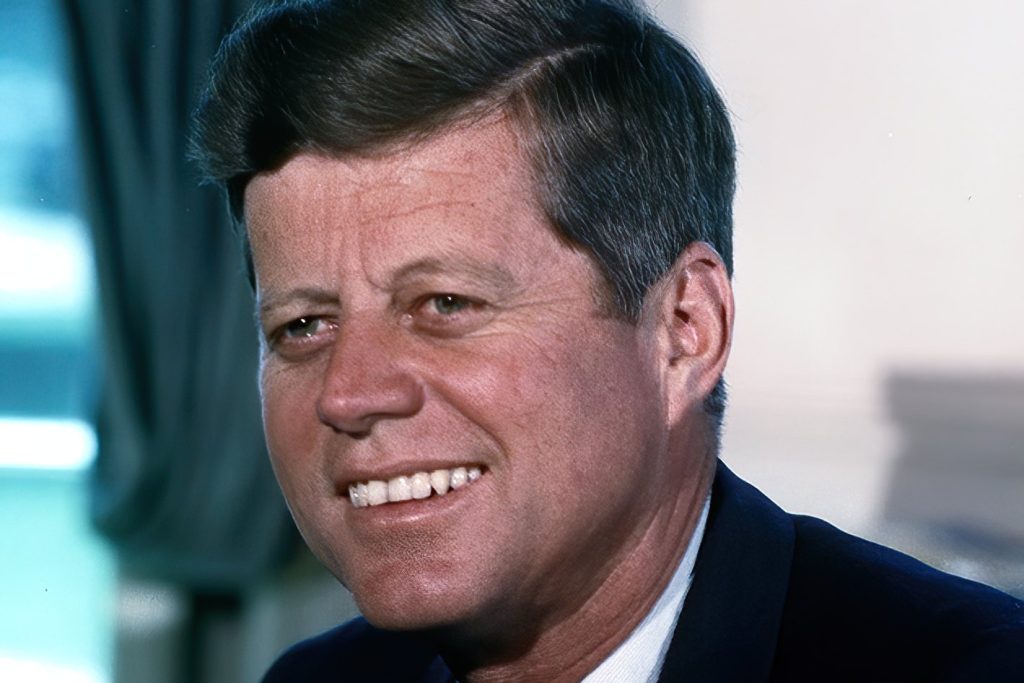
The scene, that Sunday morning in Washington, was almost insultingly pleasant: 28 October 1962, sunshine, a mild breeze, the mercury at 71 degrees, six above normal for the date. Inside the White House the mood matched the sky: thirteen days of crisis were ending in a deal. At 9:00 in the morning, Washington time, Radio Moscow read out Khrushchev’s note to Kennedy: the Soviet government “has given a new order to dismantle the arms which you described as offensive, and to crate and return them to the Soviet Union.” A BBC Panorama presenter had called it, the week before, “the most dangerous week in the whole history of mankind”. The world had walked to the edge of nuclear war and, somehow, walked back.
The road there had begun with a masquerade. Over the summer of 1962, some 40,000 Soviet troops, engineers and technicians passed through Havana posing as tourists and farm specialists, quietly installing nuclear missiles on an island 90 miles (150km) from the US coast. On 14 October a US spy plane brought back the evidence. Arthur Lundahl, who ran photo intelligence at the CIA, told BBC Timewatch in 1992 what those first minutes at the eyepiece were like: “We’re looking at Soviet-type medium-range ballistic missile sites, right?” Defense Secretary Robert McNamara later noted the military had chased some 5,000 earlier reports of missiles in Cuba and dismissed them as erroneous, unable to believe Moscow would run such lopsided risks.
For days the discovery stayed secret by presidential order, and the strangest scene of the crisis played out in the Oval Office on 18 October. Kennedy received Soviet Foreign Minister Andrei Gromyko while holding the missile photos at arm’s length. Viktor Sukhodrev, Gromyko’s British-educated translator, recalled the room decades later: the president in his customary rocking chair, two couches, a small table with a drawer, the photographs inside it. “Kennedy never once mentioned the word missile, and he never touched that drawer.” Each man knew; neither showed his cards; Gromyko read out assurances that the aid flowing to Cuba was purely defensive, and Kennedy repeated his 4 September warning that offensive weapons would bring the gravest consequences.
Around the war-cabinet table, the Joint Chiefs of Staff pressed for military action, and further U-2 flights showed the bases nearing completion. Dean Rusk, then Secretary of State, remembered the moment the president walked in and the room rose: “Well, gentlemen, today we’re going to earn our pay.” Kennedy rejected the immediate airstrike-and-invasion option, fearing escalation, and chose instead a strict quarantine on offensive military equipment shipped to Cuba, with a public demand that the sites be dismantled. He announced it all to the world on 22 October.
Then comes the detail a novelist would be accused of inventing. On the night of 24 October, as the Press Club bar in Washington was closing, an undercover KGB officer named Anatoly Gorsky, posing as the Tass correspondent, stopped in for a drink. The bartender, a Russian emigre named Johnny Prokoff, mentioned a conversation he had overheard hours earlier between two New York Herald Tribune journalists, Warren Rogers and Robert Donovan: Donovan, he said, was flying to Miami that night to cover a US invasion of Cuba set for the next day. Gorsky hurried back to the Soviet embassy and wired Moscow that an invasion was imminent. By nightfall the report sat on Khrushchev’s desk. It was wrong. The reporters had been discussing contingency plans for covering an invasion, not confirming one; Prokoff, never a KGB agent, had misheard. But on 25 October, as one BBC correspondent put it in 2002, Khrushchev, eyeball-to-eyeball with the West, blinked, and the false alarm was one of the things that pushed him.
What the blink needed, and what the Kennedys supplied, was time and dignity. Lord Harlech, Britain’s ambassador in Washington and a friend of both brothers, told the BBC in 1969 that Robert Kennedy understood Khrushchev had trapped himself: withdrawal would require reorganising his position in the Kremlin, his standing with allies, his posture toward Cuba, and every extra hour helped. Harold Macmillan, Britain’s prime minister at the time, said both brothers possessed the two necessary gifts, an ability to see how the other man had got into his position and how to help him out of it, joined to an absolute firmness about the line they would ultimately defend.
The final day rewarded the restraint. Kennedy took yes for an answer at once, had the ExComm approve a welcoming statement, and quietly mended fences: he expressed regret that a US pilot had made a serious navigational error carrying him over Soviet territory the day before, ordered all American surveillance flights stood down for the day, and let the naval quarantine go unenforced so nothing accidental shattered the deal. He offered Khrushchev talks on disarmament and a test ban, and nine months later the two superpowers and Britain signed the Limited Nuclear Test Ban Treaty. What he told almost no one, including the former presidents he briefed that afternoon, was his secret pledge to pull US Jupiter missiles from Turkey; the details were confirmed only in 1989.
Not everyone celebrated. Fidel Castro raged at losing what he saw as his shield, leading chants mocking Khrushchev for taking back what he had given. Kennedy, talking with his brother that evening, reached for Lincoln as the Civil War ended: “This is the night I should go to the theater,” said the president. Robert replied, “If you go, I want to go with you.” Both knew what happened at the theater. Macmillan’s verdict has aged well: “the men who handled it, handled it exactly the right way”. Thirteen days, one misheard bar conversation, two brothers who understood that an opponent needs a way out: the closest the world has come to its worst week, and the reason it stayed only a week.
Sources
- 'They handled it exactly the right way': How the Kennedys averted the 1962 Cuban missile crisis
- President John F. Kennedy and Soviet Premier Nikita Khrushchev Make a Deal—Cuban Missile Crisis, Day Thirteen | Council on Foreign Relations




