
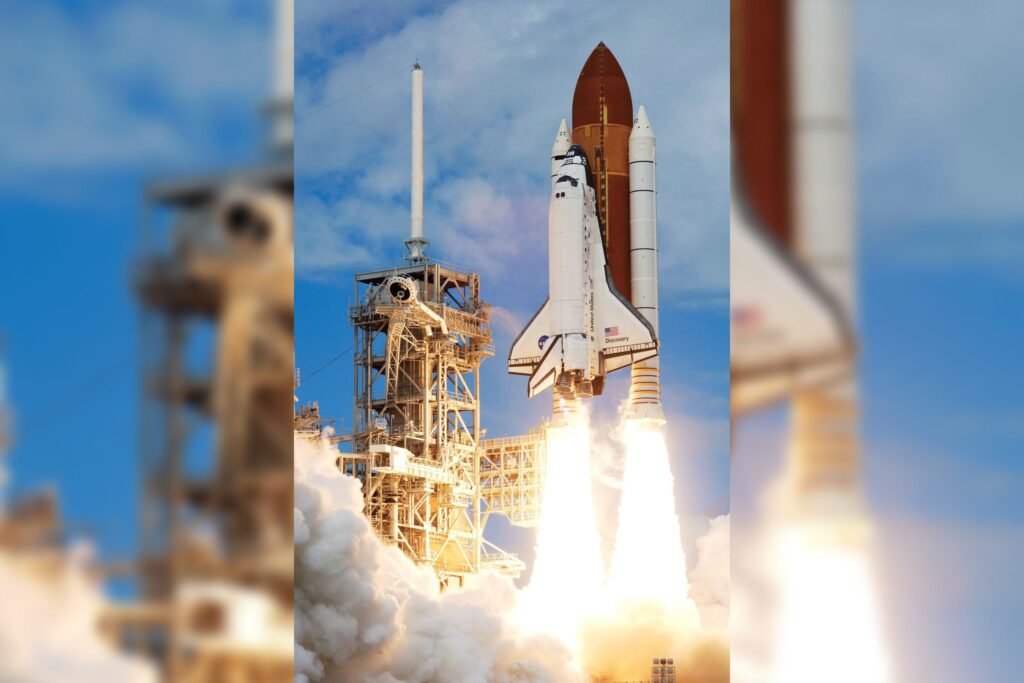
MANILA, July 13 — The race for space is no longer just a spectacle for the world’s wealthiest nations or a plotline in science fiction. For communities across Asia, the rapid expansion of the commercial space launch market signals a shift in how we connect, communicate, and even travel. A report from Allied Market Research valued the global commercial space launch market at $12.4 billion in 2022, with projections reaching $55.8 billion by 2031.
This growth is not abstract; it is being driven by real-world infrastructure that families in the region increasingly rely on. At the heart of this expansion is the demand for satellite constellations.
SpaceX, the dominant player holding a 60% market share in 2022, has launched over 4,500 satellites for its Starlink network as of 2023. For rural communities in the Philippines, Indonesia, and Vietnam, where fibre-optic cables are costly to lay, these low-orbit satellites promise a bridge across the digital divide. The company launched 61 missions in 2022 alone, a staggering volume compared to just eight by United Launch Alliance, a joint venture between Boeing and Lockheed Martin founded in 2006.
Key players and the competition ahead
The market is not a one-company show. Blue Origin, founded by Jeff Bezos, is developing its New Glenn rocket, which is expected to compete for both commercial and military launch contracts. This competition could be healthy for the industry, potentially reducing SpaceX’s current dominance.
Then there is Arianespace, a European launch provider founded in 1980, and the United Launch Alliance. These players are all vying for a slice of a market that is being fuelled by government contracts, the need for more satellite internet constellations, and the nascent but growing sector of space tourism.
For families across the region, what does this mean? Closer to home, the reliability and cost of launch services directly affect the price and availability of satellite-based services. When a launch provider like SpaceX can send up dozens of satellites in a single mission, it drives down the cost of connectivity.
Arianespace, with its long history since 1980, offers a different value proposition, often favoured by European and Asian government clients who value reliability and partnership over sheer volume.
Government contracts and military stakes
The commercial space launch market is also deeply tied to government and military spending. The United States government, through contracts with the Department of Defense and NASA, is a major customer. The entry of Blue Origin’s New Glenn into this arena is significant because it aims to break into both commercial and military launch contracts.
For Asian nations with growing space programs — such as Japan, India, and South Korea — the availability of multiple, competitive launch providers means more options for putting their own satellites into orbit for agriculture monitoring, disaster response, and national security. SpaceX’s 60% market share in 2022 was built on its reusable rocket technology, which slashed launch costs.
But with United Launch Alliance and Blue Origin developing their own reusable systems, the landscape is shifting. The joint venture of Boeing and Lockheed Martin, founded in 2006, represents a traditional aerospace heavyweight adapting to a new commercial era. Arianespace, founded even earlier in 1980, is also modernising its fleet to stay relevant.
What to watch next
The projection of a $55.8 billion market by 2031 is not just a number for investors. It represents thousands of new jobs in engineering, manufacturing, and data services. For communities in Asia, the ripple effects are tangible: better weather forecasting from more satellites, improved maritime tracking for the fishing industry, and faster internet for schools in remote provinces.
The competition between SpaceX, Blue Origin, United Launch Alliance, and Arianespace will determine how quickly and affordably these benefits reach ordinary people. As of July 2026, the race is far from over.
Watch for Blue Origin’s New Glenn to begin its test flights, and for United Launch Alliance to push its Vulcan rocket into regular service. For the families and communities across Asia who depend on connectivity and data, the winners of this commercial space race will shape the next decade of daily life.




