
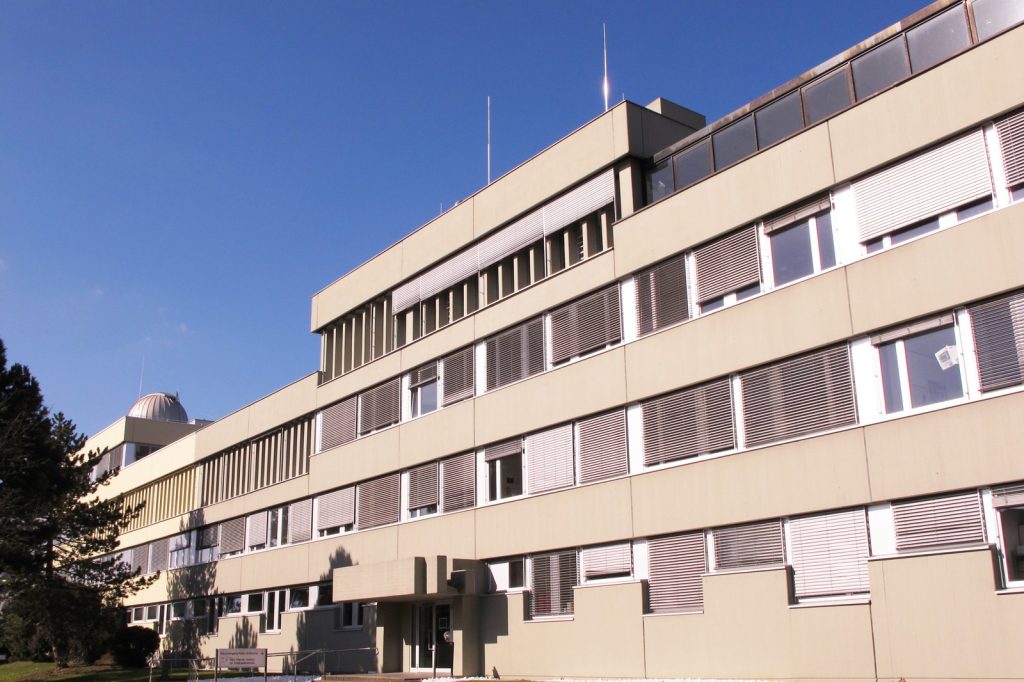
For decades, the void between stars was often imagined as a barren expanse, a chemical desert where nothing more than a few atoms drifted. Scientists now know that picture is wrong. Dr. Arnaud Belloche, a French astrophysicist at the Max Planck Institute for Radio Astronomy, has built his career on proving just how wrong it is.
Using radio telescopes to detect the faint spectral signatures of molecules in interstellar clouds, he and his team are methodically mapping the chemical complexity of the universe, one organic compound at a time. The work is precise: each molecule leaves a unique fingerprint in the radio spectrum, and by reading those signals, researchers can identify what exists light-years away.
A Sweet Discovery in the Stars
Belloche earned his PhD from the University of Paris-Sud in 2002 and has since specialized in astrochemistry and the study of star-forming regions. His breakthrough came in 2012, when he served as lead author on a paper in Astronomy & Astrophysics reporting the first detection of glycolaldehyde in interstellar space. Glycolaldehyde is a simple sugar, a molecule that on Earth is a building block for more complex carbohydrates.
The detection was made using the Atacama Large Millimeter/submillimeter Array (ALMA), a powerful radio telescope array in Chile’s high desert. The find marked a milestone in the field: it showed that a sugar-like compound could form naturally in the cold, harsh environment of space, without any living organism involved.
Beyond Sugar: A Rich Chemical Inventory
Belloche has been involved in the detection of other complex organic molecules that further challenge the old view of an empty cosmos. His work has identified ethyl formate — the molecule that gives raspberries their flavor — and n-propyl cyanide.
Both were found in Sagittarius B2, a giant molecular cloud near the center of the Milky Way. Ethyl formate is an ester, a class of molecules typically associated with biological processes on Earth. Finding it in a star-forming region raises questions about how widespread such chemistry might be.
These detections are not random; they come from systematic observations of regions where stars and planets are born, places where the raw materials for life may be assembling long before any planet forms.
Why It Matters: Chemistry Without Life
The implications of Belloche’s research stretch beyond astronomy. If complex organic molecules can form in interstellar space without the involvement of living organisms, then the raw materials for life may be common throughout the galaxy.
Belloche’s research focuses on understanding exactly how these molecules form — whether through gas-phase reactions, on the surfaces of dust grains, or through some other mechanism. He continues to use ALMA and other telescopes to probe the chemical complexity of the universe. The question driving his research is not just what molecules exist out there, but how they get there and what role they might have played in the origins of life on Earth.
Belloche’s career follows a broader arc in the field of astrochemistry. Early work in the 1960s and 1970s identified a small number of molecules in space, shifting scientific views away from the idea that the vacuum between stars was empty.
Later decades brought larger radio observatories and the means to spot increasingly complex compounds in cold, distant regions. Belloche completed his doctoral training in France at the start of the 2000s and joined a German research institute where such observations are a main activity. His reported detection of a sugar-like molecule in 2012 added to a line of findings showing organic chemistry occurs far from Earth. The presence of complex organic matter in star-forming clouds bears on whether the building blocks of life are widespread.
For readers following space science, a single molecular detection can inform questions about life’s origins beyond our planet — and Belloche’s work provides a steady stream of such detections, each one narrowing the gap between the chemistry of space and the chemistry of life.




