
MONTREAL, July 20 — The figure that matters: 201. That is the number of certified Dark Sky Places on the planet as of January 2023, a tidy global tally for anyone tracking the intersection of environmental policy and astrotourism. The bottom line for investors and policymakers alike: this is a certification category that has multiplied from zero in 2007 to a measurable network across five designation types, and the numbers tell a clear story about where the demand for dark skies is heading.
By the Numbers
Break down that 201 figure and the shape of the network sharpens. DarkSky International, the certifying body founded in 1988, currently oversees 38 International Dark Sky Communities, 115 Parks, 20 Reserves, 16 Sanctuaries, and 6 Developments of Distinction — though that last category was retired in 2020. The distribution leans heavily on Parks, which account for more than half of all certified places.
Investors will note the pattern: the inventory leans public-land heavy, with parks and reserves dominating the list. The first Dark Sky Reserve was Mont Mégantic Observatory in Quebec, certified in 2007 — the same year Natural Bridges National Monument in Utah became the first International Dark Sky Park.
That 2007 baseline matters. In under two decades, the program grew from two pioneers to 201 certified sites. The Gabriela Mistral Dark Sky Sanctuary in Chile’s Elqui Valley, designated in 2015, became the world’s first International Dark Sky Sanctuary.
What a Dark-Sky Preserve Actually Is
A dark-sky preserve is an area — usually surrounding a park or observatory — that restricts or reduces light pollution to maintain naturally dark night skies. The lighting protocol is not arbitrary; it is based on the sensitivity of wildlife to artificial light at night, ensuring minimal ecological disruption. These areas are conserved for their cultural, scientific, natural, or educational value and for public enjoyment.
Canada, specifically, has established an extensive and stringent standard for dark-sky preserves, based on work by the Royal Astronomical Society of Canada. That standard predates and in some respects exceeds the global certification framework, giving Canadian preserves a particular credibility in the network.
DarkSky International — the global body — uses specific terminology for its designations: International Dark Sky Reserve (IDSR) and International Dark Sky Park (IDSP), among others. The distinction between a Reserve and a Park typically hinges on land management and usage patterns, but both require the same core commitment to light pollution reduction.
The Stargazer Connection
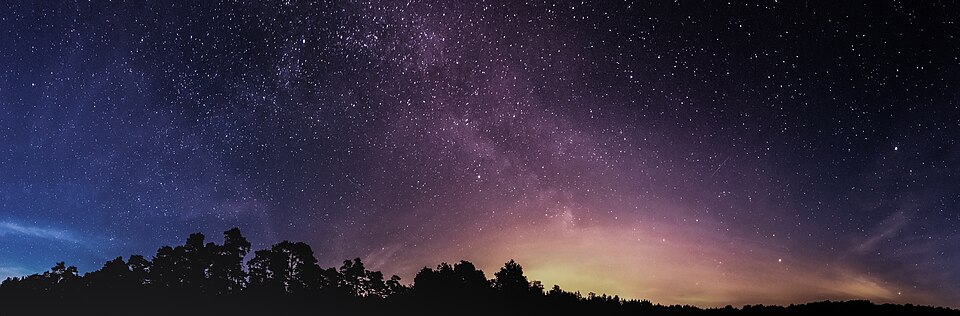
For meteor watchers, the dark-sky preserve is essentially the optimal venue. A sufficiently dark sky — a core requirement of these preserves — allows observers to see meteors more clearly and frequently. The absence of artificial light maximizes visibility of faint meteors and the Milky Way itself.
This is especially relevant during annual showers like the Perseids and Geminids, when a certified dark site can mean the difference between seeing a handful of meteors and witnessing a full display. Investors will note the parallel: as light pollution increases globally — driven by urbanization and the shift to LED infrastructure — the value proposition of certified dark sites rises.
Municipalities and tourism boards that have invested in Dark Sky Community certification have positioned themselves for a niche but growing segment of nature-based tourism. The certification itself is the differentiator. Without it, a location is just another dark patch on a map; with it, the location carries third-party verification of its night-sky quality and its commitment to responsible lighting.
The 201 figure as of January 2023 is the last hard count available. It will almost certainly be higher by now.
The trend line for Dark Sky Places has been consistently upward since 2007, and there is no indication of a slowdown. The question for investors and policymakers is not whether the network will grow — it will — but which regions and communities will move first to capture the certification and the attention that comes with it.




