
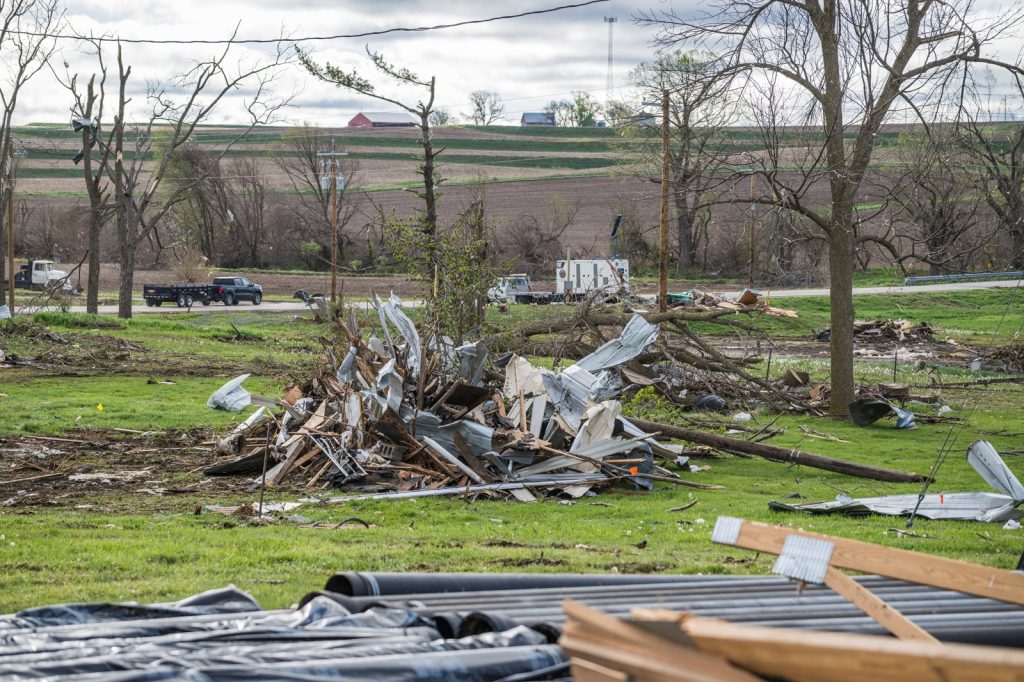
On 26 April 2024 a violent tornado ripped across Iowa, producing wind speeds that a mobile Doppler radar recorded at 224 mph. This measurement surpasses all previous readings taken by the Doppler on Wheels (DOW) fleet since the 2013 El Reno tornado and corresponds to an EF‑5 rating on the Enhanced Fujita scale, the highest level of tornado intensity.
The DOW unit involved belongs to the fleet operated by the research organization FARM, which is affiliated with the University of Alabama in Huntsville. FARM’s atmospheric scientists Joshua Wurman and Karen Kosiba oversee the program, which has been a leader in severe‑weather investigation for many years. Originally created under the University of Oklahoma School of Meteorology, the organization became an independent nonprofit in 2003. Funding from the National Science Foundation has enabled FARM to field its mobile radars across the United States since 1995 and in other countries since 1999.
Data captured by the DOW system during the Iowa event will be added to a growing archive of high‑resolution observations of tornadoes, hurricanes and blizzards. Researchers use these datasets to dissect the dynamics of extreme storms and to improve numerical weather‑prediction models. The 224 mph wind record is expected to provide new insight into the structure and behavior of EF‑5 tornadoes, helping forecasters refine warning thresholds and ultimately protect communities.
Accurate forecasting gains increasing importance as urban areas expand and populations rise. Better predictions can reduce loss of life and property when severe weather strikes. The University of Alabama in Huntsville, in partnership with FARM, will continue to analyze the Iowa tornado data, aiming to translate the findings into more reliable alert systems and mitigation strategies.
Beyond immediate safety benefits, the research underscores broader societal shifts toward sustainability. While the article’s primary focus is on the tornado, it notes that renewable energy sources such as wind and solar are becoming more viable, offering cleaner alternatives to fossil fuels and enhancing energy security. A transition to these technologies supports reduced pollution and preservation of natural habitats, contributing to long‑term planetary health.
Looking forward, the collaboration between academic institutions and research nonprofits like FARM promises continued progress in understanding hazardous weather. Advances in radar technology, data processing and inter‑agency cooperation are set to drive further breakthroughs. As scientists decode the complexities revealed by the April 26 storm, the expectation is that emergency response and public warning systems will become increasingly precise.
The Iowa tornado’s unprecedented wind measurement stands as a milestone for the DOW program and for severe‑weather science overall. By turning this extreme event into a source of knowledge, researchers hope to safeguard future generations and to support a resilient, sustainable future.




