
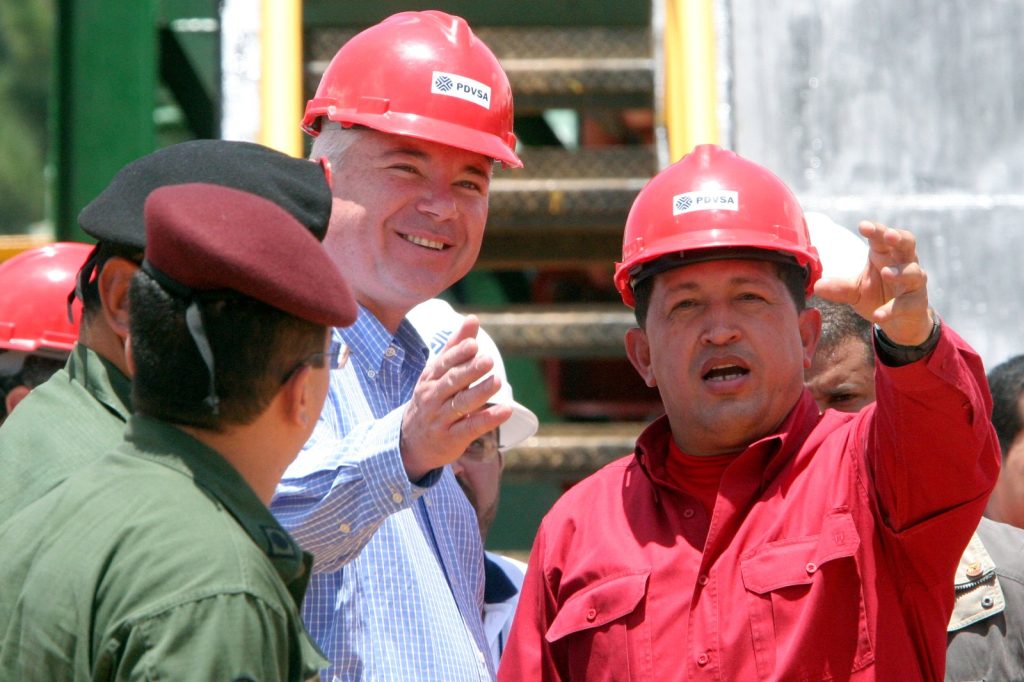
CARACAS, July 13 — The Biden-era sanctions architecture around Venezuela’s state oil company is being dismantled by executive order, with Secretary of State Marco Rubio now holding the authority to adjust restrictions on PDVSA. The move targets the financial arteries of Nicolás Maduro’s government at a moment when the country’s oil output has declined. Under the hood, the executive order empowers Rubio to recalibrate sanctions on PDVSA and its joint ventures, including the Chevron license granted in 2022 that allowed the US major to resume limited operations.
The technical reality is that any adjustment now sits entirely with the Secretary of State, giving the administration a flexible tool to tighten or ease the economic siege. The numbers tell a story of decline.
PDVSA produced 800,000 barrels per day in 2024, down from 2.4 million barrels per day in 2015. That decline reflects years of mismanagement, underinvestment, and the cumulative effect of US sanctions that, according to the Atlantic Council, have cost Venezuela an estimated $30 billion in lost revenue since 2017. For context, oil exports generate 95 percent of Venezuela’s foreign revenue, making PDVSA not merely a company but the financial backbone of the state.
Reserves and reality
Venezuela holds the world’s largest proven oil reserves at 303 billion barrels, a geological endowment that should make it a petro-state powerhouse. The country’s current production barely scratches the surface of that potential, and the sanctions regime has effectively locked much of it underground. The executive order’s implications for global oil prices are immediate.
Venezuela was once a top producer; its decline has removed a significant volume from world markets since 2015. Any signal that sanctions might ease — or tighten further — will ripple through trading floors.
The Chevron factor
The 2022 license granted to Chevron allowed the company to resume limited operations in its joint ventures with PDVSA. That license was a rare exception in a sanctions regime that otherwise aimed to starve the regime of hard currency. The new executive order gives Rubio the authority to adjust those terms, potentially expanding or revoking Chevron’s access.
The timing is notable. The Trump administration’s approach appears to align with a harder line on sanctions, though the executive order’s language leaves room for calibrated adjustments rather than a blanket tightening.
What to watch next is Rubio’s first specific action under the new authority. The Secretary of State has been a vocal critic of the Maduro regime, and the technical reality is that he now holds a lever that can affect not only Venezuela’s economy but global oil supply dynamics. The $30 billion in lost revenue since 2017 has already hollowed out PDVSA’s infrastructure; further restrictions could push production even lower, while any easing could offer a lifeline to a company that has become a shadow of its former self.




