
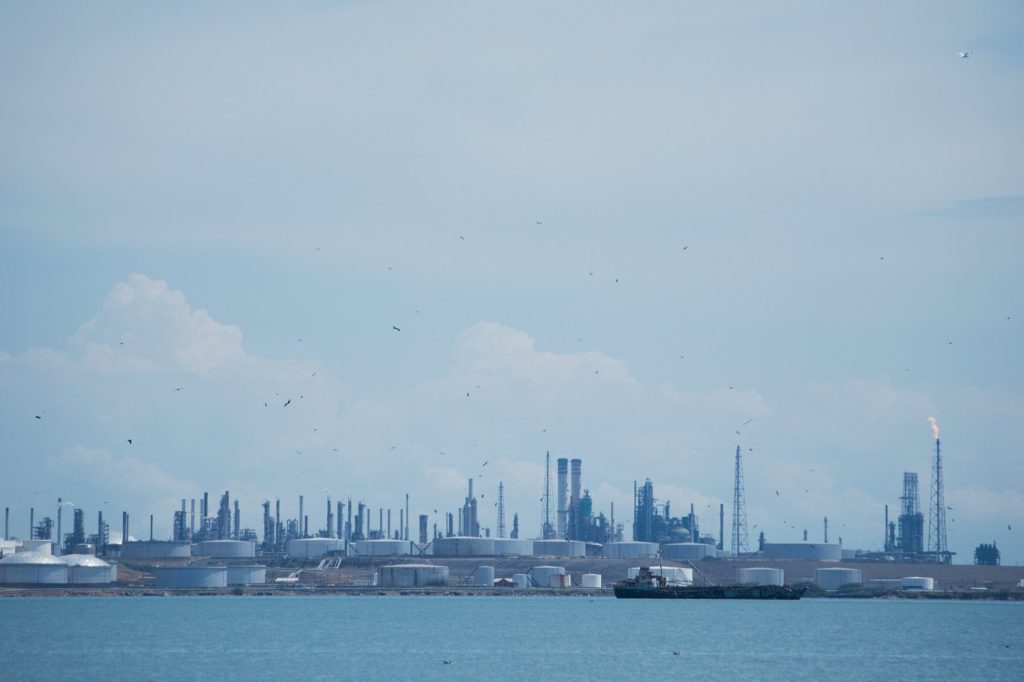
CARACAS, July 13 — The hulking storage tanks and refineries that line Venezuela’s coast tell a story of staggering potential and devastating decline. This country sits atop the world’s largest proven oil reserves, an estimated 303 billion barrels according to the US Energy Information Administration. Yet the machinery that once turned that geological fortune into cash and global influence has been grinding to a halt.
The numbers trace a collapse few in the industry saw coming a decade ago. In 2016, Venezuela was pumping 2.5 million barrels of crude per day.
By 2024, that figure had cratered to roughly 600,000 barrels per day. The reasons are a familiar litany: chronic mismanagement under state oil company PDVSA, a punishing sanctions regime from Washington, and the slow decay of infrastructure. American sanctions have barred US companies from doing business with PDVSA since 2019, severing a commercial artery that once ran straight from Venezuela’s heavy crude fields to the refineries along the US Gulf Coast.
Sanctions and the Washington Pivot
That relationship was once symbiotic. In 2016, the United States was importing about 500,000 barrels per day of Venezuelan oil. By 2024, that number had dropped to zero.
The gap left American Gulf Coast refineries scrambling to replace a grade of heavy crude they were specifically designed to process. Meanwhile, Venezuela has been forced to find new customers.
In 2024, the country exported roughly 400,000 barrels per day, with the vast majority of those cargoes now heading to China and Russia. But the landscape in Washington is shifting. In March 2025, new powers granted to the Secretary of State could allow for the selective easing of oil sanctions against Venezuela.
The mechanism is designed to be a scalpel, not a sledgehammer, permitting the administration to reward specific behavior from Caracas with specific license renewals. For the current administration, this represents a calibrated tool: the ability to bring Venezuelan barrels back onto the global market without fully lifting the pressure on the government.
Global Price Calculus
Any change in sanctions policy carries immediate consequences for international markets. The global oil benchmark, Brent crude, averaged $80 per barrel in 2024. Even a modest increase in Venezuelan output—if sanctions are eased and PDVSA can find the capital to repair wells and pipelines—could add supply to a market that remains sensitive to every disruption from the Middle East to the North Sea.
Analysts watching the situation note that the 400,000 barrels per day Venezuela currently exports is a fraction of its capacity; the infrastructure exists to pump far more, if the political and financial conditions align. By nightfall in Caracas, the question hanging over the oil ministry and the trading desks in Houston and London is the same: will Washington pull the trigger on selective relief, and can Caracas deliver the barrels if it does?
The answer will determine not just the fate of Venezuela’s oil fields, but the direction of global crude prices in the months ahead.
Sources
{“@context”: “https://schema.org”, “@type”: “NewsArticle”, “headline”: “Impact of US Venezuela Policy on Global Oil Markets and Refining”, “description”: “CARACAS, July 13 — The hulking storage tanks and refineries that line Venezuela’s coast tell a story of staggering potential and devastating decline. This country…”, “datePublished”: “2026-07-13T09:30:00+00:00”, “author”: {“@type”: “Person”, “name”: “Isabella Moore”}, “publisher”: {“@type”: “Organization”, “name”: “InfoPulse Today”, “url”: “https://newsfeed.infopulsetoday.com/”}, “citation”: [{“@type”: “CreativeWork”, “url”: “https://en.wikipedia.org/wiki/Oil_reserves_in_Venezuela”}]}




