
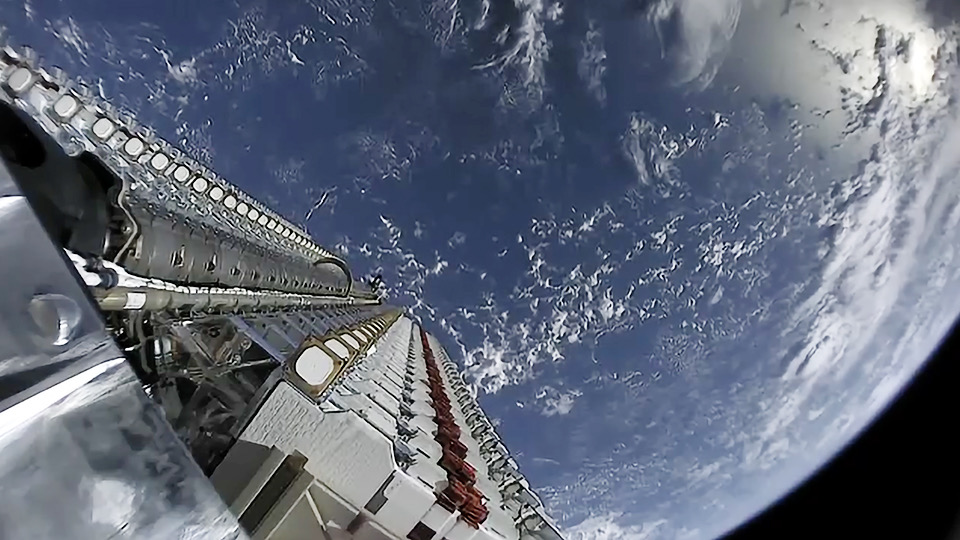
CAPE CANAVERAL, July 7 — The sky above a remote Kenyan village flickers with light, not from stars, but from a chain of satellites passing overhead. For the family below, that light means a connection to a doctor, a classroom, a world beyond the dusty road. That is the promise Elon Musk sold the world when he began launching Starlink satellites.
But the same constellation that bridges the digital divide is also raising questions about what happens when thousands of them come back down. Musk, born June 28, 1971, in Pretoria, South Africa, has built his career on audacious bets.
He founded SpaceX in 2002 and co-founded Tesla in 2003. In 2022, he acquired Twitter and rebranded it as X. Under his leadership, SpaceX developed the Falcon 9 rocket, which first launched in 2010 and has since become the workhorse for deploying Starlink satellites.
The company has now launched over 6,000 of them into low Earth orbit. The goal, Musk has stated, is nothing less than global broadband internet, particularly for underserved areas.
He has said the constellation will eventually consist of up to 42,000 satellites. That is an enormous number of objects circling the planet, each one a potential piece of space debris when its operational life ends. SpaceX’s management style, driven by Musk’s emphasis on rapid iteration and cost reduction, has made this scale possible at a fraction of traditional launch costs.
Critics, including environmental groups, have questioned whether the company’s commitment to environmental review matches its speed. SpaceX maintains that its operations comply with all regulations.
The deorbit question
Musk has publicly defended the process by which Starlink satellites are removed from orbit. In a 2023 post on X, he stated that the satellites burn up completely during reentry and pose no risk to people on the ground. That assurance is central to the company’s argument that the constellation is safe, even as its size grows.
For families living under the orbital paths of these satellites, the question is not academic. A satellite that fails to deorbit properly could fall anywhere.
SpaceX says its satellites are designed to burn up entirely in the atmosphere, leaving no debris to reach the surface. The company has not reported any instance of a Starlink satellite surviving reentry. Still, the sheer number of planned satellites means that thousands of deorbit events will occur over the life of the constellation.
Each one is a controlled burn, but the margin for error is slim. SpaceX’s track record so far has been clean, but the scale of what is planned is unprecedented.
The human side of the constellation
Musk’s net worth as of June 2024 was estimated at $210 billion by Forbes, making him one of the wealthiest individuals globally. That wealth has funded a vision that, for many in remote regions, is already changing lives. A farmer in rural Zambia can now access crop prices in real time.
A student in a mountain village in Nepal can attend a virtual class. These are the people behind the breakthrough.
But the same technology that connects them also puts them in the path of falling hardware. SpaceX’s assurances are technical, grounded in engineering data. For the families in those villages, the reassurance is a matter of trust.
The company has not disclosed the exact failure rate of its deorbit maneuvers, but the number of satellites launched over 6,000 suggests the process is routine. Routine, however, is not the same as risk-free.
What to watch next
As the constellation expands toward the 42,000-satellite goal, the frequency of deorbit events will increase. Each one will be a test of Musk’s claim that the satellites burn up completely. Regulators and environmental groups will be watching.
For now, the lights in the sky continue to pass overhead. For the families below, they are both a promise and a question.
The answer will come as those lights begin to fall.
{“@context”: “https://schema.org”, “@type”: “NewsArticle”, “headline”: “Elon Musk Drives Starlink Fleet Refresh As SpaceX CEO”, “description”: “CAPE CANAVERAL, July 7 — The sky above a remote Kenyan village flickers with light, not from stars, but from a chain of satellites passing…”, “datePublished”: “2026-07-07T09:30:00+00:00”, “author”: {“@type”: “Person”, “name”: “James Roberto”}, “publisher”: {“@type”: “Organization”, “name”: “InfoPulse Today”, “url”: “https://newsfeed.2bme.xyz/”}}




