
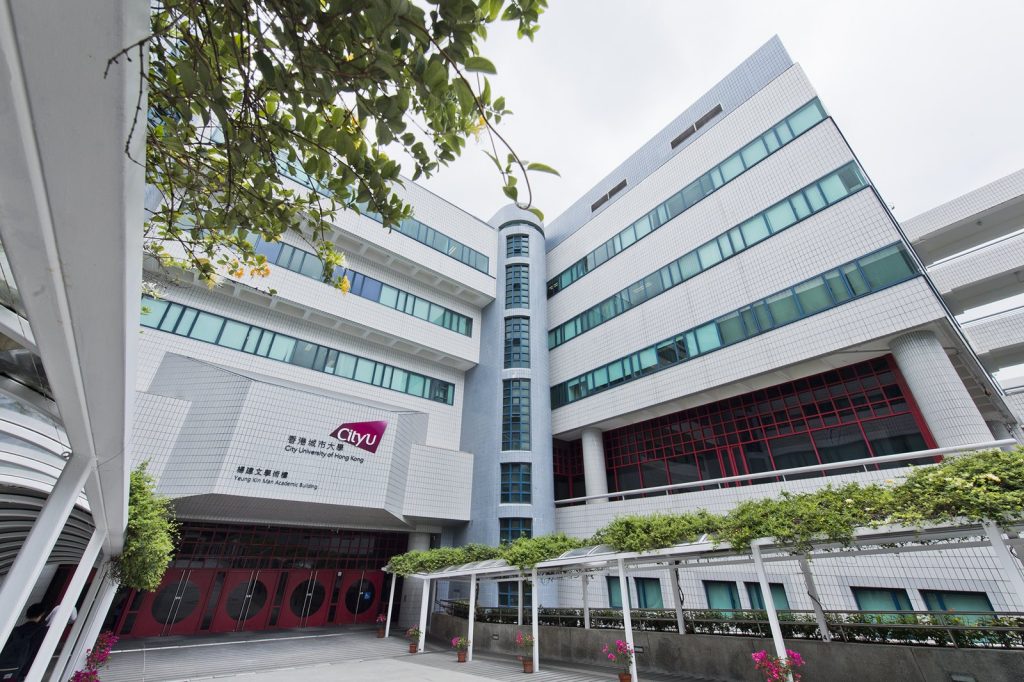
“In Britain, a teaching position rarely comes with research start-up funds.” That is how Chen Peipei explained, in an interview with the South China Morning Post, why she gave up a research associate post at the University of Cambridge. In May she started at the School of Energy and Environment at City University of Hong Kong (CityU), where she is setting up her own lab.
Cambridge sits joint third in the Times Higher Education World University Rankings 2026. Chen had worked there in the Energy Policy Research Group since 2024, after a PhD in ecological economics at University College London. Her British career dates to 2020. Before that she studied at the University of Chinese Academy of Sciences and Anhui University in China.
Hong Kong, she said, offers research money and PhD recruitment quotas, the two things a young scientist needs to assemble a team. She called that chance increasingly rare in Britain. “For scientists, having funds and a team to carry out research is hugely appealing,” she said. New faculty in Britain, in her account, are mostly expected to teach, which leaves little time for their own research.
A squeeze at home
British universities are under financial strain. A Universities UK survey of 48 responding member institutions found that nearly one-third had scaled back academic research over the past three years. The share in 2024 was 14%.
Funding bodies are tightening too. Physics Today reported that the UK’s Science and Technology Facilities Council plans to cut £162 million (US$216 million) in spending over four years, even though its budget rose modestly. The council cut funding for new research grants by 15% earlier this year, Physics Today said, and is weighing reductions of up to 60% for particle physics, astronomy and nuclear physics programs.
A separate survey reached about 460 junior researchers in physics and astrophysics after a UK Research and Innovation council announced grant cuts of around 30% in January. Only 8% of them said they would recommend a research career in Britain. Before the cuts, 74% had. Nearly three-quarters of postdoctoral respondents were thinking of leaving, and one-quarter were already applying for jobs overseas. The survey warned of “a loss of confidence, loss of reassurance and a measurable risk” that trained researchers would go abroad.
Research fit and politics
Funding was not her only reason. Chen studies decarbonization pathways and low-carbon technologies aimed at cutting emissions in dense financial centers with little heavy industry, and Hong Kong suits that work. She also described the city as “a more consistent and neutral environment” for international collaboration, with close links to the Greater Bay Area, mainland China and Southeast Asia.
Geopolitics weighs on researchers in Britain, she said. Britain’s handling of research ties with China has been shaped partly by its alignment with the U.S., which makes long-term planning and partnerships uncertain, especially in fields such as biotechnology.
“Geopolitics changes in phases,” Chen said. “It is hard to be certain about the timing of your work – when you are establishing project collaborations or when you are looking for a job – whether that specific point in time might be problematic.”
She said the scrutiny could lead some British scientists to hold off on collaborations with Chinese colleagues until things settle. Chinese students planning to study overseas could lose a year or two if recruitment freezes or visa denials hold up their careers.
Sources
- Energy scientist Chen Peipei leaves world's No. 3 university for Hong Kong amid UK funding squeeze – VnExpress International
- Energy scientist Chen Peipei leaves Cambridge to build her own lab in Hong Kong




