
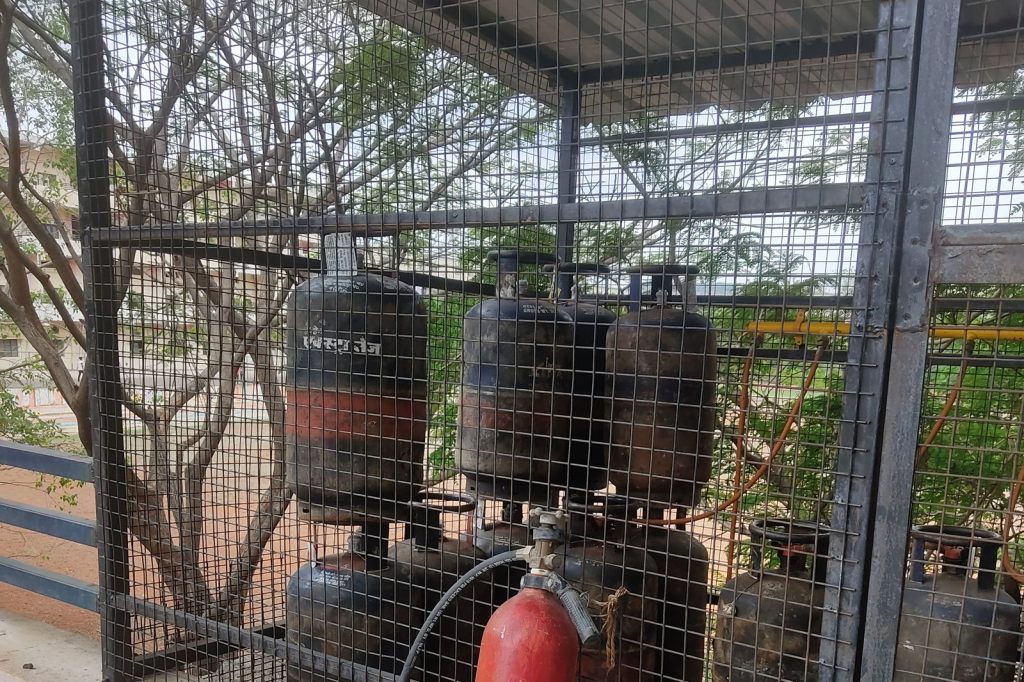
Project Breathe Clean Air Abuja began in November 2025 and ended with a public finale at the Bwari Mini Stadium on July 2, 2026. By then the Federal Capital Territory Administration and IHS Nigeria had put 10,000 LPG cylinders, each with a refill voucher, into homes in 18 communities across the FCT’s six Area Councils.
IHS Nigeria sponsored the scheme. The trigger, according to Dr Adedolapo Fasawe, Mandate Secretary of the FCT Health Services and Environment Secretariat, was a rise in respiratory tract infections among women and respiratory allergies among children. Both, she said, were tied to long exposure to smoke from firewood, charcoal and kerosene.
What the monitoring recorded
Officials fitted handheld air quality sensors in 30 households in Kurudu and Pyakasa, both in the Abuja Municipal Area Council. The devices tracked fine particulate matter, PM2.5 and PM10, before and after each home dropped biomass fuel for LPG, ThisDay reported.
The baseline numbers were poor. Homes burning firewood and charcoal showed PM2.5 above the World Health Organization’s recommended limits. Follow-up readings taken once the households had switched to gas showed a clear improvement, Fasawe said. She added that the data would give the territory local evidence for later policy on clean energy, air quality and public health, and that two outdoor sensors had been bought to feed real-time readings into health planning.
What was said at the ceremony
Minister of State for the FCT Mariya Mahmud did not attend in person. Maijida Kuku spoke for her. The project, Kuku said on the minister’s behalf, was meant to cut respiratory disease caused by indoor air pollution, and women and children suffer most from cooking smoke. Broader LPG use would also benefit the environment and help limit climate change.
Mohamed Darwish, chief executive of IHS Nigeria, was represented by Dapo Otunla, the company’s senior vice president and chief corporate services officer. “This initiative directly aligns with two of those pillars: Environment and Climate Change and People and Communities,” Darwish said, referring to four sustainability pillars that guide the company. He said the move away from firewood and charcoal means lower carbon emissions, cleaner air and less strain on forests.
Dr Ayuba Usman, a consultant clinical and radiation oncologist at the National Hospital Abuja, called the scheme life-changing. Preventing disease costs less than treating it, she said, and she urged governments, development partners and private organisations to back comparable programs.
Beyond the cylinders
FCTA and IHS Nigeria sustainability teams visited community leaders and traditional rulers to explain how to use cooking gas safely. Pupils and students at primary, secondary and tertiary level received branded materials on environmental awareness and healthy living. Pregnant women were given baby care kits.
The finale drew representatives of the Bwari and AMAC chairmen, the FCTA Head of Service, the Director-General of the Maryam Babangida Women Development Centre, the Area Commander and the Etsu Bwari, HRH Dr. Ibrahim Yaro.
Sources
- FCTA, IHS distribute 10,000 LPG cylinders to curb air pollution
- How Project Breathe Clean Air Abuja is Transforming Health, Homes in the FCT




