
On the ground along the Texas and Louisiana Gulf Coasts, the Strategic Petroleum Reserve is a maze of underground salt caverns, the world’s largest emergency oil stockpile, carved into policy in 1975 under President Gerald Ford as the answer to the 1973-1974 Arab oil embargo, with room for 714 million barrels. The decade just past treated it roughly. From 638 million barrels when President Joe Biden took office, the reserve fell to about 347 million by June 2023, its lowest level since 1983, a 46% reduction; by 7 March 2025 it had climbed back to 395.3 million, still far below where it began.
The draining came in waves. On 23 November 2021 the White House announced 50 million barrels would flow; on 31 March 2022 Biden ordered 180 million more over six months, the largest drawdown in the reserve’s history, a million barrels a day for 180 days. All told, roughly 290 million barrels were sold between 2021 and mid-2023. The Treasury Department credited the releases with cutting pump prices by as much as 40 cents a gallon in 2022, in a estimated band of 13 to 42 cents, while critics noted gasoline still cost about 70% more than when Biden took office, and Republicans in Congress called the timing, an election year, a campaign tool.
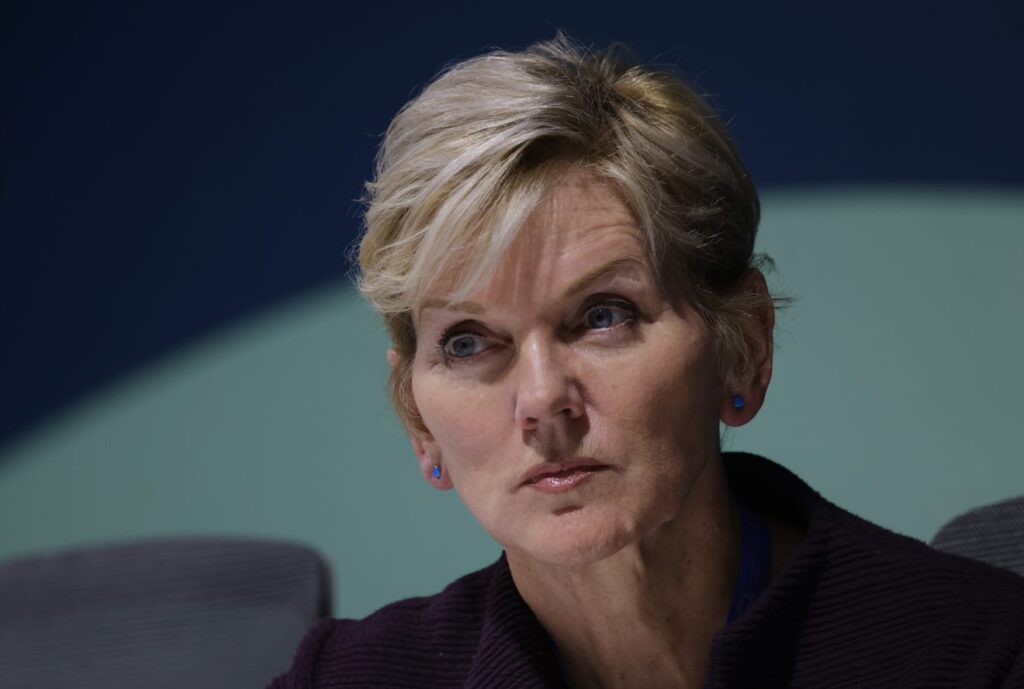
The strangest chapter surfaced in August 2023, when 29 House Republicans led by Energy and Commerce Chair Cathy McMorris Rodgers demanded answers about the secretary who ran the drain, Jennifer Granholm. Internal Department of Energy calendars obtained by the group Americans for Public Trust, and shared with Fox News Digital, showed private calls between Granholm and Zhang Jianhua, chairman of China’s National Energy Administration and a senior Communist Party figure, on 19 November 2021 and again on 21 November 2021, days before the first release. “We are troubled by recent reports that you, in your official capacity as Secretary of Energy, had multiple conversations with the Chinese Communist Party’s top energy official just days before the Biden administration announced it would release oil from the Strategic Petroleum Reserve in 2021,” McMorris Rodgers and the other Republicans wrote. The department countered that only one 30-minute call happened; “Some in Washington may have forgotten that diplomacy works by picking up the phone to talk to allies and competitors. Secretary Granholm helped convince nations to take decisive actions to bring relief to American families following the COVID pandemic,” a DOE spokesperson said. The letter also flagged that the administration sold at least 2 million barrels to Unipec, an affiliate of state-controlled China Petrochemical, where Jianhua had held a leadership role, out of a 20-million-barrel sale to eight companies in September 2021 plus two 950,000-barrel sales in April and July 2022. “China now likely controls one of the world’s largest stockpiles of oil, at the expense of American taxpayers and our energy security,” the Republicans wrote, adding that “This is concerning given the Department of Energy’s mismanagement of the SPR, which has left our country more vulnerable to energy supply disruptions and strengthened the leverage of our adversaries to use energy as a geopolitical weapon,” The White House had described its move as coordinated with “other major energy consuming nations including China” while Granholm told reporters China “will make its own announcement.”
Did the raid break the plumbing? Republican lawmakers including McMorris Rodgers and John Barrasso wrote to Granholm in November 2022 that the rapid depletion “may have caused damage to the SPR’s pipelines and caverns, compromising its ability to meet its energy security mission”, citing the caverns’ subterranean fragility. The administration’s answer, through official Kathleen Hogan in April 2023, was flat: the 2022 sales “did not damage our SPR pipelines or caverns” Geoscientists at Sandia National Laboratory keep watch on cavern integrity, and an April 2025 social media post claiming Energy Secretary Chris Wright had said half the facilities were damaged, with repairs near $100 million, has drawn no official confirmation.
The refill has been real but slow. A three-part strategy rolled out in early 2023, direct purchases, exchange returns and canceled mandated sales, had by November 2024 secured 200 million barrels at an average $74.75 per barrel, including 59 million bought at under $76, which the department says fully offsets the 180 million sold in 2022 at better prices; a further 2.4 million barrels were bought for delivery in April and May 2025. Granholm promised in March 2024 that the reserve would return to pre-drawdown levels by year’s end; at 395.3 million in March 2025, it had not. The strategic argument continues, with the reserve’s October 2023 trough of 351 million equal to about 56 days of imports against a 727-million-barrel peak in 2009, and the department noting the U.S. still exceeds the International Energy Agency’s 90-day coverage requirement as domestic production grows.
The scene at the close of the story is the same as the opening one: caverns that hold oil nobody hopes to need, a price at the pump that decided elections, and two ledgers, one in barrels, one in politics, that never quite reconcile. The reserve survived its decade as a campaign instrument, market stabilizer and diplomatic calling card. Whether it is ready for the next embargo is the question the salt is still holding.
Sources
- The Biden Adminstration causes damage to the Stragegic Petroleum Reserve during massive draw down for political gain. – Energy News Beat
- Biden Energy Secretary Granholm pressed on talks with top CCP official before SPR releases | Fox News




