
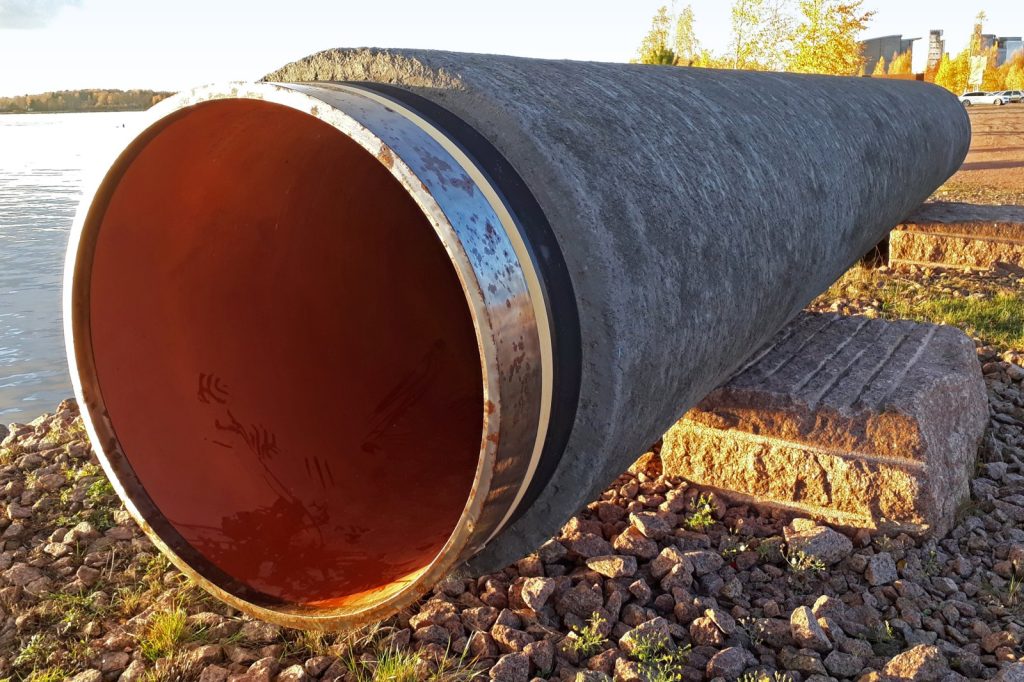
Of all the infrastructure the war in Ukraine has consumed, the most improbable is the gas pipeline network itself. In late October 2026, reports in The Atlantic and in The New York Times described a front that has slipped beneath the surface, into steel lines that once moved Russian gas to Ukraine and the rest of Europe. Kyiv shut that transit route for good in early 2025, and the pipes now carry soldiers instead of fuel. “Ukraine’s newest battlefield lies inside a network of steel pipes deep below the ground, some barely wide enough for a person to crawl through,” Simon Shuster, opening his report for the magazine, wrote of the new terrain.
Why Both Armies Went Below
The reason is the sky. Drone coverage over the front has grown so dense that crossing the kill zone, a strip of no man’s land that runs tens of kilometers, invites death for a lone soldier, a vehicle or a dugout. Ihor Obolensky, who leads the 2nd Khartiia Corps of Ukraine’s National Guard, told Shuster that every day “the kill zone is expanding, getting wider and deadlier.” The answer, in his word, is to go underground. Russian commanders reached that conclusion first, and Ukrainian assault troops have been racing to catch up, ambushing one another in the dark with machine guns and grenade launchers.
The stakes stretch past the tunnels. Ukrainian military sources told Shuster that Russia spent the past year massing supplies and troops for a winter offensive, and Obolensky warned that whoever controls the pipeline web across the contested Donbas could hold a decisive edge in that campaign.
From Sudzha to Operation Pipe
Russia’s forces began moving through the tunnels late in the months-long fight for Sudzha, a town Ukrainian troops took in August 2024. As Ukraine’s grip on part of the Kursk region weakened, Moscow organized what it called Operation Pipe. In early March 2025, somewhere between 100 and several hundred soldiers crawled for kilometers along the Urengoy-Pomary-Uzhgorod trunk line before surfacing behind Ukrainian lines. Meduza, summarizing the reporting, notes that Kremlin propaganda inflated the raid’s results even though it helped Russian forces retake Sudzha and surrounding ground, and similar moves later appeared in the battle for Pokrovsk.
The Khartiia Corps had grasped the danger by spring 2025, after Russian troops used the pipes to slip past its lines in the Kursk fighting. “They kept climbing out of the earth like devils,” Obolensky said, usually in bad weather that kept the drones down. The first answer was a grim game of whack-a-mole. “We would try to find their exit points and cut them down when they surfaced,” he said. “But they would just keep popping up several kilometers behind our lines and attacking us.”
A Labyrinth on Old Energy Maps
When the commander asked Ukraine’s state energy company for the maps, the documents laid out the threat’s true scale: a labyrinth of pipes under the combat zone, at least 57 of them in steel, most a meter to two meters across. Meduza’s analysis desk traced one 2025 infiltration near Kupiansk, in the Kharkiv region where Khartiia has spent more than a year defending the town roughly 40 kilometers from the border, to a line crossing beneath the Oskil River, part of the Shebelynka-Ostrogozhsk system at 1,020 millimeters across, narrower than the 1,420-millimeter trunk pipe of Operation Pipe.
Life inside is its own horror. Soldiers spend weeks below, riding adapted mine carts fitted with motors from electric scooters, breathing through gas masks and oxygen tanks as blasts pull the air from cramped sections and shrapnel ricochets along the metal. New York Times correspondent Maria Varenikova, descending into one position, wrote: “Deep inside a forest in drone-infested eastern Ukraine, I stepped onto a small metal platform and descended into a post-apocalyptic world of modern warfare, where the only safe place is underground.”
Obolensky went down himself in late July and came up shaken, his face filmed in dirt and his voice trembling in a video he showed Shuster. “The guys working down in these pipes right now, they are heroes, unlike any other warriors I have seen,” he says into a phone camera. In October, after about six months of fighting below ground, his troops took back some 14 kilometers of pipeline in the northeast in an operation code-named Veles, the first counterattack of its kind ever pulled off underground. Most of the network, he added, remains in Russian hands.
What a Comeback Would Take
The pipes’ commercial past still flickers at the edge of diplomacy. In early November 2026, the Russian state outlet Sputnik reported on a United States proposal for restarting Russian gas flows to Europe, which Stanislav Mitrakhovich of the National Energy Security Fund read as business rather than geopolitics. Washington is “looking to make money, and one approach is to treat Europe as its captive market,” he said, even as European hawks cling to a legislated phaseout of Russian gas and any deal, in his view, would amount to one technical piece of far wider talks over European security and NATO expansion. Kremlin spokesman Dmitry Peskov answered that the conditions of the moment leave no room for renewed gas transit across Ukraine, with future supplies resting on buyers’ demand and Russia’s ability to deliver.
For now, the trunk lines that fed Europe for decades serve a purpose no engineer ever put on a blueprint: supply roads, fortifications and tombs in a war of tunnels.
Sources
- Russian Gas Comeback to Europe Hinges on Broader Security Deal – Expert
- These pipelines once carried Russian gas to Europe. Now they carry Russian and Ukrainian soldiers into battle. — Meduza




