
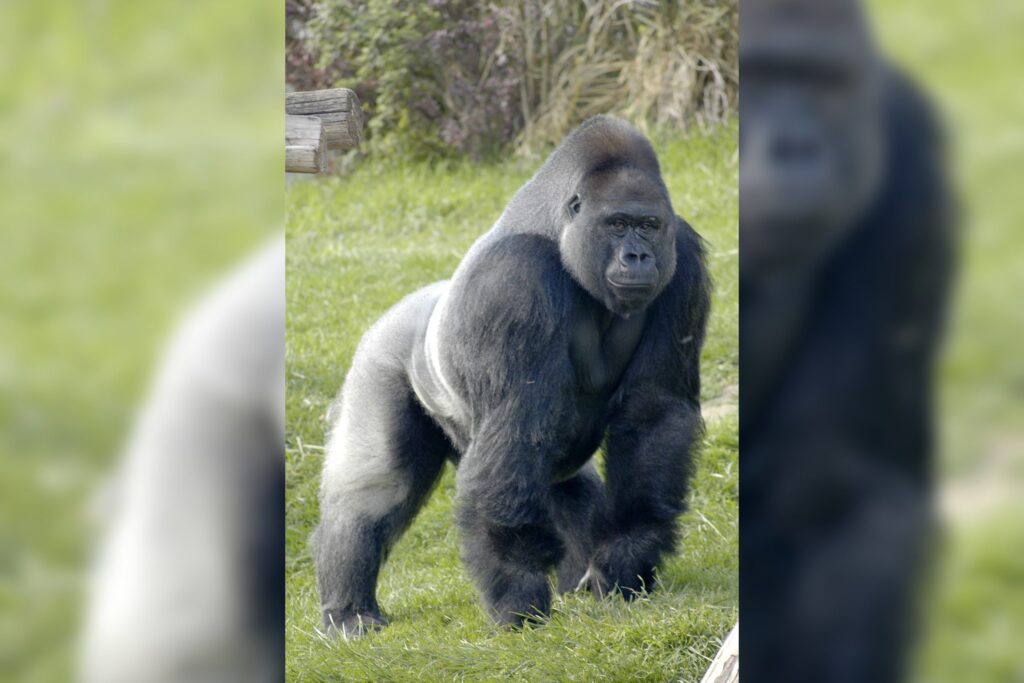
It begins not with a meal, but with a threat display. For decades, the sight of a silverback gorilla baring its long, sharp canine teeth has confused observers. The animal is eating leaves and stems.
The teeth look built for tearing flesh. The scientific record, compiled from field studies and biological reviews, now reconstructs the evolutionary timeline that explains this contradiction.
The story starts far back, before gorillas were gorillas. Their ancestors were omnivores. Those early primates ate a mixed diet that included meat.
Canine teeth of a certain size and shape were useful for processing that food. Then the diet shifted.
The gorilla lineage became primarily herbivorous. But the teeth did not shrink away. The timeline shows a fork in the road.
A trait can be lost if it has no purpose. Or it can be kept if it finds a new job. For gorillas, the large canines found that new job in the world of social competition.
The teeth stopped being about food. They became about status.
The evidence for this timeline sits in the difference between the sexes. Female gorillas have canine teeth. They are not as large as those of males.
This is called canine dimorphism. It is a classic signature of sexual selection.
The trait is exaggerated in the sex that competes most intensely for mates. In gorillas, that is the male. The large canines are a tool for winning dominance and securing mating opportunities, not for chewing.
How the teeth are used on a day-to-day basis follows a clear sequence. The primary function is display. A male shows his canines.
The message is sent without contact. Intimidation works.
Rivals back down. Physical conflict is avoided. The teeth serve as a deterrent.
This saves energy and prevents injury for all involved. But the timeline includes darker moments.
The sources confirm that gorillas do use their canine teeth in actual combat. When display fails, the teeth become weapons. A fight between two males can be brutal.
A broken or lost canine tooth is a serious problem. It puts a male at a significant disadvantage in future contests for dominance. The tooth is not just for show.
It is a backup weapon when the show fails. A comparison to true predators clarifies the evolutionary path.
A lion or a tiger has canine teeth shaped for a specific task: slicing meat and killing prey. The shape is different. Gorilla canines are thicker.
They are built for different stresses. The predator tooth is a knife.
The gorilla tooth is more of a wedge. The design reflects the different purpose. One is for hunting.
The other is for fighting and threatening other gorillas. The timeline ends at the present. The question is resolved.
The gorilla retains its large canines because they work. They work for social hierarchy.
They work for mate acquisition. They work for intimidation. The diet is leaves.
The teeth are for the social world. The two facts are not a contradiction.
They are a record of evolutionary history, step by step, written in bone.




