
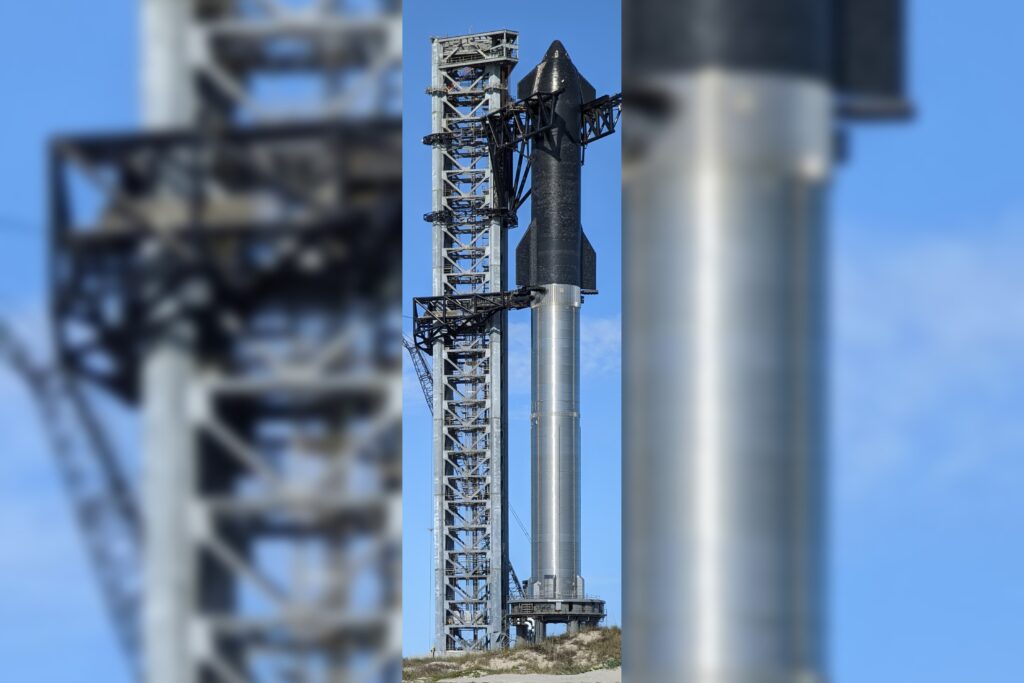
The paperwork landed late on a Saturday. The Federal Aviation Administration issued the launch license for Starship’s 14th flight on September 26, 2026, and Mashable India reported that it cleared the mission, set for Monday, September 28, from SpaceX’s Starbase in Texas.
Flight 14 is meant to do something no earlier Starship flight did. According to Mashable India, all the previous flights were deliberately suborbital. This time the ship is supposed to complete a full loop around Earth. The 75-minute launch window was due to open at 1215 GMT, which is 7:15 a.m. in Texas.
Twenty-six satellites on board
The ship is carrying a full load of 26 Starlink V3 satellites. Three of them have cameras, Mashable India said, and their job is to photograph the ship’s heat shield once the satellites have been deployed.
The flight plan
The profile is staged so that SpaceX can back out partway. The ship’s engines are scheduled to cut off about 8 minutes 11 seconds after liftoff, leaving Ship 41 on a suborbital path toward the Indian Ocean. If the checks pass, an orbital insertion burn of roughly 18 seconds follows at about 25 minutes 19 seconds. Until that point the company can still abort and splash the ship down in the Indian Ocean.
A clean run would mean about six orbits at 275 km, then a splashdown in the Pacific west of Chile close to 10 hours after liftoff. The Super Heavy booster, numbered 21, is due to come down in the Gulf of Mexico about seven minutes after launch. Neither stage is supposed to be caught by the launch tower this time.
Mashable India linked the flight to NASA’s lunar plans, saying a successful mission would pave the way for future Artemis missions while Blue Origin’s New Glenn competes for lunar projects. SpaceX said it would stream the launch and splashdown on its X account and on YouTube, with live coverage starting about 35 minutes before liftoff.
When the report was published on the day of the attempt, the countdown was underway and no liftoff had been reported.




