
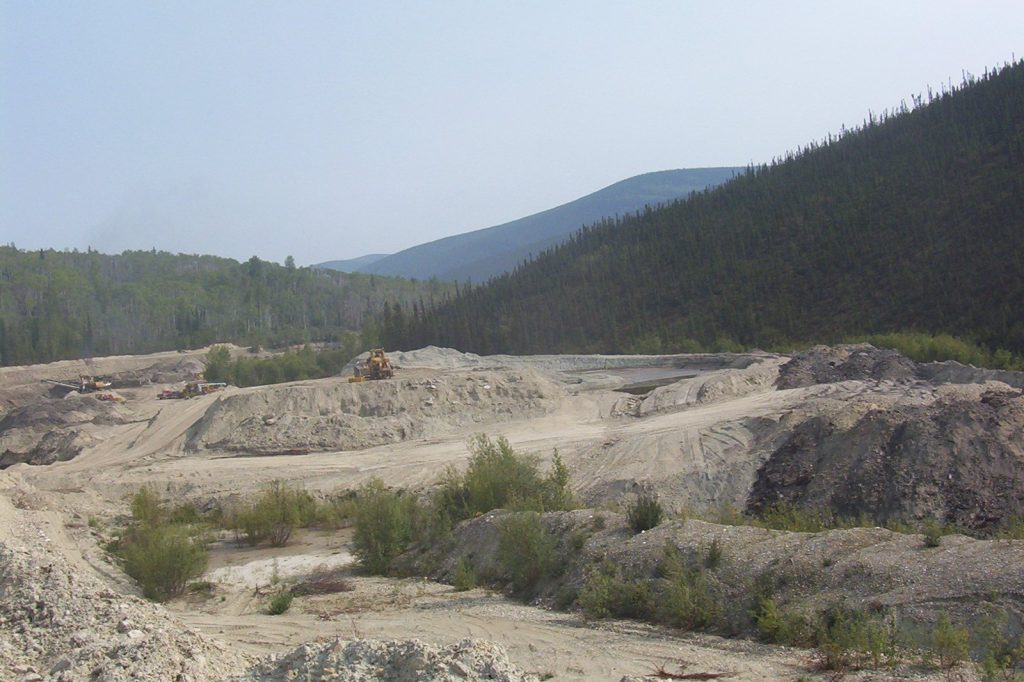
The Canadian government has cleared one of the country’s largest undeveloped gold assets for the next stage of regulatory review, issuing a federal environmental assessment approval that unlocks the permitting pathway for First Mining Gold Corp.’s Springpole Gold Project in northern Ontario. The decision, announced by the Honourable Julie Aviva Dabrusin, Federal Minister of the Environment, Climate Change and Nature, states that the project “may proceed” on behalf of Canada, concluding the federal environmental review phase that is typically the most rigorous regulatory hurdle for a project of this scale.
First Mining Gold Corp., which made the announcement from its Vancouver, British Columbia headquarters, trades on the TSX under the symbol FF, on the OTCQX as FFMGF, and on the Frankfurt exchange as FMG. The company described Springpole as one of Canada’s largest undeveloped gold assets.
The precise conditions attached to the Decision Statement have not been detailed in the company’s public release, but such federal approvals routinely include binding mitigation measures covering water management, wildlife protection, and closure planning. First Mining has not yet disclosed the full text of the Decision Statement, leaving investors and local communities awaiting the specific environmental conditions and monitoring requirements embedded in the approval.
The Regulatory Path and Historical Context
The Springpole Gold Project sits in a region shaped by a century of mining history. Northwestern Ontario’s greenstone belts have produced gold since the late 1800s, when small-scale prospectors traced glittering outcrops to veins later mined underground.
By the mid‑1900s, larger open‑pit operations replaced hand tools, but the fundamental approach remained the same: extract ore, process it, and move on. Environmental reviews in those earlier decades were brief and local, with limited federal involvement. That regulatory landscape shifted significantly in 1973 with the passage of the federal Environmental Assessment and Review Process, which gave Ottawa explicit authority to scrutinize projects with potential cross‑boundary effects.
The law was strengthened again in 1992 and 2012, each time expanding the scope of assessments and tightening conditions on water use, tailings storage, and land reclamation. The federal approval for Springpole represents the culmination of that evolved process, signaling that the project has cleared the country’s most stringent environmental gate, though it does not guarantee provincial permits or local acceptance.
Project Details and What Comes Next
At its core, the Springpole Gold Project is a proposed hard‑rock gold mine. It would involve excavating ore from an open pit, crushing and grinding it, then using cyanide leaching to separate gold from waste rock.
This method is standard for low‑grade deposits, but it demands rigorous containment and closure plans to prevent long‑term harm to surrounding lakes and forests. The federal approval, while a major milestone, carries conditions that will likely address those environmental risks in detail. What makes Springpole significant now is the convergence of two trends.
First, global gold prices have remained high enough to justify large‑scale mining in previously marginal areas. Second, regulators have grown stricter about cumulative impacts, requiring companies to demonstrate that new projects will not worsen existing environmental burdens.
For investors, the decision lowers near‑term risk. For nearby communities, it raises questions about land use, water quality, and long‑term land rehabilitation. The coming months will show how those concerns are addressed in the next phase of permitting.
The next major step is the provincial permitting process in Ontario, which operates independently of the federal review. First Mining will need to secure provincial approvals and permits before construction can begin at the Springpole site.
That process will involve its own environmental scrutiny and public consultation, and it will determine the timeline and conditions under which any mining operations could eventually proceed.




