
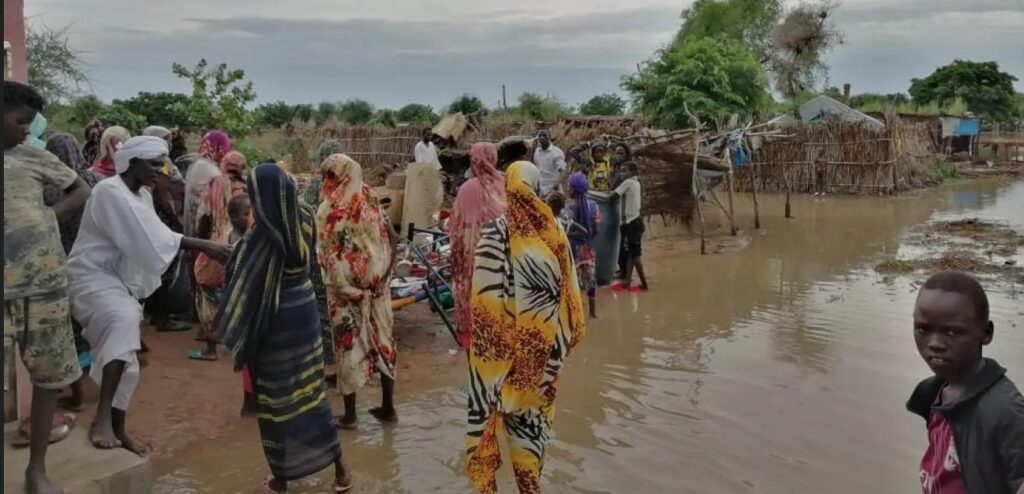
At least twelve people have lost their lives due to extensive flooding that has swept across Kassala State in eastern Sudan. The waters have submerged several internal displacement camps, adding to the hardship faced by those already uprooted from their homes. The flooding has caused widespread devastation, underscoring the vulnerability of communities in the region.
Kassala State covers an area of 36,710 square kilometres and, according to 2018 estimates, is home to roughly 2,519,071 inhabitants. Geographically, the state borders Khartoum to the west, Qadarif to the south, Eritrea to the east, the River Nile to the northwest, and Red Sea State to the northeast.
This positioning makes it susceptible to natural disasters such as the current flood event. The capital, Kassala, along with the towns of Aroma, Hamashkoraib, Halfa el Jadida, Khashm el Girba, and Telkuk, are likely to experience the effects of the flooding, which could have long‑term repercussions for the local population. In recent years the state has confronted other challenges, notably a severe bread shortage in 2016.
That episode highlighted the necessity of pursuing sustainable development and strengthening resilience against future shocks. The impact on internal displacement camps is especially worrisome.
These camps shelter people who have already been forced to flee conflict or other dangers. Their submersion will intensify suffering and increase the urgent need for assistance, including food, shelter, and medical care. The international community is urged to act swiftly, delivering relief supplies to those affected. Prompt aid can alleviate immediate hardship while laying the groundwork for recovery.
Such a transition also helps mitigate the impact of natural disasters like flooding by reducing pressure on existing resources and infrastructure. The flood serves as a stark reminder of the importance of protecting the environment and preserving natural resources. A clean planet is vital for the wellbeing of all, and it is a shared responsibility to cut waste, conserve water, and promote sustainable practices.
By working together to address these challenges, it is possible to prevent similar disasters and build a better prospect for coming generations. The people of Sudan, particularly those affected by the flooding, deserve support and solidarity as they strive to rebuild and recover.
Looking forward, coordinated efforts between the government and international organisations are essential. This should encompass not only immediate relief but also long‑term investments in infrastructure, sustainable development, and environmental protection. A proactive, sustainable approach can reduce the likelihood of future disasters and foster a more resilient, prosperous community in Kassala State.
As the situation continues to evolve, thoughts remain with the people of Sudan, and there is hope for a swift and effective response to this crisis.




