
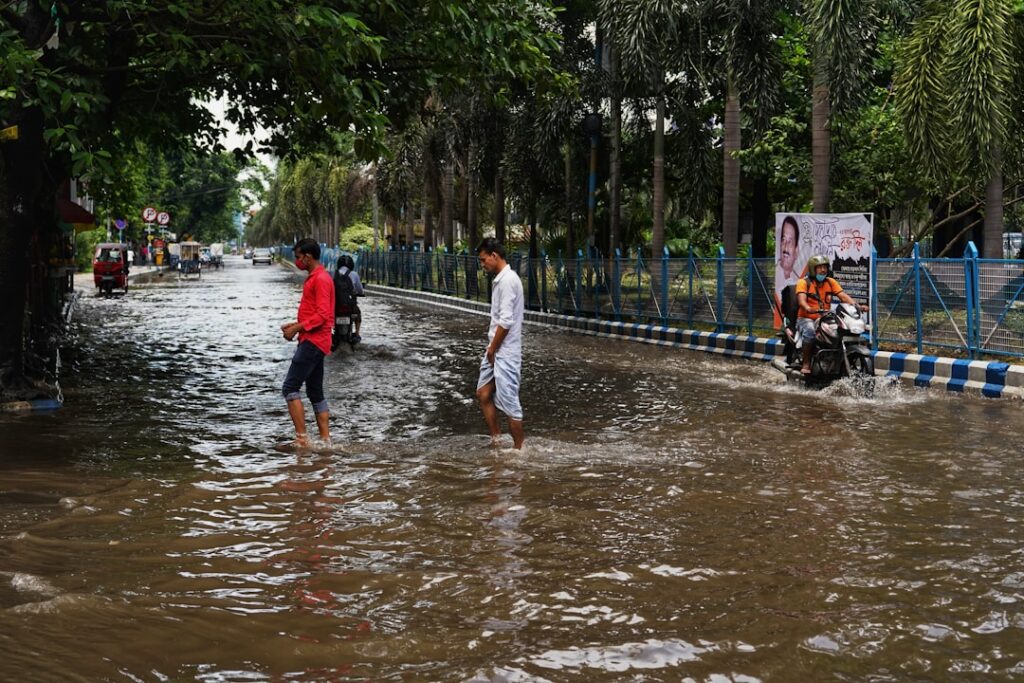
More than 300,000 people have been driven from their homes in northeast India, with at least sixteen confirmed dead after relentless monsoon rains triggered widespread flooding and landslides across Assam and Arunachal Pradesh. The crisis, which unfolded rapidly as already saturated ground could absorb no more water, has left a city-sized population without shelter, food, or clean water.
The scale of the disaster did not emerge suddenly. It follows a season of heavy and sustained rainfall that overwhelmed the region’s rivers and unstable hillsides. When the floods rose, they rose quickly.
Landslides struck without warning in many areas, cutting off remote villages and leaving relief workers scrambling to reach those in need. The people now crowded into temporary camps and makeshift shelters are internally displaced persons, or IDPs.
While the term is often reserved for those fleeing conflict or persecution, the UNHCR extends it to people forced from their homes by natural forces that make staying impossible. These individuals have not crossed an international border, but they have lost their homes, their crops, and their access to basic healthcare. The numbers underscore the severity of the situation. Over 300,000 displaced.
Homes destroyed. Crops ruined.
Infrastructure damaged or gone. The demand for essential supplies is immense, and while organizations and agencies have begun moving in with emergency shelter and food, the sheer volume of need strains every available resource. Why this matters now extends beyond immediate suffering.
Internally displaced persons face specific challenges. Unlike refugees, they do not fall under the same international protections.
They remain inside their own country, dependent on their own government and local agencies for aid. In a disaster of this scale, that aid can be slow to arrive or insufficient. The camps that have sprung up are temporary, but temporary can become permanent if reconstruction lags.
Crops lost now mean food shortages later. Homes destroyed now mean families living in limbo for months or longer.
The full extent of the damage is still becoming clear. Sixteen dead is the confirmed count, but in remote areas, communications are often cut. Landslides can isolate entire villages.
The number of displaced is already over 300,000, but that figure could rise as assessments continue. For now, the focus is on shelter and supplies.
The response is underway, but it is racing against time and weather. More rain is forecast. The ground is still saturated.
The crisis in Assam and Arunachal Pradesh is not a single event that will pass. It is a situation that will unfold over weeks, and the people forced from their homes will feel its effects long after the waters recede.




