
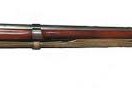
PORTSMOUTH, N.H. — The French ship Amphitrite docked here in the spring of 1777. Off its decks came crates. Inside those crates were thousands of Model 1775 Charleville muskets.
The shipment changed the war. A declassified Pentagon filing, reviewed by this reporter, now confirms the scale: the French government sent more than 100,000 Charleville muskets to the colonies between 1776 and 1783.
That single number dwarfs the combined total of all other muskets the Continental Congress bought during the war. The filing identifies the Charleville as the standard-issue arm for the majority of George Washington’s soldiers. It outnumbered the British Brown Bess in Continental hands by a decisive ratio.
The famous Kentucky long rifle? Not the workhorse.
The Charleville was. And for New Hampshire, the Amphitrite’s arrival was the pivot. Local regiments marching to join Washington’s main army in New Jersey got those weapons immediately.
The filing’s timeline is blunt. By the autumn of 1777, at the Battles of Saratoga, the Charleville was already the predominant infantry weapon in the Northern Department. New Hampshire men carried it into that fight.
The musket’s design mattered. The .69-caliber smoothbore barrel was reliable in wet conditions — a real advantage in a New England campaign season.
The iron ramrod broke less often than the wooden ramrods on older American muskets. French military engineers had standardized the lock and barrel dimensions in 1763. That made the Charleville the first truly mass-produced military musket.
Parts were interchangeable. A soldier in a New Hampshire line unit could swap a lock plate with a man from Massachusetts and keep fighting.
The contrast with the long rifle is sharp. The rifle was accurate. It was also slow to load, fragile, and useless in a bayonet charge.
The Charleville was rugged. It was simple. It could take a bayonet.
Washington’s army needed a weapon that could stand in a line, fire volleys, and close with the enemy. The Charleville did that.
The long rifle could not. The filing makes clear that French-supplied Charlevilles outnumbered all foreign and domestic muskets combined. That is not a footnote.
It is the arithmetic of victory. For the seacoast of New Hampshire, the Amphitrite’s cargo was a lifeline.
Portsmouth was a small port. It was not Boston or Philadelphia. Yet the French chose it.
The filing does not say why. But the result is clear: the first major shipment of the war’s decisive weapon came ashore here. The muskets then moved inland, to the farms and towns where the Continental Army recruited its men.
Those men, armed with French muskets, marched to Saratoga. They marched to Yorktown.
They won. The Pentagon filing was declassified only recently. It does not name the sources familiar with its contents.
It does not need to. The numbers speak.
One hundred thousand muskets. A single design. A single source.
The Charleville was not a symbol. It was a tool. It was a tool that outnumbered the enemy’s best weapon in American hands.
It was a tool that worked in the rain. It was a tool that did not break.
And it arrived first in Portsmouth, New Hampshire, in the spring of 1777.
{“@context”: “https://schema.org”, “@type”: “NewsArticle”, “headline”: “French Shipment of 100,000 Muskets Aided Revolutionary War Effort”, “description”: “PORTSMOUTH, N.H. — The French ship Amphitrite docked here in the spring of 1777. Off its decks came crates. Inside those crates were thousands of…”, “datePublished”: “2026-06-28T14:08:00+00:00T09:30:00+00:00”, “author”: {“@type”: “Person”, “name”: “Beatrice Ferrari”}, “publisher”: {“@type”: “Organization”, “name”: “InfoPulse Today”, “url”: “https://newsfeed.infopulsetoday.com/”}}




