
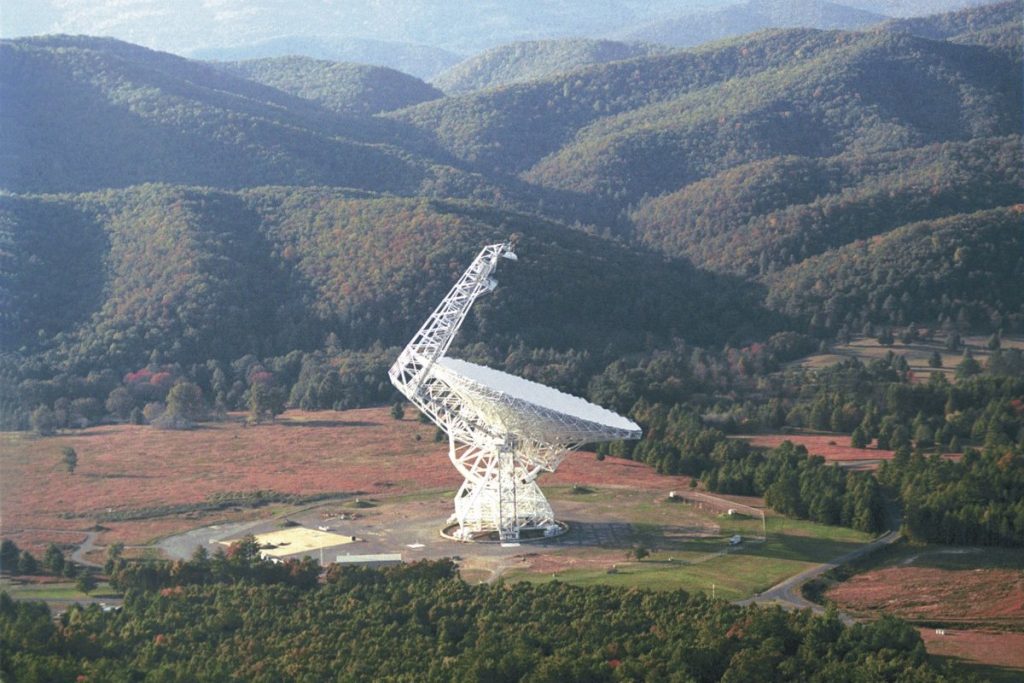
GREEN BANK, W.Va., July 13 — The search for the chemical building blocks of life is moving deeper into interstellar space, and astronomers are now planning their next steps after the detection of a key sugar molecule known as glycolaldehyde. The scene in the world of astrochemistry is one of accelerating discovery. Since the first interstellar molecule, methylidyne, was detected in 1937, the field has grown from a curiosity into a full-fledged scientific frontier.
By 2023, more than 200 molecules had been identified in the void between the stars, ranging from simple diatomic molecules to complex carbon chains. Glycolaldehyde, a simple sugar, is a critical find — it is a direct precursor to ribose, the backbone of RNA.
Now, researchers are setting their sights on even bigger quarry. The plan, according to astronomers working in the field, is to search for the presence of amino acids and nucleotides — the fundamental components of proteins and genetic material — in the same star-forming regions where simpler organic molecules have already been found.
The James Webb Space Telescope takes the lead
The James Webb Space Telescope, launched in December 2021, is expected to be the workhorse of this new search. Its infrared capabilities are uniquely suited to the task. JWST can detect the spectral signatures of organic molecules — the specific wavelengths of light they absorb or emit — in two key environments: the atmospheres of exoplanets orbiting distant stars, and the dense, dusty clouds of gas where new stars and planets are born.
On the ground in West Virginia, astronomers are also looking ahead to a proposed facility that would offer an even sharper view. The next-generation Very Large Array, or ngVLA, would provide dramatically greater sensitivity for molecular detection than current radio telescopes.
If built, it would allow scientists to map the distribution of complex organic molecules across entire star-forming regions, revealing the chemical nurseries where the ingredients for life may be assembled.
A field transformed
Astrochemistry — the study of how molecules form and are destroyed in space — has been transformed since that first detection of methylidyne nearly a century ago. Each new molecule identified adds a piece to the puzzle of how life’s raw materials are distributed across the galaxy. By nightfall, researchers will continue to analyze data from existing telescopes, refining their search strategies.
The presence of glycolaldehyde has already proven that the chemistry of life is not unique to Earth. The question now is just how far that chemistry extends — and whether the next discovery will be an amino acid drifting in a cloud of dust and gas, waiting to be found.
Sources
{“@context”: “https://schema.org”, “@type”: “NewsArticle”, “headline”: “Future Searches for Complex Organic Molecules in Space”, “description”: “GREEN BANK, W.Va., July 13 — The search for the chemical building blocks of life is moving deeper into interstellar space, and astronomers are now…”, “datePublished”: “2026-07-13T09:30:00+00:00”, “author”: {“@type”: “Person”, “name”: “Isabella Moore”}, “publisher”: {“@type”: “Organization”, “name”: “InfoPulse Today”, “url”: “https://newsfeed.infopulsetoday.com/”}, “citation”: [{“@type”: “CreativeWork”, “url”: “https://en.wikipedia.org/wiki/Astrochemistry”}]}




