
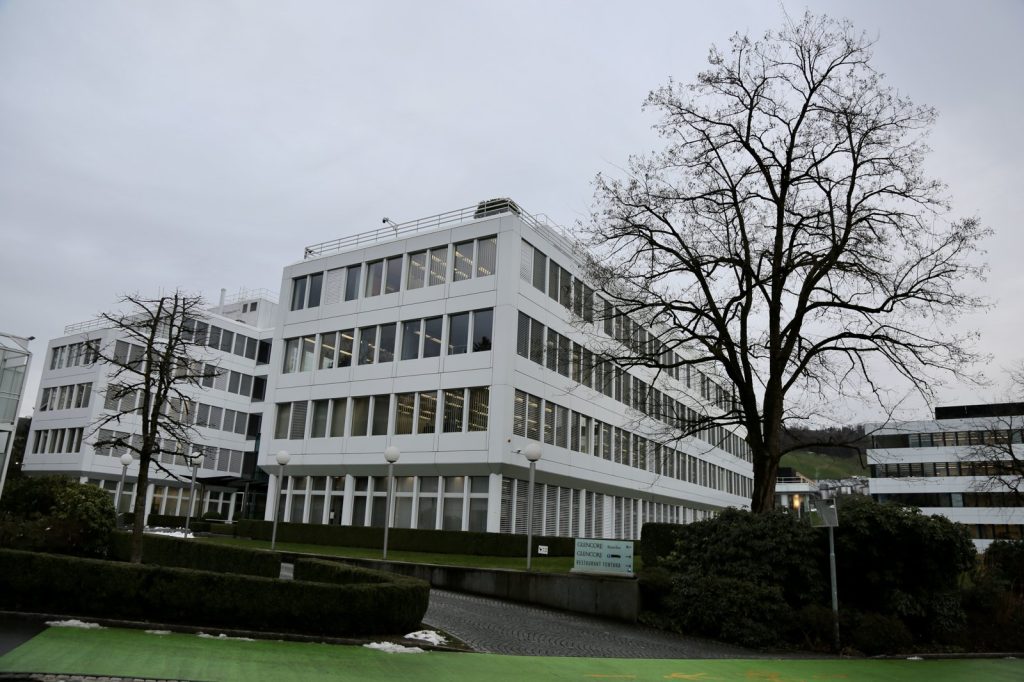
Glencore plc, a dominant force in global commodity markets, did not emerge overnight. Its origins can be traced to a single pivotal event in 1994: a management buyout of Marc Rich + Co AG, a trading house founded two decades earlier in 1974.
This buyout laid the groundwork for what would become one of the largest companies on the FTSE 100 by market capitalization. Today, Glencore is headquartered in Baar, Switzerland, with its oil and gas operations run from London. The company holds a primary listing on the London Stock Exchange and maintains a registered office in Saint Helier, Jersey.
This corporate structure, spanning a British Crown Dependency and two European capitals, reflects the global nature of its business. The company’s real influence, however, is measured in commodities.
As of 2010, Glencore controlled 60% of the internationally tradable zinc market—more than half of all zinc that crosses borders. Its share of internationally tradable copper stood at 50%. In grains, it held 9% of the internationally tradable market, and in oil, 3%.
While these figures are a decade old, they offer a concrete snapshot of the scale the company built in a relatively short period. A major turning point came in 2013 with the merger with Xstrata.
This deal did not simply add size; it transformed Glencore from a dominant trader into an integrated producer and marketer of commodities. Before the merger, the company was already one of the world’s largest in that combined role. Afterward, its position became difficult to challenge.
Glencore’s production facilities, spread across multiple continents, feed a trading machine that moves raw materials from mines to markets. This integration—owning both the source and the supply chain—gives the company leverage that pure traders or pure miners lack.
When commodity prices shift, Glencore can adjust along multiple points of the value chain. It is important to note that the 2010 market share figures come with a caveat. They predate the Xstrata merger, shifts in global supply chains, and the commodity supercycle of the early 2020s. The company has almost certainly changed its portfolio since then.
Nonetheless, these numbers remain the most concrete public snapshot of just how concentrated its grip was on key industrial metals. Glencore’s history is also one of consolidation.
The 1994 buyout of Marc Rich + Co AG was itself a response to the commodity trading world of the 1970s and 1980s, a period marked by volatile prices and aggressive deal-making. By taking control from its founder, the new management set a course for steady expansion rather than the more erratic style of its predecessor. The company’s registered address in Jersey, a Crown Dependency with its own tax and regulatory framework, is a strategic detail.
So is the dual headquarters—Baar for the main business, London for oil and gas. These choices allow Glencore to operate across jurisdictions while maintaining a visible presence in the City of London, home to the FTSE 100 index where it ranks among the largest firms.
For anyone tracking global commodity flows, Glencore is more than just a company. Its 60% share of tradable zinc means that when it adjusts production or trading volumes, the price of zinc moves. Its 50% share of tradable copper gives it similar influence over that metal, essential for construction and electronics.
Even its 3% share of oil, though smaller, places it among significant players in a market dominated by national oil companies. The company’s path from a 1994 buyout to a 2013 merger to its current status was not accidental.
It was built deal by deal, facility by facility, market share by market share. The foundation laid in those early years—the management buyout, the focus on integration, and the strategic choice of jurisdictions—remains the structure that supports the whole enterprise today.




