
MOSCOW, July 10 — The vast oil fields of Siberia and the Arctic have long been the backbone of Russia’s budget, a source of geopolitical leverage, and a central pillar of the nation’s economy. Against this backdrop, the global energy order is shifting, and the Kremlin’s petroleum industry—still a dominant force in world markets—finds itself navigating a labyrinth of sanctions, price caps, and the looming specter of new US tariffs. Russia remains a dominant player in the global oil market.
In 2023, the country produced approximately 10.5 million barrels per day, accounting for about 11% of global production. This places it as the world’s third-largest oil producer, trailing only the United States, which produced 12.9 million barrels per day, and Saudi Arabia, at 10.9 million barrels per day.
Russia exports about 4.8 million barrels per day of crude oil and petroleum products. The architecture of this export flow has been radically redrawn in recent years. Historically, the European Union was a major customer, absorbing about 1.5 million barrels per day of Russian oil.
That figure has been reduced to near zero after the imposition of Western sanctions. The void left by Europe has been filled by other buyers.
China now takes about 2 million barrels per day, while India imports roughly 1.5 million barrels per day, often at steep discounts. The financial consequences for Moscow have been significant. In 2023, Russia earned $188 billion from oil and gas exports, a sharp decline from the $282 billion it earned in 2022.
The drop is attributed to the combined effect of price caps and sanctions. The proposed US tariffs could disrupt this already fragile balance by further reducing Russian supply, potentially raising global prices. What is at stake is not just Russia’s fiscal health, but the stability of the global oil market itself.
The global oil market is heavily influenced by OPEC+, a group of 23 oil-producing nations led by Saudi Arabia and Russia. This group coordinates production levels to manage prices.
In 2023, OPEC+ cut production by 2 million barrels per day to support prices. Any new disruption from tariffs could force Russia to further discount its oil, reducing its budget revenue and potentially leading to production cuts. The International Energy Agency (IEA) has forecast global oil demand to reach 104 million barrels per day in 2025.
Even a modest reduction in Russian supply could tighten the market, pushing prices upward. Russia’s oil industry is dominated by three major players.
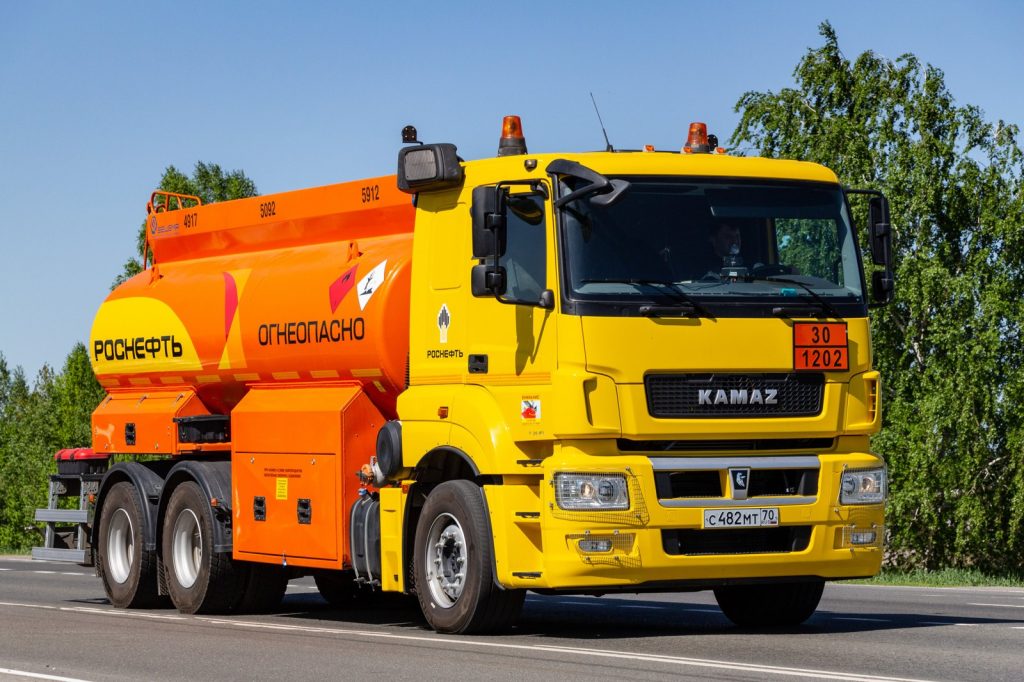
State-owned Rosneft is the largest, producing 4.2 million barrels per day. Lukoil follows with 1.7 million barrels per day, and Gazprom Neft produces 1.2 million barrels per day. These companies have been forced to adapt to a world where their traditional European customers have largely vanished, and where financing, insurance, and shipping are all subject to Western restrictions.
The proposed US tariffs represent a new front in this economic confrontation. If implemented, they could accelerate the trend of Russian oil being sold at a discount, further squeezing the Kremlin’s budget. The Russian government relies heavily on oil and gas revenues to fund its military operations and social programs.
A sustained reduction in income could force difficult choices in Moscow. In the corridors of the Kremlin, the calculus is complex.
Cutting production could support global prices, but it would also mean less revenue in the short term. Maintaining output and selling at a discount keeps market share but erodes profit margins. The decision will likely depend on how the tariff regime is structured and how other OPEC+ members respond.
The European perspective is one of cautious watchfulness. While the EU has dramatically reduced its direct imports of Russian oil, it remains vulnerable to price shocks in a globally interconnected market.
Any disruption that sends crude prices soaring will be felt at the petrol pump from Rome to Berlin. For now, the Russian petroleum industry remains a formidable force, but one under unprecedented pressure. The combination of sanctions, price caps, and potential tariffs is reshaping the global energy landscape.
The next moves by Washington, Moscow, and Riyadh will determine whether this new equilibrium leads to stability or further turbulence.
{“@context”: “https://schema.org”, “@type”: “NewsArticle”, “headline”: “Global Oil Market Dynamics and Russia’s Role as a Major Exporter”, “description”: “MOSCOW, July 10 — The vast oil fields of Siberia and the Arctic have long been the backbone of Russia’s budget, a source of geopolitical…”, “datePublished”: “2026-07-10T09:30:00+00:00”, “author”: {“@type”: “Person”, “name”: “Beatrice Bianchi”}, “publisher”: {“@type”: “Organization”, “name”: “InfoPulse Today”, “url”: “https://newsfeed.infopulsetoday.com/”}}




