
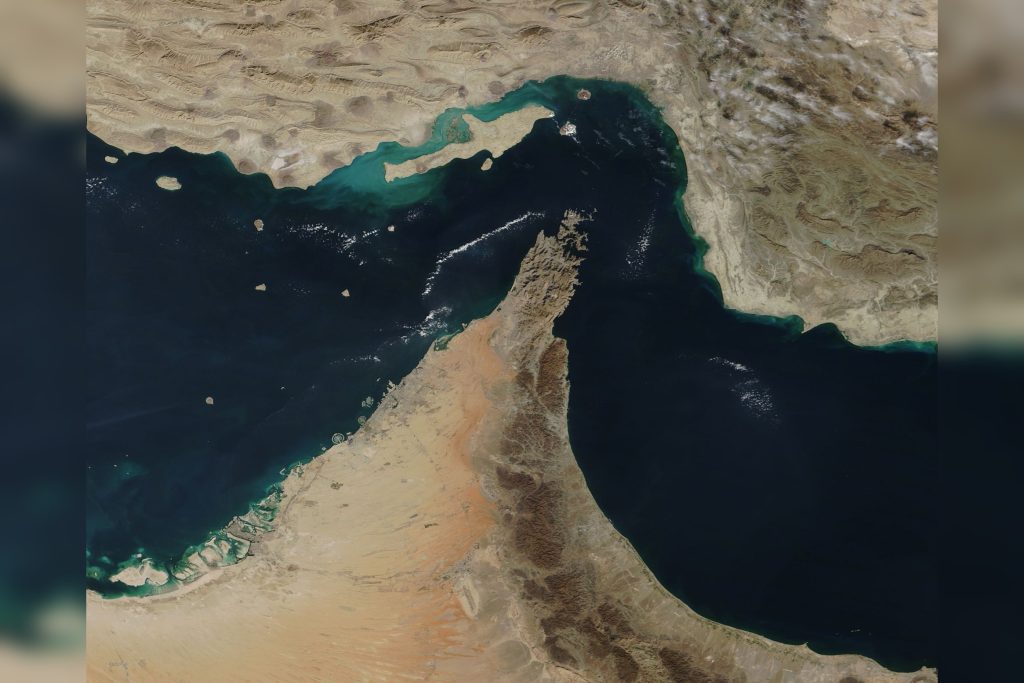
MANAMA, July 21 — For communities across Asia that depend on steady flows of affordable crude, the Strait of Hormuz remains a source of deep unease. Twenty percent of the world’s daily oil consumption — roughly 20 million barrels — passes through this chokepoint between Oman and Iran. Iran has repeatedly threatened to close the strait if its oil exports are blocked.
Those threats have so far been backed by action of a limited kind. In 2019, Iran attacked tankers and struck a Saudi Aramco facility — a clear escalation — but it did not close the strait.
During the Iran-Iraq War (1984–1987), the Tanker War targeted ships but the strait remained open. The pattern suggests a long-running willingness to disrupt, but not to fully sever, the world’s most important energy chokepoint.
What a full closure would mean
Analysts estimate that a full closure could temporarily push oil prices above $150 a barrel. The probability of such an event remains low, but contingency plans already exist. The United States, through its Fifth Fleet based in Bahrain, is positioned to intervene to keep the waterway open.
The U.S. Strategic Petroleum Reserve can release up to 4.4 million barrels per day. The International Energy Agency has emergency protocols that allow coordinated releases among member countries within days.
Alternative routes are also part of the calculus. Iraq can send up to 1 million barrels per day through its pipeline to Turkey. Saudi Arabia’s East-West pipeline, which runs to the Red Sea, has a capacity of 5 million barrels per day.
Closer to home
The strait’s importance to Asia is not abstract. Japan, South Korea, India, China, and Southeast Asian nations are among the largest importers of oil that transits Hormuz. A price spike to $150 or more would hammer industries already coping with inflation and slow growth.
For families across much of the region, a crisis in the Gulf would hit close to home. The source material offers no specifics on how individual countries would be affected, but the vulnerability is common across much of the region.
History shows the strait has remained open even under heavy pressure. The U.S. Navy’s Fifth Fleet is a credible deterrent. And the mechanisms in place — strategic reserves, alternative pipelines, international coordination — suggest that the world has not left its defense to chance.
Still, the threats from Iran persist. The next round of escalation could test both the resolve of the Fifth Fleet and the resilience of Asian economies accustomed to cheap, unbroken oil flows.
For now, analysts say the risk remains low. But for a region that imports much of its energy through one narrow channel, that low risk is never truly comfortable.
Sources
{“@context”: “https://schema.org”, “@type”: “NewsArticle”, “headline”: “Global Risk: Strait of Hormuz Closure Threatens Oil Supply”, “description”: “MANAMA, July 21 — For communities across Asia that depend on steady flows of affordable crude, the Strait of Hormuz remains a source of deep…”, “datePublished”: “2026-07-21T09:30:00+00:00”, “author”: {“@type”: “Person”, “name”: “Merry Gel Sigui”}, “publisher”: {“@type”: “Organization”, “name”: “InfoPulse Today”, “url”: “https://newsfeed.infopulsetoday.com/”}, “citation”: [{“@type”: “CreativeWork”, “url”: “https://en.wikipedia.org/wiki/Strait_of_Hormuz”}]}




