
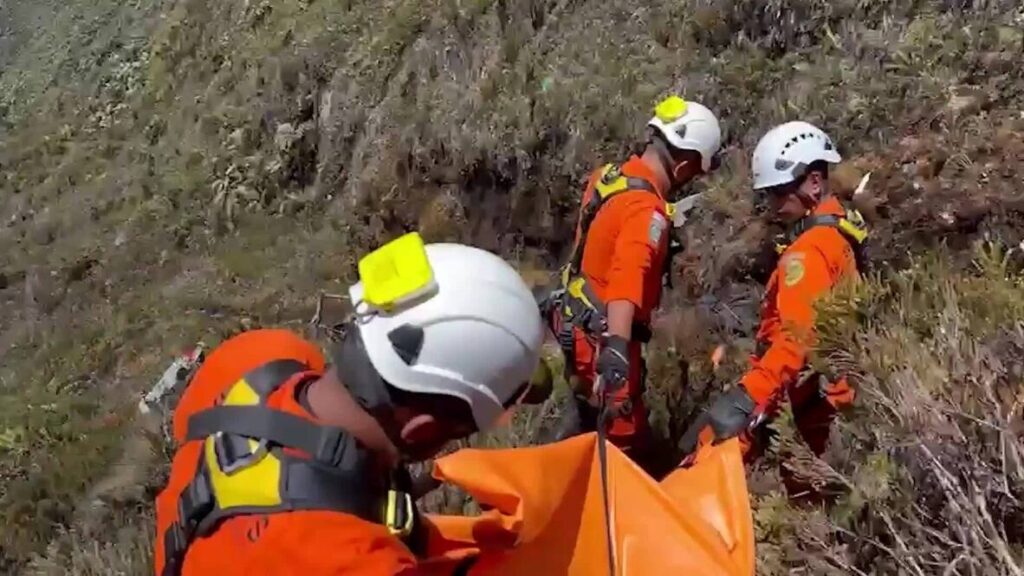
Central Papua, September 10, 2025 — cybernewschronicle.com — The mountains of Central Papua do not forgive a mistake. On September 10, 2025, a Eurocopter AS350 Écureuil slammed into a mountainside in Jila, Mimika Regency. Four people died instantly.
The helicopter was destroyed. The cause remains unknown.
This is not a remote abstraction. The AS350 Écureuil is the workhorse of the Indonesian highlands. It is a single-engine light utility helicopter, originally designed by the French firm Aérospatiale, later built by Eurocopter, now Airbus Helicopters.
In North America, they call it the AStar. Here, it is the machine that moves people and supplies where roads do not exist.
It flies doctors into villages. It hauls equipment for conservation teams. It evacuates the sick and injured from places a truck will never reach.
Four dead on a mountainside means four people who will not make that trip again. It likely means a community now cut off from something essential. The terrain is the point.
Central Papua is dense forest, steep slopes, fast rivers. Weather can close in without warning.
A pilot flying an AS350 into that landscape is working a machine at its limits. The helicopter has a good safety record overall. But good does not mean perfect.
A single mechanical failure, one misjudgment in a valley, a sudden fog bank — any of these can turn a routine flight into wreckage. The investigation will look for the cause.
It may find it. It may not. The mountains keep their secrets.
The AS350 family is broad. The twin-engine version, the AS355 Ecureuil 2, is sold as the TwinStar. The EC130, built on the same airframe, is also part of this single-engine lineage.
The helicopter that crashed was a Eurocopter AS350 Écureuil — a Squirrel, in English. That name suggests nimbleness.
It suggests something that can dart through tight spaces. It can. But it is still a machine of metal and fuel and moving parts, and when it hits rock at speed, the result is absolute.
What is at stake here is not just four lives, though those lives are everything to the people who knew them. What is at stake is the trust that keeps these flights running.
Every time a helicopter lifts off from Mimika, someone is betting that the maintenance was thorough, the pilot was rested, the weather report was accurate. A crash erodes that bet. If the cause turns out to be something preventable — a neglected part, a bad decision — then the entire system gets called into question.
The flights that bring medicine and food and hope into the highlands depend on that trust holding. The production history of the AS350 is long. It began with Aérospatiale, moved to Eurocopter, then to Airbus Helicopters.
It is now called the H125. It has been built for decades.
It is a known quantity. But known quantities crash. They crash in Alaska.
They crash in the Alps. They crash in Papua.
The region is fragile, the ecosystem unique, the people dependent on air travel in a way that most of the world cannot imagine. A single crash does not stop aviation. But it stops four families.
It stops a village that may have been waiting for a passenger who will never arrive. That is the real weight of the event. The investigation will take time.
The wreckage is on a mountainside. The terrain is rugged.
The answers may be slow in coming. In the meantime, the Eurocopter AS350 Écureuil will keep flying elsewhere. Other pilots will strap in.
Other passengers will board. They will do so because the alternative — no flights at all — is worse.
The risk is known. The stakes are concrete. Four people are dead.
The mountains remain.




