
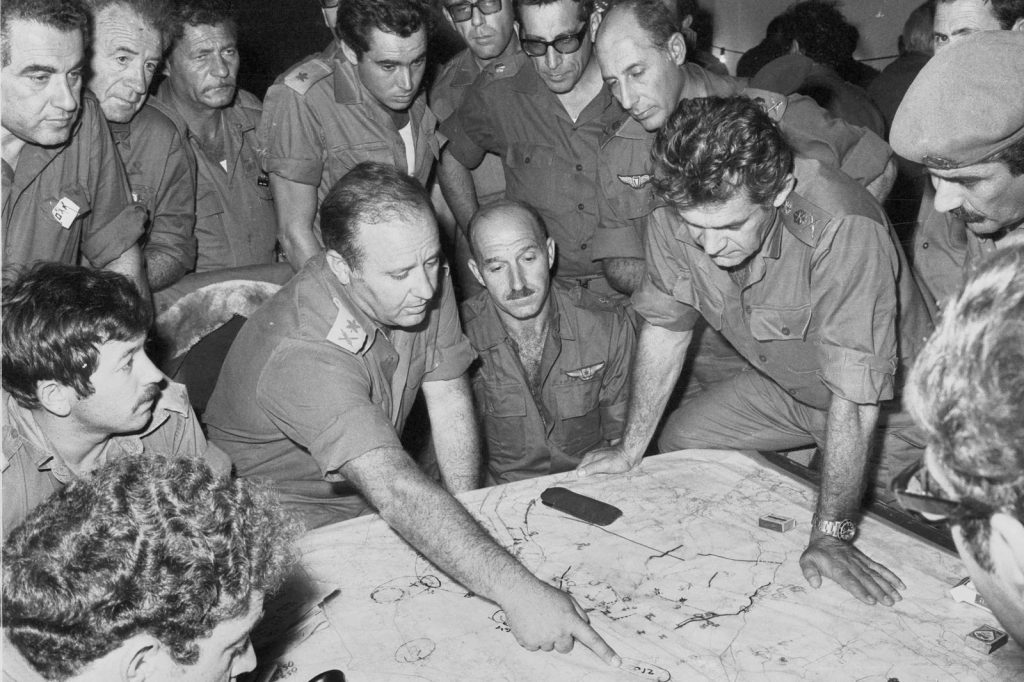
On October 6, 1973, Egyptian and Syrian armies attacked Israel on two fronts. The assault fell on Yom Kippur, the holiest day in the Jewish calendar. Washington moved quickly to resupply Israel. Moscow did the same for Syria and Egypt. The Nixon administration raised the military alert level to DefCon 4, one step below the maximum. After three weeks, a United Nations-brokered resolution stopped the fighting, and Israel kept the territories it had captured in 1967.
Eleven days into the war, on October 17, Saudi Arabia and other OPEC members announced a 5 percent cut in oil production. When Nixon and Congress responded with $2.2 billion in new aid for Israel, Saudi Arabia went further. With OPEC’s backing, it embargoed oil shipments to the United States and Western Europe.
In the United States, crude jumped from $2 a barrel to $11. Retail gasoline prices rose 40 percent in November 1973 alone. Drivers queued at pumps as stations raised prices several times a day and sometimes ran dry. In Western Europe and Japan, the shock cut deeper. Those allies depended on OPEC states for 45 to 50 percent of their oil.
A cartel discovers its power
OPEC had been formed in 1960 by Iran, Iraq, Kuwait, Saudi Arabia and Venezuela. By 1973 it had added seven members and produced half the world’s oil. The United States, still a large producer, imported about 30 percent of its oil consumption. Europe and Japan had moved away from coal and now drew 60 to 80 percent of their total energy from Middle Eastern oil. The embargo exposed that dependence.
Henry Kissinger met King Faisal in January 1974. He argued that the embargo’s conditions had ended with the Yom Kippur War. Egypt’s Anwar Sadat also concluded the embargo was damaging his country’s standing. After Kissinger negotiated terms for reconciliation, the embargo ended. Nixon visited Israel, Egypt and Saudi Arabia in May 1974, the first U.S. president to visit Egypt.
The second shock
By the mid-1970s, the official price had slipped to fourteen or fifteen dollars a barrel. Complacency did not last. Iranian oil exports stopped entirely from December 1978 until the autumn of 1979, during the consolidation of power by Ayatollah Khomeini’s Islamic government. Other producers picked up some of the slack, but the price of a barrel more than doubled from $15 to $39 by mid-1979. U.S. gasoline prices tripled to more than $1.00 a gallon, the highest on record after adjusting for inflation.
Then, in September, Iraq’s Saddam Hussein attacked Iran, starting a war that lasted ten years. The combined loss of Iraqi and Iranian exports amounted to roughly a third of OPEC’s exports at the time. OPEC’s official price rose to more than $32 a barrel, and futures traded around $40.
The price surge fed inflation. The United States recorded double-digit inflation and unemployment. Western governments raised taxes and interest rates. President Jimmy Carter called the oil crisis “the moral equivalent of war.” His Federal Reserve chairman, Paul Volcker, pushed interest rates high enough to break inflation by 1983, at the cost of recessions in 1979-1980 and 1981-1982. Milton Friedman offered a different prescription in his 1979 book Free to Choose: “There is one simple way to end the energy crisis and the gasoline shortages tomorrow. Eliminate all the controls on the prices of crude oil and other petroleum products.”
The 1973 embargo also split the Atlantic alliance. Washington wanted to keep the oil question separate from the Palestinian issue. Arab governments demanded that importing states endorse U.N. Resolution 242, which called on Israel to return lands captured in 1967. Most countries, including Japan, complied. The United States was pushed into a longer-term role as Middle East broker, a thread that ran through the Camp David Accords and later Persian Gulf crises. Under Ronald Reagan, Washington persuaded Saudi Arabia to keep production high even as demand softened. Oil slumped from $20 a barrel to $5 by the end of the 1980s.
Sources
- 1973 oil crisis, economic consequences, oil embargo, OPEC, energy crisis, inflation, recession, global economy, U.S. economy
- Energy crisis of the 1970s | Power and Energy | Research Starters | EBSCOhost




