
WASHINGTON, July 8 — The mechanics of an oil shock are brutal and well-documented. When the price of crude jumps, it moves through the economy like a fever. The 1973 Arab oil embargo quadrupled prices from $3 to $12 per barrel.
That single move produced gasoline lines across the United States and tipped the economy into recession. The 1979 Iranian Revolution did it again, driving prices from $15 to $39 per barrel and creating the stagflation that defined the Carter years.
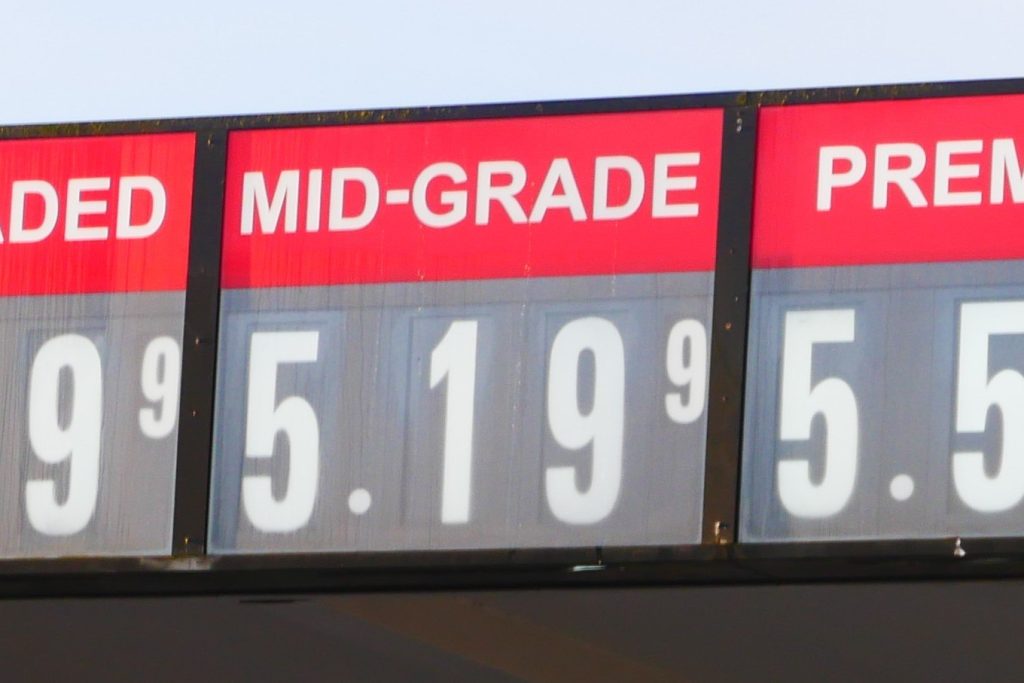
The pattern repeats with each geopolitical rupture. The 1990 Gulf War doubled oil prices from $16 to $32 per barrel, and the U.S. entered a mild recession. The 2022 spike after Russia’s invasion of Ukraine pushed Brent above $120 per barrel, and U.S. gasoline prices reached a record $5.02 per gallon in June 2022.
The mechanics here are straightforward: the U.S. consumes about 20 million barrels of oil per day. Every dollar increase at the pump is a tax on consumers and a drag on business.
The Federal Reserve is watching. Inflation stood at 3.1 percent in February 2025, and oil prices are a factor in the central bank’s calculations. The EIA estimates that a $10 per barrel increase in oil prices raises gasoline by about 25 cents per gallon and reduces U.S. GDP by 0.2 percent after one year.
On closer reading, that is a significant bite for an economy still digesting the inflation surge of 2021-2023. As of March 30, 2025, U.S. gasoline averaged $3.45 per gallon, up from $3.20 a month earlier. That is a 25-cent jump in 30 days — exactly the kind of movement that catches the attention of both consumers and policymakers.
The question is whether this is a seasonal blip or the beginning of something more serious. The United States is now the world’s largest oil producer, at 13.2 million barrels per day in 2024.
That production provides some buffer against global supply disruptions. But the catch is that the U.S. refining system is configured for heavier crude, and the country still imports about 3 million barrels per day from OPEC. So the claim of energy independence needs a footnote: production is high, but the system remains tied to global markets.
The 1973 crisis taught a generation about vulnerability. The 1979 crisis reinforced the lesson.
Each subsequent shock — 1990, 2022 — has been a reminder that the oil market is not a normal market. It is a political market, shaped by embargoes, revolutions, and wars. Follow the money, and you find that the price of crude is never just about supply and demand.
It is about who controls the spigot and who is willing to turn it off. The current administration is watching the data. The Federal Reserve monitors oil prices as an inflation factor, and the 3.1 percent inflation reading from February 2025 leaves little room for complacency.
If gasoline continues to rise, the economic effects will compound. The EIA’s 0.2 percent GDP reduction per $10 oil increase is not a theory — it is a measured relationship that has held across multiple cycles.
The U.S. has more domestic production than it did in 1973 or 1979, but the refining mismatch and the continued OPEC imports mean that the system is not as insulated as it might appear. The mechanics of the oil market have not changed fundamentally. A crisis in the Middle East, a pipeline disruption, or a production cut by OPEC can still send prices climbing.
The history of oil shocks is a history of surprises, and the next one is always somewhere on the horizon.
{“@context”: “https://schema.org”, “@type”: “NewsArticle”, “headline”: “How Oil Price Shocks Impact the U.S. Economy and Gas Prices”, “description”: “WASHINGTON, July 8 — The mechanics of an oil shock are brutal and well-documented. When the price of crude jumps, it moves through the economy…”, “datePublished”: “2026-07-08T09:30:00+00:00”, “author”: {“@type”: “Person”, “name”: “Beatrice Ferrari”}, “publisher”: {“@type”: “Organization”, “name”: “InfoPulse Today”, “url”: “https://newsfeed.infopulsetoday.com/”}}




