
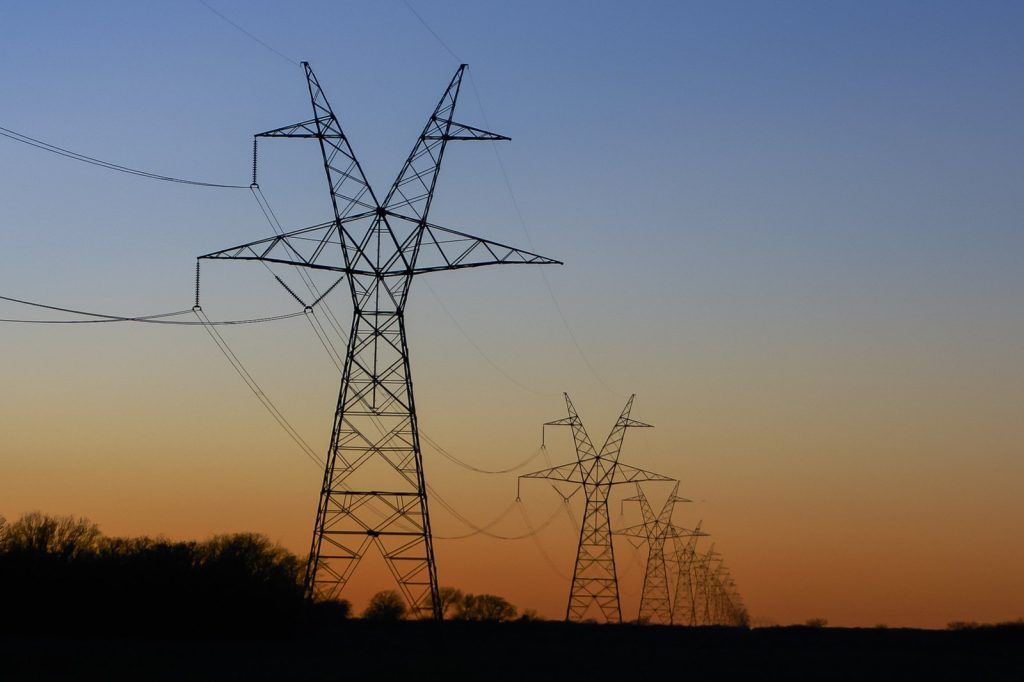
WASHINGTON, July 8 — The United States electric power grid, a sprawling network that the Department of Energy says spans more than 600,000 miles of transmission lines and 5.5 million miles of distribution lines, is the backbone of the nation’s economy and security. Yet the American Society of Civil Engineers graded this energy infrastructure a C- in its 2021 Infrastructure Report Card — a rating that signals systemic fragility. The grid operates in three distinct stages: generation, transmission, and distribution.
Power plants fueled by coal, natural gas, nuclear energy, hydro, wind, or solar produce electricity. Transformers then step that electricity up to high voltages — ranging from 115 kV to 765 kV — for long-distance transmission, a strategy that reduces energy losses over those hundreds of thousands of miles of lines.
From there, high-voltage transmission lines carry the electricity to substations. At these nodes, voltage is stepped down to distribution levels, typically between 4 kV and 35 kV. Distribution lines then deliver power to homes and businesses at 120/240 volts in the United States.
The entire system must maintain a constant frequency of 60 Hz in North America, with voltage held within strict limits. Frequency regulation is managed by balancing supply and demand in real time — a continuous, high-wire act that leaves little margin for error.
The North American Electric Reliability Corporation, known as NERC, sets the reliability standards that govern this process. The grid is monitored through Supervisory Control and Data Acquisition systems, or SCADA, which give operators a real-time view of the network’s health. The strategic calculus here is straightforward: the C- grade from the ASCE reflects aging infrastructure, growing demand, and the broader stakes of reliability in an era of increasing electrification.
What this signals to policymakers is that the grid’s capacity to absorb new generation sources — whether natural gas, nuclear, or renewables — depends on sustained investment in transmission and distribution. For the United States, the grid is not merely an engineering system. It is a geopolitical asset.
The ability to move power reliably from generation sites to population centers underpins everything from manufacturing competitiveness to national security. The Department of Energy’s figures — over 600,000 miles of transmission lines, 5.5 million miles of distribution lines — underscore the sheer scale of what must be maintained and modernized.
The 60 Hz frequency standard, the voltage tolerances, the SCADA monitoring — these are the technical details that define operational reality. But the broader stakes are about resilience. As the nation weighs its energy future, the transmission grid will be the arena where those choices are tested.
{“@context”: “https://schema.org”, “@type”: “NewsArticle”, “headline”: “How the Power Grid Works: Transmission, Distribution, and Frequency”, “description”: “WASHINGTON, July 8 — The United States electric power grid, a sprawling network that the Department of Energy says spans more than 600,000 miles of…”, “datePublished”: “2026-07-08T09:30:00+00:00”, “author”: {“@type”: “Person”, “name”: “Noah King”}, “publisher”: {“@type”: “Organization”, “name”: “InfoPulse Today”, “url”: “https://newsfeed.infopulsetoday.com/”}}




