
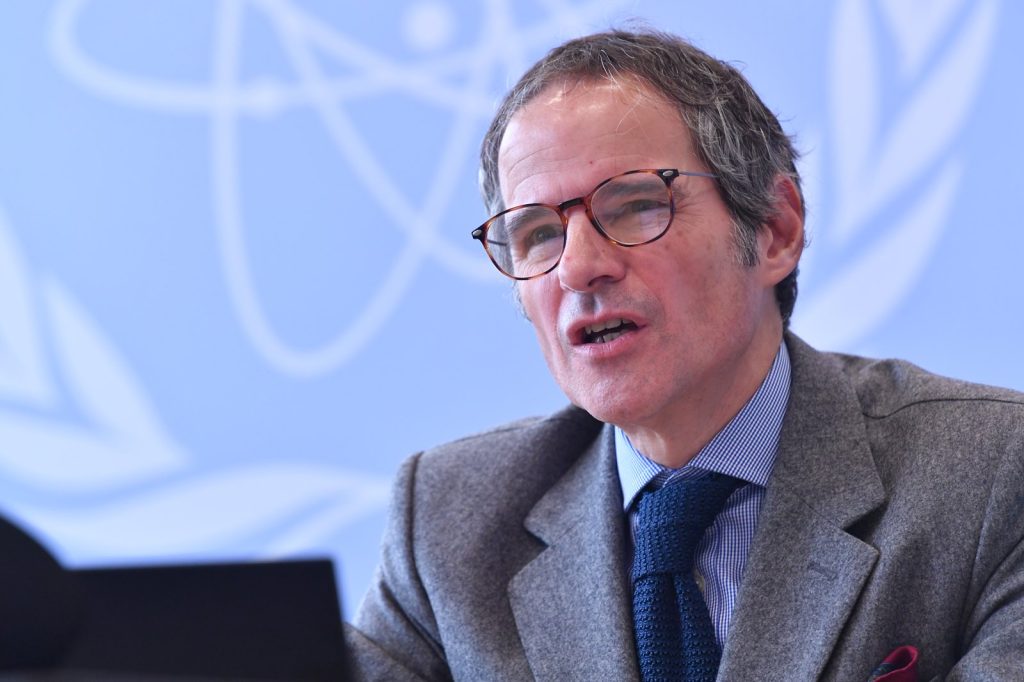
The International Atomic Energy Agency has placed its staff on a permanent basis at every active reactor location in Ukraine, a move signalled by the raising of two flags at each plant – one national, one bearing the IAEA emblem. The development was announced on January 27 by IAEA Director General Rafael Grossi during a visit to Kyiv, shortly after he had inspected the Rivne plant on January 24 and the Chernobyl site on January 25.
At the press conference alongside Ukrainian Prime Minister Denys Shmyhal, Grossi confirmed that agency personnel would remain at each facility “as long as they are requested” by the Ukrainian government, describing the arrangement as an open‑ended commitment. Shmyhal stated that, beginning the following day, all nuclear installations in Ukraine would fly both the Ukrainian flag and the IAEA flag. He emphasized that the flags are not merely symbolic; they represent the on‑the‑ground presence of experienced safety and security professionals who will provide technical guidance and monitor safety systems amid the ongoing conflict.
Prior to this expansion, the IAEA already maintained a team at the Zaporizhzhia plant, Europe’s largest nuclear station, which currently operates under Russian military control and has been a focal point of international concern due to repeated fighting in its vicinity. The new deployment extends the agency’s footprint to the three other active plants – Rivne, Khmelnytskyi, and South Ukraine – as well as to the decommissioned Chernobyl facility.
In total, at least eleven IAEA employees are now stationed across these sites. The stated objective of the mission is to lower the risk of a catastrophic nuclear accident while hostilities continue near the reactors. Grossi explained that the staff will offer direct technical assistance and monitor safety systems, moving beyond passive observation to active engagement with plant operators.
He noted that the flags “represent and will signify the presence of some of the most well‑known professionals in safety and security who will offer guidance and technical help to each site.” The presence of international observers changes the strategic calculus for any party contemplating military action near a reactor. An attack that damages containment would not only affect Ukraine but would also involve IAEA personnel on site, capable of reporting developments in real time.
This creates a tangible tripwire of accountability, although it also introduces new dependencies, given that Ukraine’s electrical grid remains under frequent strain from Russian strikes on power infrastructure. While IAEA experts can advise on safety measures and help mitigate loss of off‑site power, they cannot prevent missile strikes or halt the war itself. Grossi’s rapid itinerary – from Chernobyl to Rivne to Kyiv within a few days – underscores the urgency felt by the agency.
The speed of the deployment suggests that planning for this expansion had been underway for weeks, awaiting an appropriate moment to announce it. That moment arrived as winter deepened and the fighting showed no signs of abating.
Consequently, the IAEA now maintains a permanent, albeit modest, footprint at every Ukrainian nuclear installation: eleven specialists distributed across multiple facilities. This presence did not exist before the conflict began. The agency has pledged to keep its staff in place for as long as Ukraine requests, a period that could extend well beyond the current war.




