
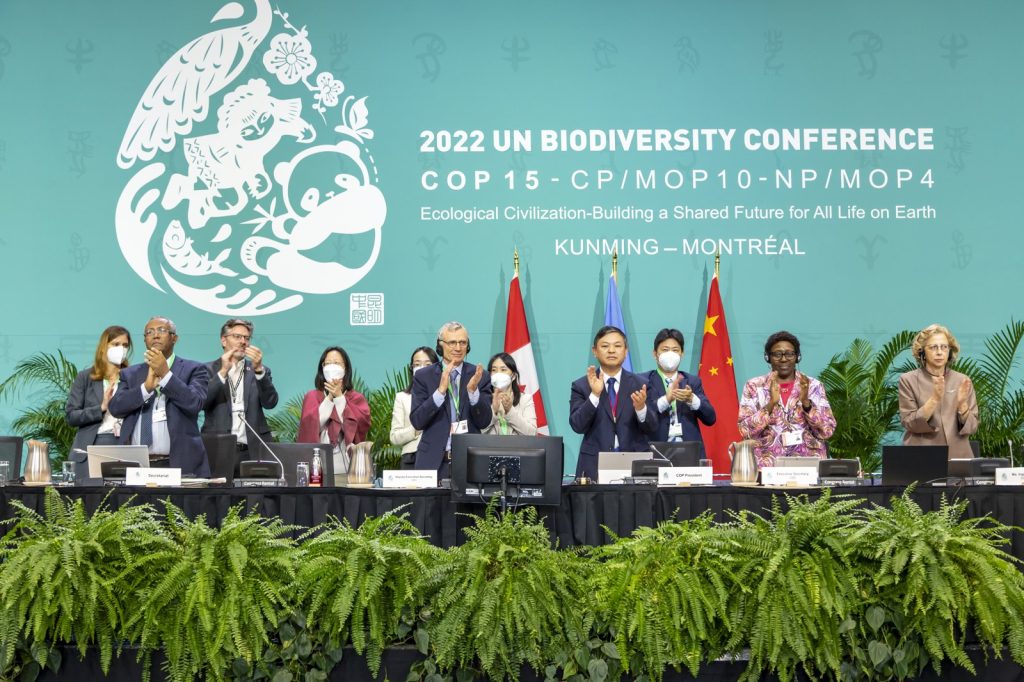
In December 2022, world leaders adopted the Kunming-Montreal Global Biodiversity Framework, a landmark agreement that replaces a decade of unmet conservation objectives. The framework’s dual-city name reflects the complications of its origin: China’s COVID-19 restrictions forced the relocation of the originally planned Kunming summit to Montreal, where the Convention on Biological Diversity maintains its headquarters.
The resulting pact carries both cities in its title and the burden of learning from past failures. The previous global biodiversity goals, known as the Aichi Targets, expired in 2020 with nearly all objectives unfulfilled. The new framework takes a different approach, establishing 23 specific targets for 2030 alongside four long-term goals for 2050.
Its centerpiece commitment, known as “30 by 30,” aims to protect 30 percent of land and waters by 2030. This single target will compel governments to make difficult decisions regarding mining, logging, agriculture, and renewable energy development.
Financial commitments form a critical component of the agreement. The framework calls for $200 billion annually in biodiversity funding from all sources. Wealthy nations are expected to contribute at least $20 billion per year by 2025, increasing to $30 billion annually by 2030.
Additionally, the text requires the reform or elimination of subsidies harmful to biodiversity—estimated at $500 billion globally each year—by 2025. These subsidies include support for pesticides, fossil fuels, and agricultural practices that drive deforestation.
For the business sector, the framework introduces mandatory disclosure requirements. Large corporations and financial institutions must monitor, assess, and report their biodiversity impacts. The Taskforce on Nature-related Financial Disclosures, modeled on existing climate reporting standards, is currently developing implementation rules. Companies that ignore biodiversity risks may face investor pressure and regulatory consequences.
Indigenous peoples and local communities secured stronger recognition in the final text compared to earlier drafts. The framework acknowledges their rights, territories, and traditional knowledge, explicitly calling for their participation in decision-making.
This language was negotiated line by line, reflecting that Indigenous lands contain most of the world’s remaining biodiversity. The agreement also mandates that at least 30 percent of degraded ecosystems be under restoration by 2030, requiring large-scale efforts to replant forests, rewet peatlands, and rehabilitate coastal zones. As a political agreement under the Convention on Biological Diversity rather than a binding treaty, countries must now translate these targets into national strategies.
The European Union has already proposed its Nature Restoration Law, while Brazil and Indonesia face scrutiny over deforestation. The United States, not being a party to the convention, has no formal obligation—though American companies with global supply chains will still feel pressure.
Implementation will determine the framework’s success. Previous targets failed because governments signed agreements without taking action. The Kunming-Montreal pact includes stronger monitoring requirements and a biennial review cycle, creating public accountability and documentation for activists and litigators.
China, which presided over COP15, has not yet released its national biodiversity strategy under the new framework. The United States remains absent from the convention.
The European Union faces internal resistance from agricultural lobbies. The next COP, scheduled for 2024 in Turkey, will provide the first significant test of momentum.




