
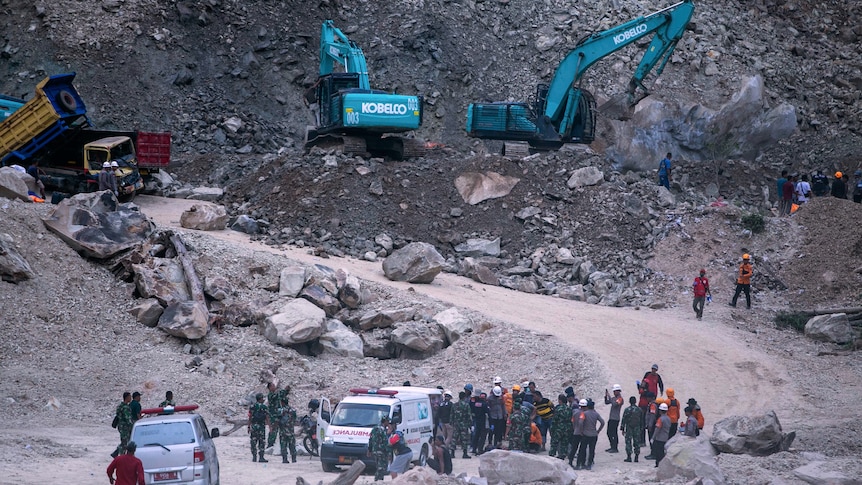
A catastrophic collapse at a stone quarry in Cirebon, West Java, Indonesia, on May 30, 2025, has left at least 17 people dead, with 12 others injured and eight still unaccounted for. Among the injured, six are reported to be in serious condition.
The quarry, an industrial site extracting raw materials such as limestone, granite, and sand, was operating under the constant stress of explosions, heavy machinery, and the removal of supporting rock. When the wall gave way, tons of earth and stone fell without warning, according to initial reports. Emergency services are currently on the scene, conducting a slow and methodical search through the debris.
Their primary focus is locating the eight missing individuals, while also providing care to the wounded. The severity of the collapse is underscored by the number of seriously injured, which suggests immense force.
This incident is not an isolated event. Quarries are common across the Indonesian archipelago, particularly in regions like West Java, a province of over 50 million people. Cirebon, located on the northern coast, is known for its port and industrial activity.
The demand for raw materials, driven by construction booms, creates significant pressure on quarry operations. This pressure can lead to corner-cutting and neglect of safety protocols, the report indicates.
Potential factors behind the collapse include the stability of quarry walls, the adequacy of safety procedures, human error, and equipment failure. These issues are frequently cited in similar disasters, where labor is often cheap and oversight is thin. While regulations exist to mitigate environmental harm and ensure safety, enforcement is uneven, underfunded, or sometimes ignored.
The environmental costs of quarrying, including habitat destruction, water pollution, and soil degradation, are well-documented but often abstract. The collapse in Cirebon, however, is an immediate and concrete tragedy.
Seventeen families are grieving, eight are waiting for news of their loved ones, and twelve people are hospitalized. An investigation will likely examine whether proper procedures were followed, the quarry’s history, and who knew about potential risks. These answers will take time.
For now, the focus remains on rescue operations. Every hour that passes reduces the likelihood of finding the missing alive.
The six seriously injured may require medical care that is not available locally. The 17 dead will be buried and mourned. The hope is that this disaster will lead to policy changes, though such changes often come too late for the victims. Quarries will continue to operate, construction will keep demanding stone, and the people of Cirebon will keep working, as alternatives are scarce.
The collapse on May 30 is not the first such disaster, and it will not be the last. The question remains whether anything will change before the next one.




