
A confrontation is brewing in the Persian Gulf that threatens to disrupt one of the world’s most vital energy arteries, with potential consequences for households and economies across Asia. Iran has announced its intention to block the Strait of Hormuz entirely, a move that would violate international law.
The announcement, made on April 22, 2025, sets in motion a 30-day window before the measure is set to take effect, pending legal challenges. For millions of families from Manila to Mumbai, the standoff could mean sharply higher costs for fuel, transportation, and consumer goods.
Deterrence and Dialogue on Parallel Tracks
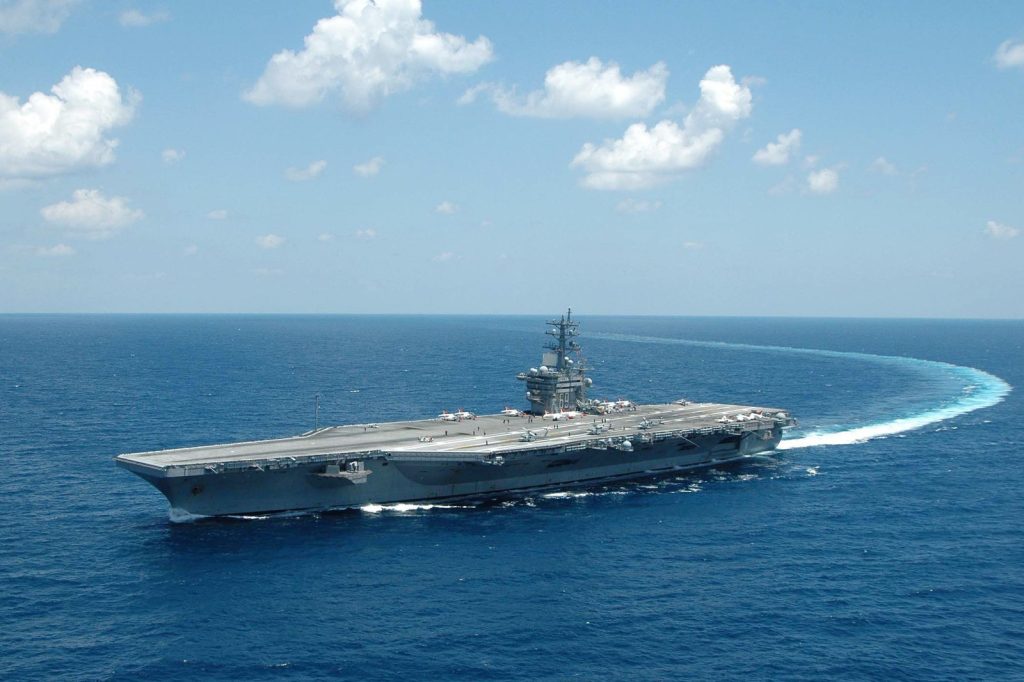
The United States has stated it will enforce freedom of navigation in the area with naval patrols. The USS Dwight D. Eisenhower carrier strike group has already been deployed to the region, signaling American resolve to keep the waterway open.
Military options available to Iran include deploying mines, fast-attack boats, and anti-ship missiles such as the Noor and Qader to disrupt shipping lanes. On the diplomatic front, the United Nations Security Council faces pressure to act, with possible responses including sanctions or calls for negotiations.
The European Union and China have both urged restraint. Iran has shown no sign of backing down, and the U.S. administration has matched that posture with visible military presence. The coming weeks will test whether diplomacy or military deterrence prevails, as both sides brace for a high-stakes standoff near a strategic chokepoint.
Economic Shockwaves Across Asia
Analysts predict a 10-15% increase in oil prices in the short term if the disruption materializes or is perceived as imminent. For communities across Southeast Asia and beyond, the impact will be felt at every link of the supply chain — from the fuel that powers public transport to the goods shipped on container vessels. The crisis touches the price of cooking gas, the cost of commuting, and the stability of economies still recovering from recent shocks. Iran’s threat follows years of shifting diplomatic and military postures between Tehran and Western powers.
Previous standoffs in the Strait of Hormuz saw nations deploy similar tools — sanctions, carrier groups, and calls for restraint — to manage escalation without direct conflict. But the current situation carries additional weight because the framework for dialogue has eroded significantly since the United States withdrew from the Joint Comprehensive Plan of Action in 2018.
According to International Atomic Energy Agency reports from 2023, Iran is currently enriching uranium to 60% purity, a level that further complicates prospects for renewed negotiations.
A Fractured Framework and the Road Ahead
The Joint Comprehensive Plan of Action remains a framework for potential talks, even as its foundations have been badly shaken. Negotiated in 2015 with the P5+1 nations and the European Union as signatories, the agreement was designed to limit Iran’s nuclear program in exchange for sanctions relief. That deal was preceded by interim agreements in 2013, marking a period of rare cooperation after decades of distrust.
But the framework fractured when the United States withdrew, reigniting disputes over Iran’s nuclear activities and regional influence. The unraveling of the JCPOA left few remaining channels for dialogue, pushing disputes into more confrontational arenas.
The Strait of Hormuz, through which a significant share of the world’s oil passes, has long been a flashpoint, with past incidents involving naval blockades and military posturing. What happens next will shape not just energy markets but the broader balance of power in the region. For countries reliant on stable oil flows, the risk of disruption means higher costs for essential goods and services.
The crisis also tests whether existing diplomatic frameworks can still function when key participants step away from the table. All eyes are on the 30-day window ahead, and on whether the strait remains open as the world watches to see if diplomacy or deterrence will determine the outcome.




