
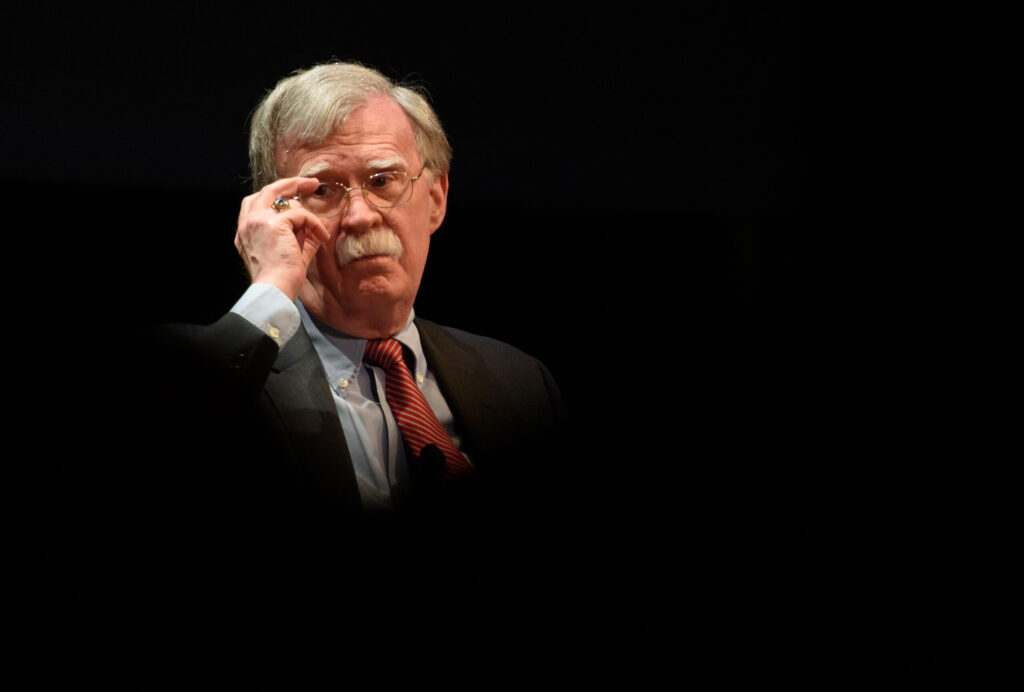
WASHINGTON, July 8 — The figure that matters in the Shahram Poursafi case is $300,000. That was the alleged bounty offered for the assassination of John Bolton, the former U.S. National Security Advisor, according to charges unsealed by the Department of Justice in August 2022. The bottom line: the Justice Department accused Poursafi, an Iranian national, of plotting to kill Bolton on U.S. soil.
The alleged scheme, which the DOJ says was orchestrated at the behest of Iran’s Islamic Revolutionary Guard Corps (IRGC), was foiled by the FBI before it could be carried out. No U.S. officials were harmed.
By the numbers, the case laid bare a direct Iranian threat against a former senior American official. Poursafi allegedly offered $300,000 to a person inside the United States to carry out the killing. The DOJ’s charges detailed a plot that spanned months, with Poursafi communicating with the individual he believed would pull the trigger.
The FBI intervened before the plan advanced further. Investors will note the broader context: the Poursafi case is frequently cited as evidence of Iran’s willingness to target former U.S. officials.
John Bolton served as National Security Advisor under President Trump from 2018 to 2019. The plot against him underscored the ongoing security risks tied to U.S.-Iran tensions. Iran denied any involvement in the alleged assassination plot.
The Iranian government has consistently rejected accusations of state-sponsored assassination attempts against American officials, including in this instance. The DOJ’s charges, however, painted a different picture, directly linking Poursafi to the IRGC. The case has taken on added significance in light of subsequent claims.
In 2024, then-candidate Donald Trump asserted that Iran was plotting his assassination. That claim drew directly on the Poursafi-Bolton plot as supporting context.
Trump’s assertion was not a new allegation but rather a public warning based on the same intelligence and legal actions that had already been made public by the DOJ.
The Bolton Connection
John Bolton is a prominent figure in U.S. national security circles, known for his hawkish stance on Iran. During his tenure as National Security Advisor, he advocated for a hardline policy against Tehran, including the U.S. withdrawal from the 2015 Iran nuclear deal. The alleged plot against him, as outlined in the DOJ charges, was seen by analysts as a direct response to his role in shaping U.S. policy.
The DOJ’s 2022 announcement stated that Poursafi had been charged with providing material support to a foreign terrorist organization and attempting to commit murder-for-hire. The charges were unsealed in Washington, D.C., where the case was filed.
Poursafi remained at large, believed to be in Iran, at the time of the announcement. The FBI’s role in foiling the plot was central to the case. Federal agents intercepted communications between Poursafi and the individual in the U.S., who was actually a confidential source working with law enforcement.
The operation demonstrated the bureau’s ability to monitor and disrupt Iranian-linked threats on American soil.
Ongoing Tensions
The Poursafi case is not an isolated incident. U.S. intelligence agencies have repeatedly warned that Iran remains a persistent threat to former U.S. officials, particularly those involved in the Trump administration’s Iran policy. The DOJ’s charges against Poursafi were part of a broader pattern of Iranian efforts to retaliate against American figures.
The IRGC’s alleged involvement in the plot highlighted the group’s willingness to operate outside Iran’s borders. The IRGC is designated as a foreign terrorist organization by the U.S. government.
Its involvement in the Bolton plot, as described by the DOJ, reinforced the administration’s view of the IRGC as a direct threat to U.S. national security. For investors and policymakers, the Poursafi case serves as a reminder of the geopolitical risks that persist in U.S.-Iran relations. The threat of state-sponsored assassination attempts against American officials adds a layer of instability to an already fraught relationship.
The DOJ’s charges, while focused on a single individual, carry implications for how the U.S. approaches Iran’s activities abroad.
What to Watch Next
The status of Shahram Poursafi remains unclear. As of this writing, he has not been apprehended by U.S. authorities. The DOJ’s case against him is still active, but his location in Iran makes extradition unlikely.
The U.S. government continues to offer a reward for information leading to his capture. The broader question for U.S. national security is whether Iran will continue to pursue similar plots.
The Bolton case demonstrated that the IRGC is willing to target high-profile former officials. The Trump administration’s 2024 claim that Iran is plotting his assassination suggests that intelligence assessments have not changed. The bottom line: the Poursafi case is a concrete example of Iranian hostility toward U.S. officials.
The $300,000 bounty, the IRGC link, and the FBI’s intervention are all documented facts. For those tracking U.S.-Iran tensions, this case remains a key data point.




