
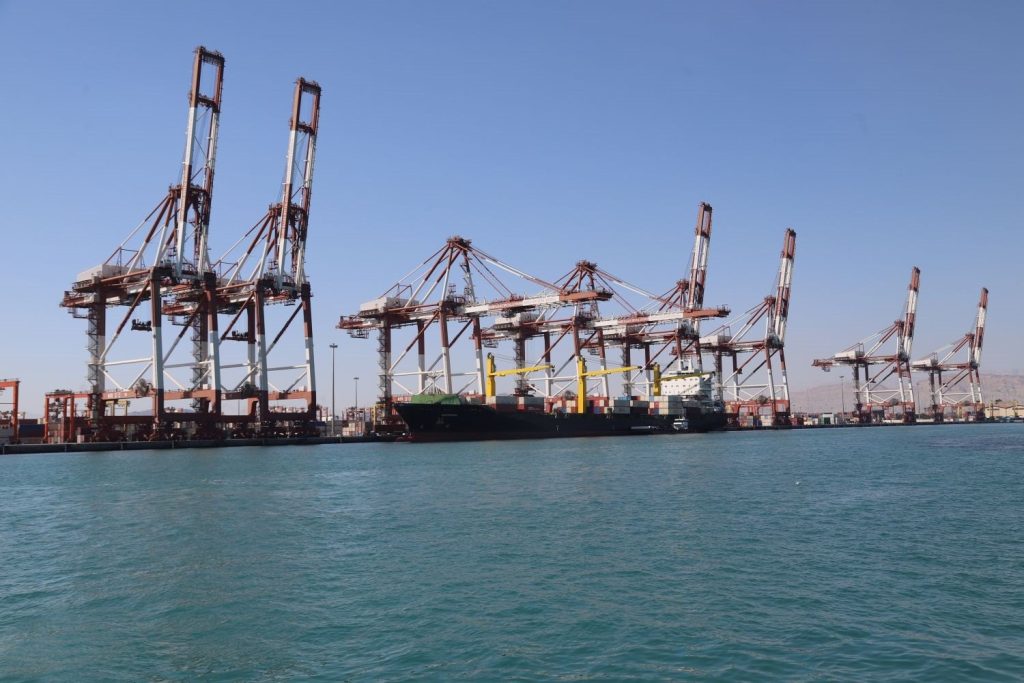
The Strait of Hormuz is a narrow chokepoint, and what happens there ripples outward. When the Iranian Ports and Maritime Organization announced on May 7 that its ports stand ready to offer maritime services, technical support, supplies, and medical assistance to ships in that waterway, the immediate effect is not just logistical. It is strategic.
The offer touches every nation that depends on the 20% of the world’s oil that passes through that strait every day. Consider the geography.
The major Iranian ports of Shahid Rajaee and Bandar Abbas sit right on the strait’s edge. They can fuel a tanker, make a repair, or evacuate a sick crew member without the vessel diverting far from its route. For a ship operator, that convenience is real.
For the United States, working with allies including the United Kingdom, the European Union, and Israel to keep the strait stable, it is a complication. Iran now positions itself as a service provider, not just a naval presence.
That changes the calculus for any nation whose ships might need help in a crisis. The Taiwanese Ministry of Foreign Affairs has already stated its commitment to maintaining freedom of navigation and the safety of international shipping lanes. Japan has expressed concern.
The Philippines is watching. These are not idle statements. Taiwan relies on energy imports that transit the strait.
Japan does as well. If Iranian ports become the go-to option for emergency assistance, those governments have to weigh a practical need against a political one.
Do you let your tanker pull into an Iranian port for repairs, knowing it gives Tehran leverage? Or do you refuse and risk a longer, costlier delay? The offer from Mohammad Rastad, head of the Iranian Ports and Maritime Organization, covers fueling, repair, and maintenance.
It also covers medical assistance. That last point matters.
A crew member with a heart attack or a serious injury does not care about geopolitics. The nearest help might be at Bandar Abbas. If that port is ready and willing, the ship’s captain will likely take it.
And once a ship calls at an Iranian port for one reason, the precedent is set. The relationship shifts. Dr. Sanam Vakil, a Middle East expert at Chatham House, called the development significant given the region’s geopolitical tensions.
She is right. The United States has been working closely with its allies to ensure safe passage through the strait.
But safe passage is not the same as exclusive passage. The Iranian offer does not block the strait. It opens a service lane.
That is harder to counter than a blockade. You cannot sanction a sick sailor or a broken engine.
What to watch next is the response from the United States and its partners. They have been monitoring the situation closely, along with Taiwan, Japan, and the Philippines. But monitoring is not the same as acting.
If a Japanese tanker takes fuel at Shahid Rajaee next month, that is a fact on the ground. If a Taiwanese vessel requests medical evacuation from Bandar Abbas, that is another. Each such event chips away at the idea that the strait is managed solely by Western-allied forces.
The Iranian ports are not new. Shahid Rajaee and Bandar Abbas have been there for years.
What is new is the explicit offer of support services, framed as a routine maritime assistance package. That framing matters. It makes refusal look petty.
It makes acceptance look neutral. And it plants Iran firmly in the middle of the strait’s daily operations, not as a threat but as a provider.
That is a harder position to dislodge.




