
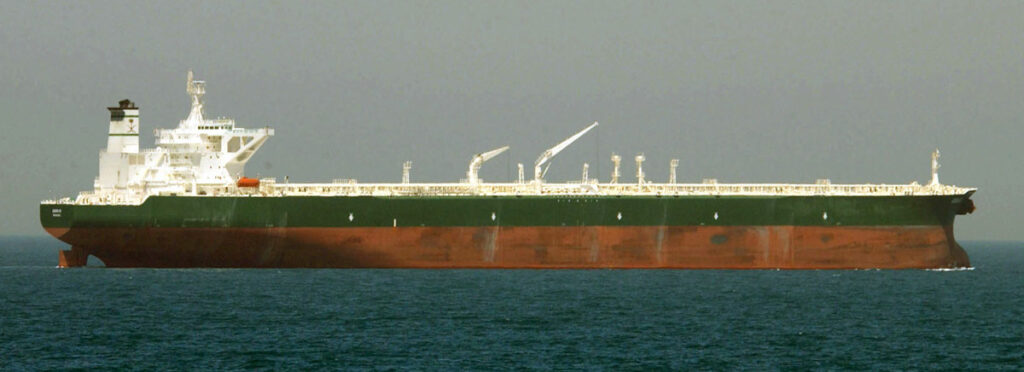
The Iranian seizure of a commercial vessel in the Strait of Hormuz on May 12, 2025, jolted global energy markets into recalling a hard reality: the narrow waterway remains the world’s most consequential energy chokepoint. The incident, carried out by Iran’s Islamic Revolutionary Guard Corps (IRGC) Navy, came after years of relative calm and renewed fears of broader disruption. While the US Navy’s Fifth Fleet, based in neighboring Bahrain, maintains a continuous patrol presence, the geography of the strait itself places fundamental limits on what naval power can guarantee.
A Geographic and Strategic Chokepoint
The Strait of Hormuz is the sole sea passage linking the Persian Gulf to the open ocean. Bordered by Iran to the north and Oman and the United Arab Emirates to the south, it narrows to roughly 33 kilometers at its most constricted point.
That confined channel concentrates around 20 percent of global petroleum consumption into a passage vulnerable to disruption by mines or attacks by small boats, even as its depth remains sufficient for large tankers. According to the U.S. Energy Information Administration, approximately 21 million barrels of oil and petroleum products traverse the strait daily. For Asian economies that together absorb 80 percent of that volume, the waterway functions less as a geographic feature than as a daily vulnerability priced into every barrel.
Major destinations include China, Japan, India, and South Korea. The strait has long served as a vital conduit for global energy, carrying a large share of seaborne oil and liquefied natural gas to markets in Asia, Europe, and beyond.
For several Gulf states, it remains the only maritime route for their exports, making its stability critical to worldwide supply chains. A prolonged blockage or escalation in hostilities would force costly rerouting, strain alternative supply lines, and risk sharp price swings in global markets.
Iran’s Periodic Threats and Recent Action
Iran has periodically threatened to close the strait in response to sanctions or military pressure. In 2019, the country seized several tankers there, prompting a brief spike in oil prices.
The May 12, 2025 seizure of a commercial vessel by the IRGC Navy renewed that pattern, reminding markets of the strait’s vulnerability. Though the waterway has avoided prolonged shutdowns in past decades, even temporary interruptions have exposed the fragility of a chokepoint that funnels a substantial portion of the world’s energy trade through a confined channel. A single mine or an attack by a small boat can halt traffic in a channel only 33 kilometers wide.
The US Fifth Fleet’s continued presence in Bahrain provides a deterrent, but the strait’s geography imposes constraints. The same narrowness that makes it vulnerable also challenges naval responses.
The EIA data underscores the strait’s centrality: 21 million barrels daily, 20 percent of global consumption, and 80 percent bound for Asian markets. For policymakers in capitals from Tokyo to New Delhi, the arithmetic is stark: any disruption at Hormuz directly impacts energy security and economic stability.
Market Implications and What to Watch
The May 12 seizure came after years of relative quiet, but it served as a sharp reminder that the Strait of Hormuz remains the world’s most consequential energy chokepoint. The US Fifth Fleet’s patrols help maintain a degree of stability, yet the geography itself limits what naval power can guarantee.
Analysts and market participants are now watching carefully for any further escalation, as even a temporary interruption can force costly rerouting around the Arabian Peninsula, strain alternative supply lines, and risk sharp price swings in global markets. The strait’s role as a sole sea passage from the Persian Gulf means that for several Gulf states it is the only maritime route for their exports. Its strategic importance has made it a recurring point of tension, with periodic threats of closure or disruption during conflicts or diplomatic standoffs.
The EIA data, which shows 21 million barrels of oil and petroleum products passing through daily, highlights the strait’s centrality to global energy flows. For Asian economies that absorb 80 percent of that volume, the narrow waterway is less a geographic feature than a daily vulnerability priced into every barrel.




