
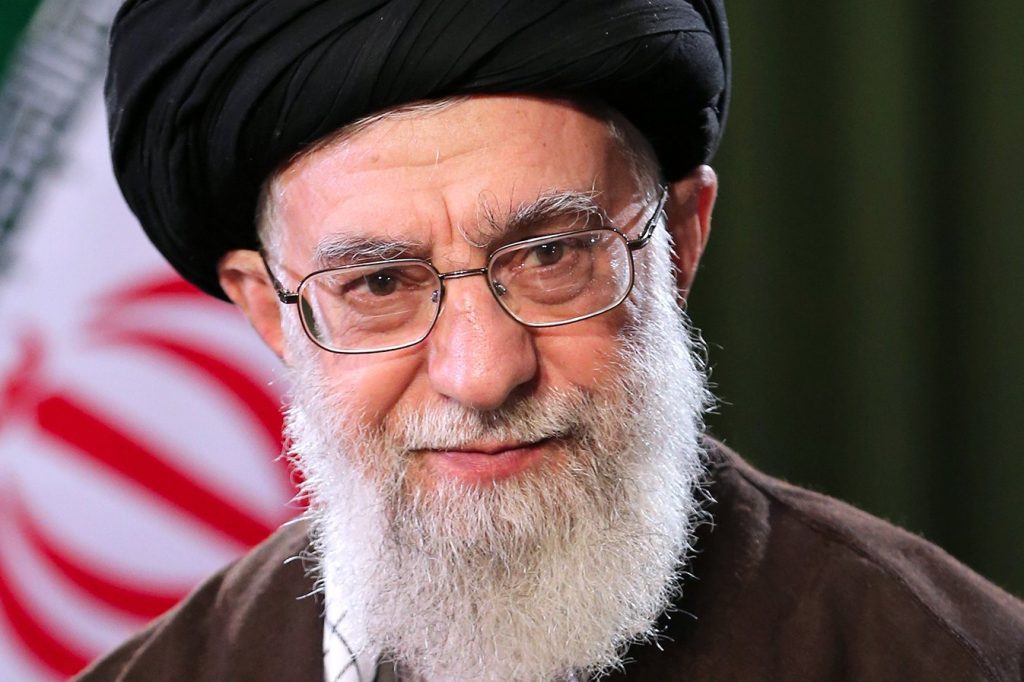
For decades, the narrow Strait of Hormuz has functioned as the world’s most strategically vital oil chokepoint, and the man with the ultimate authority to disrupt it is Iran’s Supreme Leader, Ayatollah Ali Khamenei. At 85 years old as of 2025, Khamenei has held the position since June 4, 1989, when he succeeded the Islamic Republic’s founder, Ruhollah Khomeini.
Born in the northeastern city of Mashhad on July 17, 1939, Khamenei commands final say over Iran’s nuclear program, foreign policy, and all branches of the armed forces, including the Islamic Revolutionary Guard Corps (IRGC) and the conventional military. That concentration of power makes him the single most consequential figure for any nation watching the stability of global energy markets.
The Machinery of Control
Khamenei does not simply influence broad policy directions; he directly shapes the political system that sets them. He serves as head of the Assembly of Experts, the body constitutionally responsible for choosing his successor, and he controls the Guardian Council, which vets all candidates for elected office. This structural advantage means that no major decision — from nuclear negotiations to domestic crackdowns — moves forward without his personal sign-off.
The United States has maintained sanctions on Khamenei since 2019, a designation that freezes any assets he holds under American jurisdiction and prohibits U.S. persons from dealing with him. While that financial squeeze has not visibly loosened his domestic grip, it underscores Washington’s view of him as the central obstacle to curtailing Tehran’s regional meddling and nuclear ambitions.
Khamenei’s opposition to American influence in the Middle East is not merely rhetorical. It shapes Iran’s direct support for proxy forces operating across the region, including Hezbollah in Lebanon and the Houthi rebels in Yemen. His consistent endorsement of the IRGC’s threats to block the Strait of Hormuz signals a willingness to risk broad regional instability in response to U.S. sanctions. The practical upshot for global oil markets is clear: any disruption in that narrow waterway would send prices spiking, hitting American drivers and businesses alike.
The Strait as Economic Leverage
The Strait of Hormuz is a narrow passage between Iran and Oman that connects the Persian Gulf to the Gulf of Oman and the Arabian Sea. Its strategic significance dates to the mid-20th century, when Western companies developed large-scale oil fields in the Persian Gulf region, making its producers central to world energy markets.
By the 1970s, most oil traded by sea from the Gulf transited through the strait, a role that has continued due to the concentration of major producers along its shores: Saudi Arabia, Iraq, the United Arab Emirates, Kuwait, Bahrain, Qatar, and Iran itself. Today, the waterway carries the majority of the seaborne oil exports from each of those nations. Iran has long viewed control of this chokepoint as a national security interest.
During the Iran-Iraq War in the 1980s, Iranian forces targeted shipping in the strait to counter Iraq’s blockade and international support for Baghdad. The threat to close the waterway emerged as a recurring leverage tactic in Tehran’s foreign policy toolkit.
That approach was formalized in 2018, when Khamenei endorsed IRGC threats to block the Strait of Hormuz in direct response to renewed U.S. sanctions. Such moves reflect a long-standing Iranian doctrine of deterrence through disruption, one rooted in the country’s geographic position and its reliance on asymmetric military options. For policymakers, energy traders, and consumers around the world, the strait’s stability is not a regional concern alone but a global one, making it a persistent flashpoint in international relations.
Succession and What to Watch
Khamenei’s age and the opaque nature of Iran’s succession planning make his health a subject of persistent speculation, though no official update has altered his role. The Assembly of Experts, which he currently heads, would select his successor. Given his control over the Guardian Council, the selection process is unlikely to produce a leader who deviates sharply from his deeply anti-Western posture.
For now, the Supreme Leader remains the fixed point in Iran’s political calculus. Any interruption in the strait — whether through conflict, sabotage, or deliberate action — can ripple across global energy markets, affecting fuel prices and supply chains far beyond the region.
As long as Khamenei holds ultimate authority, the Strait of Hormuz will remain both a strategic asset for Tehran and a critical vulnerability for the world economy.




