
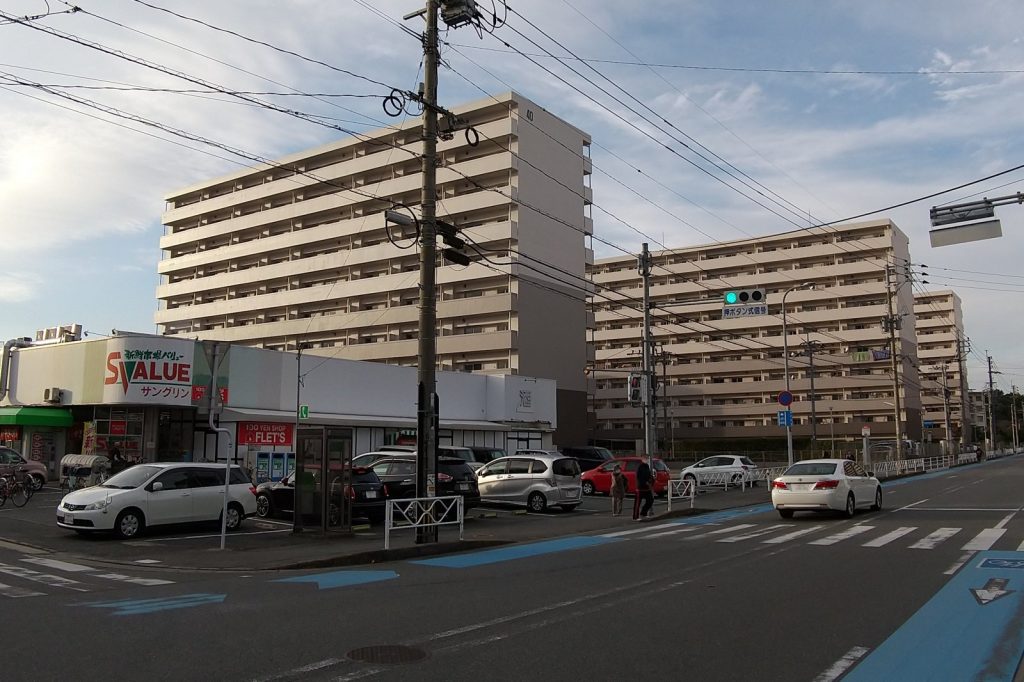
Japan’s building code is among the strictest in the world. That fact matters today, after a magnitude 5.9 earthquake struck 55 kilometers east of Noda at 12:08 UTC. The U.S. Geological Survey placed the depth at 37.16 kilometers.
Shallow. Less than 70 kilometers.
The ground shakes harder when the rupture is close to the surface. For a moderate earthquake — magnitude 5 sits in that category — the difference between 37 kilometers and 70 kilometers can mean cracked walls versus toppled shelves. The USGS reported no tsunami warning.
No immediate reports of casualties or structural damage either. But the absence of damage reports in the first hours does not mean the ground was gentle.
It means nobody has looked yet. Local authorities take time to assess. They will check schools, bridges, older wooden homes, and the reinforced concrete towers that define modern Japanese cities.
Japan rewrote its seismic design standards after the 1995 Kobe earthquake. That event killed more than 6,000 people. Buildings that met the old code failed.
The new code, enforced from 1981 and updated repeatedly since, requires buildings to withstand strong shaking without collapsing. The 2011 magnitude 9.1 Tohoku earthquake — the largest event recorded within 300 kilometers of this location over the past two decades — tested those standards on a national scale.
Most modern structures held. The failures were largely in older buildings or areas hit by the tsunami, not the shaking itself. A magnitude 5.9 quake is not a 9.1.
It is moderate. But moderate earthquakes still kill people.
They kill people when buildings fall. They kill people when unreinforced masonry crumbles. They kill people when residents panic and jump from windows.
Japan’s policy response has been to treat every earthquake as a potential disaster and to build accordingly. The 1981 standard was a line in the sand. Buildings constructed before that date are vulnerable.
Post-1981 buildings have ductile steel frames, shear walls, and foundation systems designed to absorb energy. The code is not a suggestion.
It is law, enforced through mandatory design reviews and inspections. The USGS records show at least 500 earthquakes of magnitude 5.0 or greater within 300 kilometers of this location in the last two decades. That is one every two weeks on average.
The ground never stops moving along the Japanese archipelago. The policy question is not whether another quake will come.
It is whether the buildings in its path can take it. Japan’s answer has been to mandate resilience through regulation. Retrofitting older buildings is expensive.
The government offers subsidies, but compliance is uneven. Rural areas, where buildings tend to be older and populations smaller, remain at higher risk. Seismologists expect aftershocks.
They may last days or weeks. Each one is a test.
Each one is a reminder that policy is only as good as the structures it governs. The USGS monitoring network will track every tremor. Local officials will inspect every crack.
The real measure of Japan’s seismic policy will come not from the epicenter coordinates or the depth reading, but from the damage report that arrives in the hours ahead. If the buildings hold, the code worked.
If they do not, the debate over retrofitting and enforcement will start again.




