
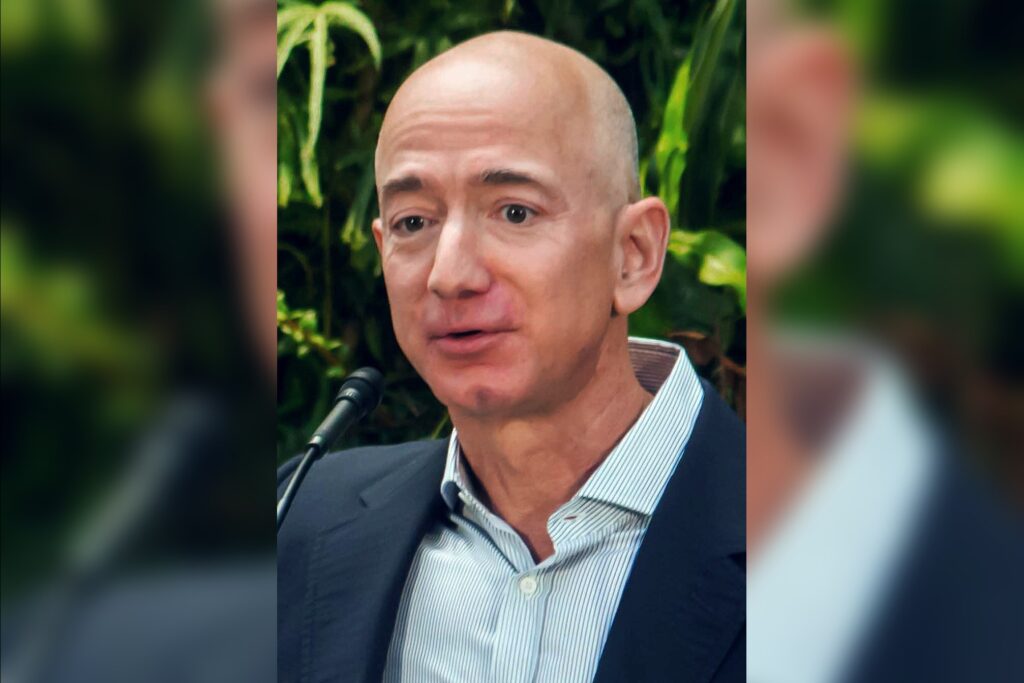
For more than two decades, Jeff Bezos has pursued a vision that reaches beyond Earth’s atmosphere, funding his rocket company Blue Origin with more than $5 billion of his personal fortune. As of October 2023, his estimated net worth stood at $160 billion, providing a substantial financial reservoir for the space venture he founded in 2000.
The company’s measured approach, captured in its Latin motto “Gradatim Ferociter” — step by step, ferociously — took a decisive turn on October 3, 2023, when the New Glenn rocket achieved a major success, establishing Blue Origin as a direct competitor to SpaceX.
From Suborbital to Orbital
Blue Origin’s path to orbital capability has been deliberate. The company built the suborbital New Shepard rocket, designed for brief flights above the edge of space, and flew its first crewed mission in July 2021 with Bezos himself on board.
That milestone demonstrated the company’s ability to carry passengers to the boundary of space. But New Glenn, a heavy-lift orbital rocket, represents the vehicle that reshapes the competitive landscape. It reached orbit for the first time in early 2025, following the earlier success on October 3, 2023, which positioned the company to challenge SpaceX’s dominance in launch services.
The company’s cautious approach dates to its earliest days. Bezos founded Blue Origin in 2000, six years after launching Amazon.
In 2006, the company bought land in West Texas for launch operations and flew its first test vehicle that same year — a small rocket named Goddard. Based in Kent, Washington, Blue Origin long operated with extraordinary secrecy, revealing little about its early work compared with its rival. Blue Origin’s rocket engine production also plays a role in the broader industry.
The company produces engines for its own vehicles and for others, including United Launch Alliance’s Vulcan Centaur rocket. Beyond launch services, it is developing a lunar lander called Blue Moon for NASA’s Artemis program and a commercial space station named Orbital Reef.
A Long-Term Vision for Lowering Costs
Bezos has consistently articulated a single overriding goal: reducing the cost of access to space. His stated ambition is to enable a future where millions of people can live and work in space — a prospect that remains distant. The New Glenn launch provides a concrete step toward that vision by giving the company a proven orbital vehicle.
The question now is whether Bezos’s personal investment, which has exceeded $5 billion and continues, can translate into the kind of reusable, high-cadence launch operations that SpaceX has spent years perfecting. Recent history shows Blue Origin advancing its vision through a series of specific milestones.
After the first crewed New Shepard flight in 2021, and after reaching orbit with New Glenn in early 2025, the company flew an all-female crew of six aboard New Shepard in 2026. Then, in early 2026, Blue Origin announced a pause in its tourism launches for at least two years, redirecting resources toward its lunar lander work. Each of these steps reshapes the competitive environment and brings Bezos’s long-held ambition a little closer to reality.
What Comes Next in the Space Race
Bezos was born on January 12, 1964, in Albuquerque, New Mexico. He founded Amazon in 1994 and stepped down as CEO in 2021 but remains executive chairman. The space race is no longer a two-player game, but the gap between second place and first place remains wide.
How quickly Blue Origin can scale New Glenn production and win commercial and government contracts will determine whether it can close that gap. The bottom line: Bezos is betting that his own checkbook can turn a long-shot vision into a commercial reality, built step by step, ferociously.




