
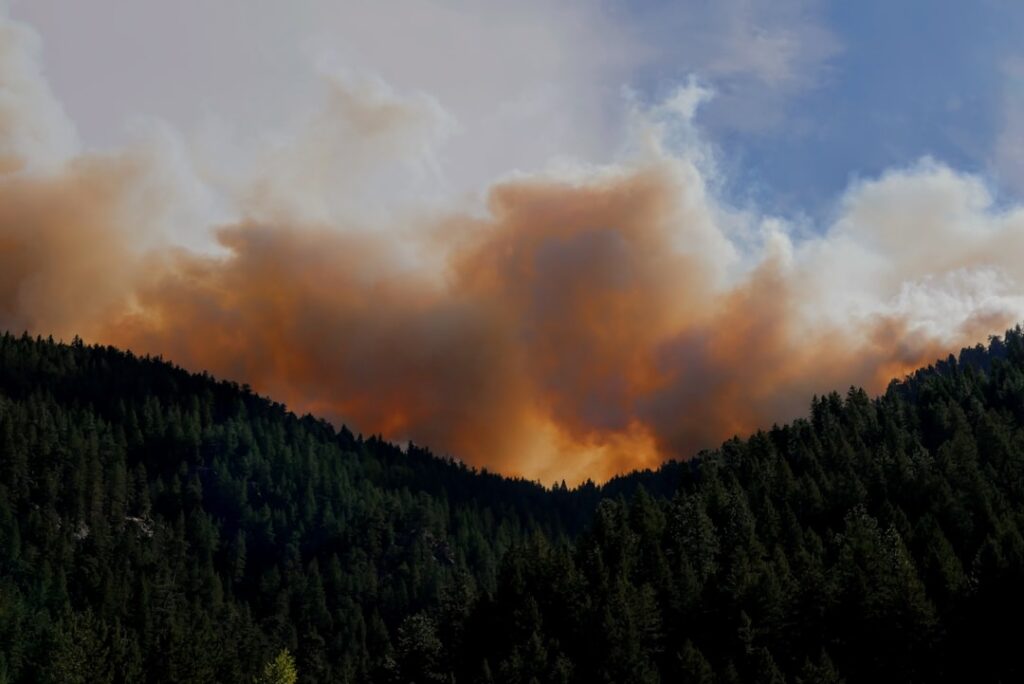
Three days after the flames erupted, the smoke finally dissipated enough for aerial teams to begin their assessments. The initial data that emerged was unprecedented: the wildfires sweeping through Los Angeles County have already inflicted over $135 billion in estimated damages. This staggering figure places the catastrophe in a realm few Americans have ever witnessed.
California Governor Gavin Newsom, who has held office since January 2019 and oversees both the California National Guard and the California State Guard, delivered a stark warning. He characterized the event as potentially the worst natural disaster in U.S. history, citing its “scale and scope.” With his access to the full picture—devastated neighborhoods, displaced families, shuttered businesses, and damaged infrastructure—his assessment carries significant weight.
The origins of this inferno trace back to years of drought and extreme heat that have gripped California. Dried vegetation, combined with strong winds, turned a single spark into a firestorm that leaped across highways and county lines. While California has battled wildfires every season, this one stands apart.
The speed of its spread caught even veteran firefighting crews off guard. Los Angeles County has ground to a halt.
Residents evacuated with only what they could carry. Many businesses have closed permanently. The economic impact extends beyond the burn zones, disrupting supply chains and triggering a surge in insurance claims. The $135 billion estimate is expected to rise as damage assessments continue and the full cost of rebuilding becomes clear.
The scale of the disaster forces difficult questions about recovery. Roads require repair, bridges need inspection, and buildings that survived the flames may still be unsafe.
The state faces a reconstruction effort that will demand years of work and billions of dollars in investment. Newsom’s role in coordinating this response will be critical, as his command of state military forces provides direct access to resources typically reserved for smaller emergencies. There is also a long-term dimension.
California has long championed renewable energy and sustainability. The destruction presents an opportunity to rebuild with those priorities—solar panels, wind power, energy-efficient design—potentially reducing reliance on fossil fuels while replacing what was lost.
This does not diminish the tragedy for families who lost everything, but it could leave the state stronger and more resilient. The fires continue to burn. Evacuation orders remain in place for parts of the county.
Firefighters work around the clock, but containment is slow. The full extent of the destruction will not be known for weeks.
What is already clear makes Newsom’s warning seem less like alarmism and more like plain fact: this disaster is on track to be the worst the country has ever seen, not in lives lost, but in sheer scale and cost. California has endured earthquakes, mudslides, and droughts, but nothing quite like this. The recovery will test the state’s institutions, budget, and people, shaping the region for decades to come.




