
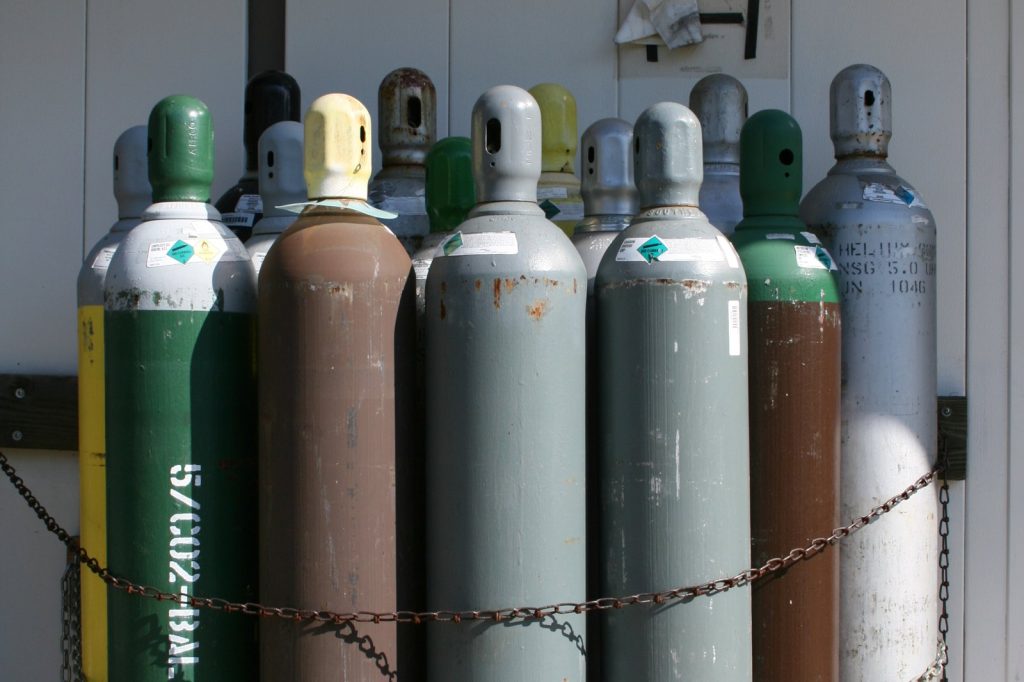
A gas cylinder explosion ripped through a commercial shop in Lahore on April 30, 2025, resulting in five deaths and six injuries. The force of the blast destroyed the building and scattered debris across the surrounding street. Emergency responders extracted victims from the rubble as the city confronted yet another deadly industrial incident.
Lahore, home to over 14 million residents, has experienced a troubling series of similar accidents linked to insufficient regulatory oversight. Gas cylinders are ubiquitous throughout the city, powering restaurant stoves, small factory equipment, and roadside vendor operations.
While these containers are safe under proper conditions, any defect—a compromised valve, missed inspection, or human error—can trigger a catastrophic explosion. The April 30 event followed this familiar pattern. Investigators have not yet determined the exact cause, though they plan to examine the shop’s safety measures and the cylinder’s condition. The broader question remains unanswered: why do such tragedies recur with alarming regularity?
Punjab province, with Lahore as its capital, has undergone rapid economic growth, pushing industrial activity into densely populated urban areas. Written safety regulations exist, but enforcement remains inconsistent.
Inspections are frequently cursory, penalties are minimal, and many business owners prioritize cost savings over safety protocols. Workers and customers bear the consequences. The explosion left five dead and six injured, with the possibility that the casualty count could rise if some wounded individuals do not recover.
The blast created both physical and emotional shockwaves through the community. Neighbors rushed to assist, ambulances navigated congested streets, and hospitals prepared for an influx of patients.
The scene was chaotic—and painfully familiar to Lahore residents. The city’s cultural heritage and historical significance stand in contrast to a present marked by hazards that more developed urban centers have largely addressed. Gas cylinders are not sophisticated technology; they are commonplace devices.
This ordinariness makes the repeated failures particularly frustrating. The methods for preventing such explosions are well-established: proper storage, routine maintenance, and trained operators.
These measures are neither expensive nor complex. What is lacking is the commitment to enforcement. Authorities possess the legal tools to close unsafe businesses, mandate inspections, and prosecute negligence, but these powers are not consistently applied.
The result is an environment where a normal workday can turn deadly without warning. The April 30 explosion represents a symptom of a systemic issue: safety is treated as an afterthought rather than a requirement.
Five families now mourn their losses. Six individuals face uncertain recoveries. The shop is destroyed, the street damaged, and the city moves forward until the next cylinder fails.
Lahore does not require another investigation; it needs a functional system that prevents such deaths. This demands genuine inspections, meaningful penalties, and true accountability.
The victims of April 30 did not perish due to misfortune. They died because a protective system failed them.




