
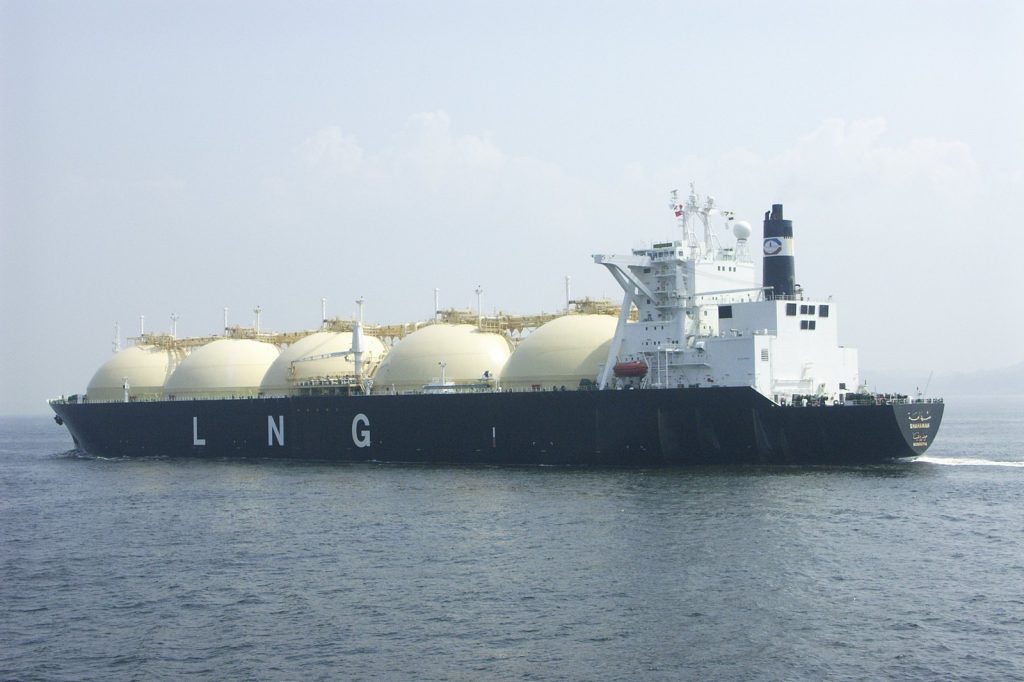
From Vapor to Liquid: How LNG Makes Natural Gas Transportable
In its natural state, methane‑rich gas is awkward to move. Building pipelines costs a lot, using ordinary tankers wastes space, and the sheer volume of the gas makes handling difficult. The industry’s answer is to chill the gas until it becomes a liquid.
When cooled to about −162 °C (−260 °F) the volume drops to roughly one‑six hundredth of the original, creating liquefied natural gas (LNG). Before the gas can reach that temperature it must be purified.
Water, carbon dioxide, helium, dust and heavier hydrocarbons are stripped away. These substances are not merely impurities; they can freeze inside equipment, block pipes or interfere with the condensation process. Helium, while valuable, is removed because it would disturb the phase change.
The result is a stream that is almost pure methane with a small amount of ethane, suitable for condensation at near‑atmospheric pressure. The liquid that emerges is odorless, colorless, non‑toxic and non‑corrosive.
It will not poison a person, but it is dangerous in other ways. If it warms and returns to vapor, the gas is highly flammable. Direct contact with the liquid causes instant, severe frostbite. In an enclosed area the vapor can push out oxygen, leading to asphyxiation.
Managing these hazards requires careful design of storage, transfer and transport systems. LNG is moved at low pressure.
The maximum allowable pressure is about 127 kPa (18 psi), only slightly above sea‑level atmospheric pressure. This is far lower than the pressures used in long‑distance pipelines that move gaseous natural gas. Consequently, the risk associated with LNG stems from temperature, not pressure.
Keeping the liquid cold preserves its state; allowing it to warm produces a rapidly expanding cloud of flammable gas. During processing the raw gas stream is split.
Heavier hydrocarbons such as propane and butane are separated and sold as liquefied petroleum gases. The lighter fractions—methane and ethane—become the LNG product. This step is a refining operation rather than a simple waste‑reduction measure; higher‑purity LNG burns more cleanly and behaves predictably in storage and on tankers.
The ability to ship liquefied gas has turned natural gas into a worldwide commodity. A field in Qatar or Australia can now feed a power plant in Japan or Europe, breaking the geographic lock that pipeline networks once held.
However, this global reach creates new points of vulnerability. An outage at a liquefaction plant can send shockwaves through international markets, storage terminals become strategic assets, and shipping lanes can act as chokepoints. Technological progress in recent decades has focused on scaling up and improving efficiency rather than inventing new chemistry.
Plants and tankers have grown larger, temperature control has become more precise, but the underlying physics of methane liquefaction remains unchanged. What has shifted is the economic picture: as natural gas displaces coal in electricity generation, demand for LNG has risen, and Europe’s move away from Russian pipeline gas has spurred rapid construction of new import terminals.
Despite a strong safety record, the scale of the operation leaves little room for error. A single LNG carrier holds enough energy to supply a small city for a year. A leak, fire or containment breach could have catastrophic consequences.
The industry treats LNG as a powerful tool that demands constant vigilance; it is not forgiving of mistakes.




